HÖRST
Watching television with a hearing aid
July 29, 2025
11 minutes reading time

OSKAR
Portable TV voice amplifier
Advertisement
Table of contents
Hearing aid users are familiar with the problem when watching television: sometimes it feels as if you are guessing rather than hearing what is happening on the screen.
Hearing aids are small technical marvels designed to amplify and optimize ambient noise. When watching television, however, there is often a collision of sound worlds—the dialogue from the TV competes with the ambient noise in the room. For many people, watching television with a hearing aid is more of a challenge than a relaxing experience.
Find out below how you can enjoy television to the fullest despite wearing hearing aids. From Bluetooth connections to TV adapters and TV sound amplifiers, there are various ways to adjust the sound of your TV to your hearing aid. Find out more below.
Basics for watching television with a hearing aid
How hearing aids work
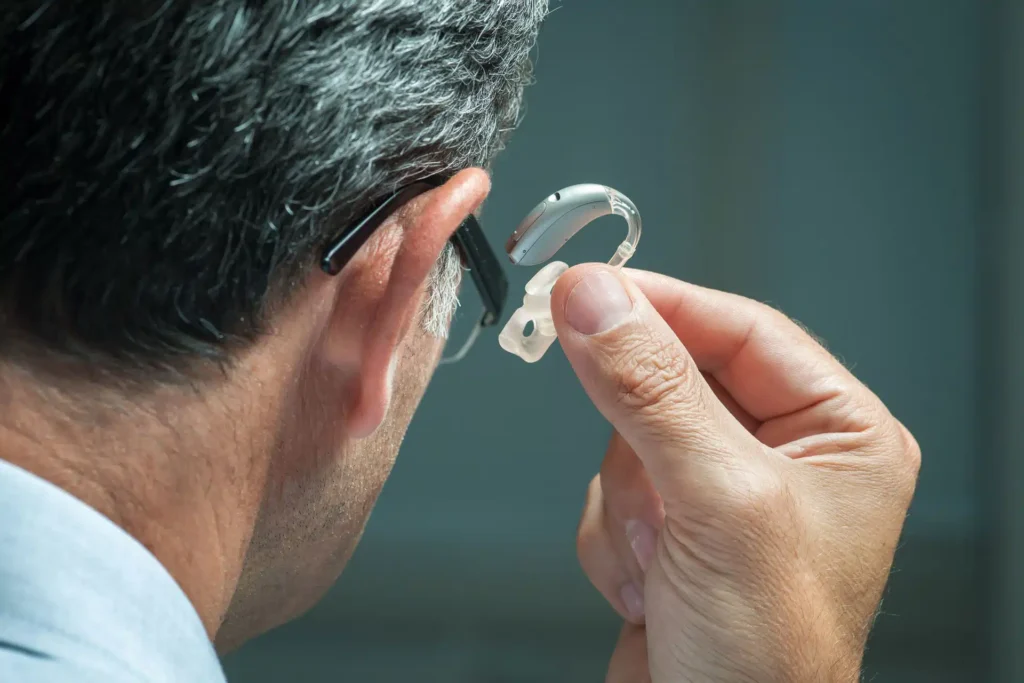
Hearing aids are complex technological devices designed to improve or restore hearing. They work by picking up sound waves from the environment, digitally amplifying and modifying them, and then directing the amplified sound into the wearer's ear. Modern hearing aids can automatically adapt to different listening environments.
Types of hearing aids
There are different types of hearing aids. Some of the best-known manufacturers include Oticon, Signia, Widex, and Phonak. Hearing aids can vary in size, shape, functionality, and the way they process sound to provide optimal support for the wearer. Some are almost invisible in the ear canal, while others are worn behind the ear. Whether Oticon, Signia, Widex, Phonak, or other manufacturers: each model also offers different functions and features, such as wireless connectivity, directional microphones, or tinnitus relief technologies. Here, too, the individual wishes of the wearer play a role.
It is important to note that not all hearing aids are compatible with all types of additional devices or hearing aids, such as certain televisions or Bluetooth devices. This can be a challenge if users want to use special functions or connections. Therefore, it is important to check compatibility with existing or planned devices before purchasing a hearing aid. Expert advice from a hearing care professional can help you find a hearing aid that not only meets your hearing needs but also your technical requirements.
Technology of modern televisions in terms of sound quality
Today's televisions are no less diverse in terms of their function and technology. Modern televisions are equipped with advanced audio technologies that deliver clear and dynamic sound quality. Many models offer features such as Dolby Atmos, surround sound systems, and customizable audio settings.
These technologies are designed to create an immersive listening experience, but can be problematic for hearing aid users if the sound is not optimally tailored to their specific needs. Some televisions therefore offer special settings or additional devices to enable television viewing with hearing aids.
Watching television with a hearing aid: Here are the options
Watching television with a hearing aid or connecting a hearing aid to your television may seem complicated at first glance. However, with the right technology, watching TV with a hearing aid is very easy and the quality is excellent. There are various methods available—from special audio settings and direct cable connections to modern wireless solutions, TV adapters, and TV hearing amplifiers, which you can simply take with you to your listening spot as portable TV speakers.
Audio settings for hearing aid users
Modern televisions offer extensive audio settings that allow you to customize the volume and sound. Hearing aid users should take the time to try out different settings to achieve the best audio output. Adjusting the bass and treble settings, for example, can significantly improve speech intelligibility.
In addition, individual hearing programs tailored to the specific needs of hearing aid users can be helpful. Such programs make it possible to adjust the TV sound so that it harmonizes optimally with the characteristics of the room and the hearing aid. These adjustments can often be made directly on the TV set.
However, using these special settings also has disadvantages:
- Shared use:
If a TV is used by several people, the settings optimized specifically for hearing aid users may be less than ideal for other viewers. - Individual differences in perception:
What is a clear and understandable audio setting for one person may be insufficient for another. This can be particularly challenging for hearing aid users with different types of hearing loss. - Complexity of settings:
For users who are not familiar with the technology, adjusting the audio options on the TV can be challenging.
- Time required for fine-tuning:
Finding the optimal audio settings can be time-consuming, as it often requires several attempts and adjustments to achieve the best possible sound quality. - Dependence on TV quality:
Not all TVs offer the same range of audio adjustments. In some cases, the available settings may be limited, which restricts the options for optimizing sound for hearing aid users.
Bluetooth connectivity: Connecting hearing aids to televisions
One of the most popular and convenient ways to connect your hearing aid to the TV is via Bluetooth. Some modern hearing aids and televisions are equipped with Bluetooth, which allows for a wireless connection between the hearing aid and the TV. You can stream the sound directly to your hearing aid, which means you can adjust the volume individually without disturbing other viewers.
However, Bluetooth connectivity also has a few disadvantages when watching television with hearing aids:
- Unstable connections:
Occasional interruptions or delays in sound may occur. - Limited range:
The need to stay close to the TV to ensure a constant connection. - Higher battery consumption:
More frequent charging or battery replacement of the hearing aid may be necessary.
Not all hearing aids and TVs support Bluetooth or are compatible with each other.- Isolation:
Streaming sound directly into the hearing aid can cause you to be less aware of your surroundings, which can lead to a certain degree of isolation.
Alternative connection options: TV adapter, TV streamer, TV connector
If your TV or hearing aid does not have Bluetooth, don't worry! There are other options, such as TV adapters, streamers, or connectors, which serve as a bridge between your TV and hearing aid. Many of these devices can be adjusted to your hearing needs and offer various connection and transmission options, such as wireless or infrared.

However, there are a few potential disadvantages that users should be aware of:
- Compatibility issues:
Not all TV adapters are compatible with all hearing aid types or models. This can be problematic for users who already own a hearing aid and find that it cannot be paired with available TV adapters. - Additional setup and maintenance:
Installing and setting up a TV adapter requires a certain amount of effort. This could be a problem for people who are not technically savvy. - Delays in audio transmission:
In some cases, there may be a minimal delay between the image on the TV and the sound transmitted through the hearing aid, which may affect the TV viewing experience.
- Limited mobility:
While using the TV adapter, your freedom of movement may be restricted, especially if the adapter requires a physical connection to the TV. - Power consumption:
Some TV adapters may increase the battery consumption of the hearing aid, resulting in more frequent battery changes or recharging. - Isolation from the environment:
Direct transmission of TV sound to the hearing aid can cause users to hear less of their surroundings, which could be problematic in certain situations and limit social interaction.
wireless headphones
Special wireless headphones for the hard of hearing, such as chin rest headphones, are another option for hearing aid users to improve their understanding of television. However, they have one clear disadvantage: they often cannot be used at the same time as a hearing aid. This means that hearing aids must be removed from the ears before using the headphones, which can be inconvenient and annoying in the long run.
Other disadvantages of wireless headphones when watching television with hearing aids are:
- Wearing comfort:
Wireless headphones, such as chin strap headphones, can cause discomfort during prolonged use due to their weight or the pressure they exert on the jaw and ears. - Perception of background noise:
When wearing wireless headphones, everyday noises such as the rustling of clothing can be perceived more intensely.
- Isolation:
Using headphones while watching television with family or friends can lead to social distancing. Wearers may feel isolated from conversations and interaction with others. - Worse sound:
Although headphones generally increase the volume, they do not necessarily improve sound quality.
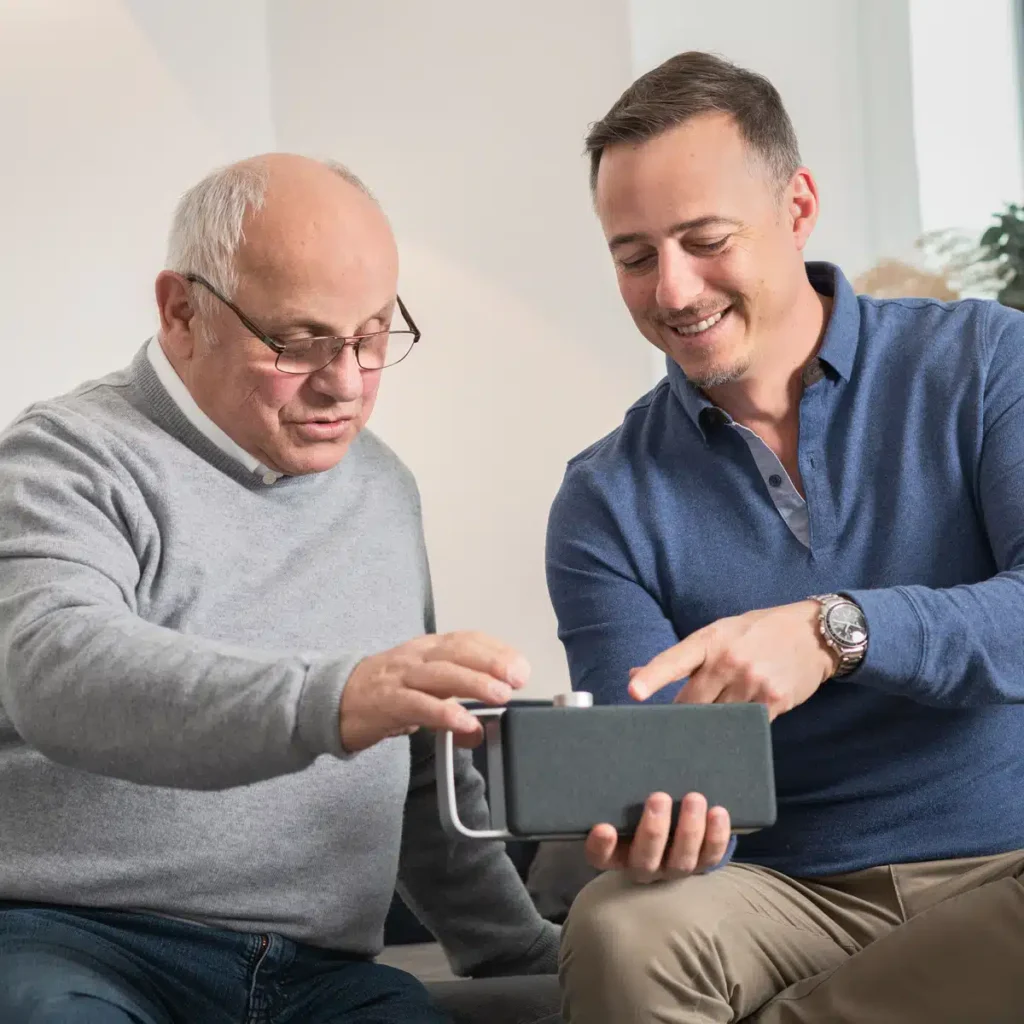
TV audio amplifier: Portable TV speakers for hearing aid users
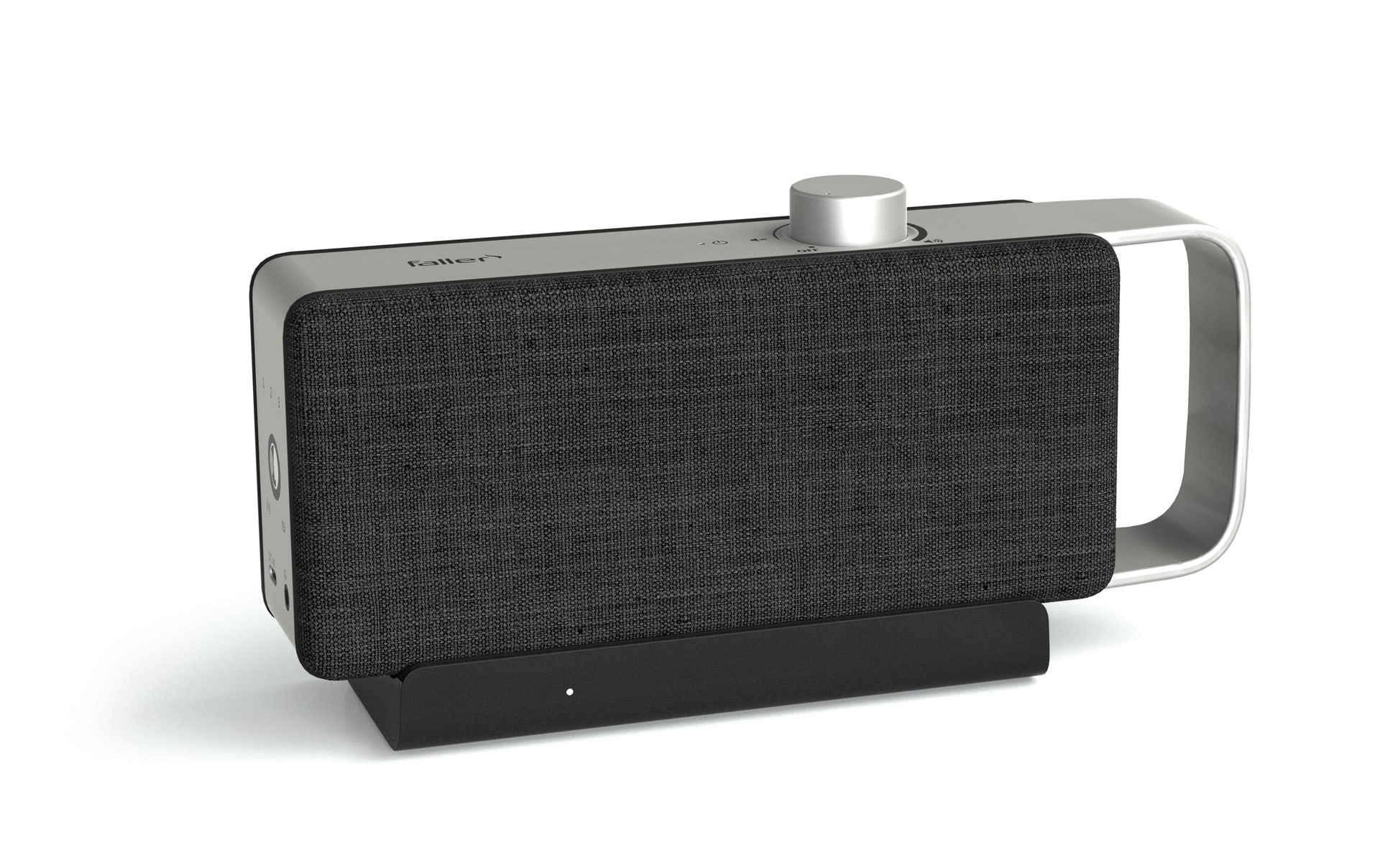
TV hearing amplifiers such as the OSKAR from faller audio offer a great alternative to TV adapters, connectors, or direct Bluetooth connections between hearing aids and televisions. While hearing aids are indispensable for many people with hearing loss, they are not always the optimal solution for watching television, as they are primarily designed to amplify speech and ambient noise. The OSKAR TV hearing amplifier, on the other hand, features special technology that amplifies dialogue on TV and filters out distracting background noise. This makes it a helpful addition when watching TV with a hearing aid.
In addition, OSKAR is compatible with all standard TV models that have an optical digital audio output or a 3.5 mm audio output (jack). This means that it can be easily connected to almost any TV. Furthermore, the hearing system can be connected to any other device that has one of these connections (e.g., PC, tablet, radio, CD player).
Tips for watching television with hearing aids
Watching television can be challenging for people with hearing problems. We would therefore like to give you a few additional useful tips that can improve your television viewing experience with hearing aids:
- Have your hearing aids individually adjusted by a hearing care professional:
It is important that your hearing aids or hearing devices are optimally adjusted to your individual needs. A visit to a hearing care professional can help to adjust your hearing aids so that they are specifically optimized for use when watching television. - Use special TV hearing aids:
In addition to your hearing aids, you can use special TV hearing aids such as the OSKAR TV sound amplifier. It helps to make dialogue clearer and easier to understand by reducingbackground noiseand improving speech intelligibility. - Use your TV settings:
Many modern TVs offer special settings that improve speech clarity. These settings can be particularly useful for making dialogue easier to understand for people with hearing impairments. - Use "clear language":
Since 2022, some television stations such as Das Erste and some regional programs have been offering an additional audio track called "clear language." This audio track, which runs parallel to the original audio track, has been technically edited to make the language easier to understand. - Use subtitles:
Subtitles are an excellent aid for people with hearing problems. They enable them to follow what is happening on the screen, even if the sound quality or speech intelligibility is not optimal. - Consider placement and room acoustics:
The positioning of the television and the acoustics of the room play an important role when watching television with a hearing aid. Ensure that your television is positioned in an acoustically favorable location and avoid places with high noise levels or echo effects. - Have your hearing aids serviced and adjusted regularly:
Ensure that your hearing aids and hearing devices are serviced and checked regularly. Good maintenance by your hearing care professional guarantees that your devices function optimally.
Further articles

Communication with hearing loss
Hearing Loss & Communication Hearing loss affects much more than just the ability to perceive sounds. It can change the way you
FM systems for hearing aid users
FM systems and modern radio transmission equipment can significantly improve speech intelligibility for hearing aid users, especially in acoustically challenging environments. The wireless technology transmits

postural vertigo
Positional vertigo is one of the most common forms of vertigo and typically occurs when the head is moved into a certain position.