HÖRST
Chin strap headphones or TV hearing amplifier
December 15, 2025
13 minutes reading time

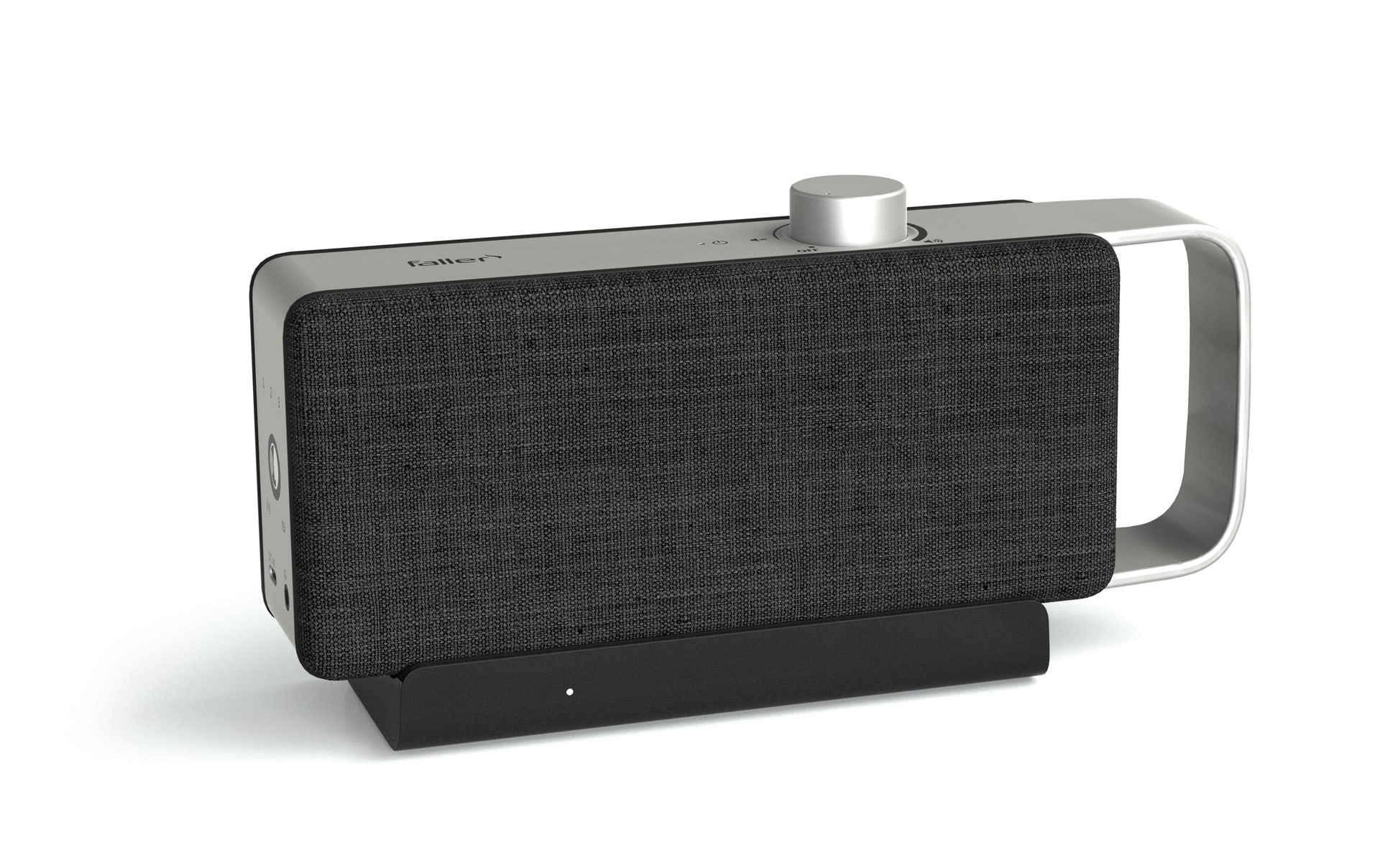
OSKAR
Portable TV voice amplifier
Advertisement
Table of contents
When dialogue on television becomes unclear and the volume has to be constantly adjusted, many people are faced with the question of finding the right hearing solution. Chin strap headphones and TV sound amplifiers are two popular options that take different approaches. While chin strap headphones deliver sound directly to the ear, TV speech amplifiers rely on open-room playback with targeted speech optimization. This article highlights both types of devices, explains how they work, and helps you decide which solution is best for you.
The most important information in brief
- Chin strap headphones are worn with the strap under the chin and are considered a lighter alternative to classic over-ear models.
- TV hearing amplifiers such as the OSKAR from faller audio are speaker-based and deliver optimized TV sound directly to the listening position.
- Headphones can be uncomfortable during prolonged use and often amplify distracting background noises such as the rustling of clothing.
- TV voice amplifiers enable an open listening experience without isolating you from your family and surroundings.
- Modern speech optimization technology highlights dialogue and reduces distracting background noise.
- For hearing aid users, TV hearing amplifiers offer the advantage that no devices need to be removed from the ear.
Basics of hearing solutions for TV
For many people, television is an integral part of everyday life. But when voices sound unclear or are drowned out by loud background music, the viewing experience suffers considerably. There are many reasons for this, ranging from the inherently weak built-in TV speakers to age-related changes in hearing ability. Both chin-rest headphones and TV hearing amplifiers have been developed to address this problem.
Why TV sound is often difficult to understand
Modern flat-screen TVs are optimized for a slim design. This inevitably leads to compromises in audio quality. The integrated speakers have little space and can therefore only deliver limited sound quality. In addition, professional sound mixes for films and series have a high dynamic range. This means that quiet dialogues and loud action scenes or music are far apart. For people with hearing loss, this problem is further exacerbated because the dynamics between quiet and loud are perceived as significantly reduced when hearing is impaired.
Overview of different approaches
Headphone-based systems such as chin rest headphones rely on reproducing the TV sound directly at the ear. The advantage lies in the individual volume control. Others in the room are not disturbed. TV hearing amplifiers, on the other hand, function as a mobile, speaker-based solution. They bring the sound to where the TV is being watched and optimize speech reproduction in a targeted manner. Both approaches have their merits, but differ fundamentally in the type of listening experience they provide.
The chin strap headphones in detail
Chin strap headphones are a special type of headphone that differs from classic headphones. The strap that gives them their name does not go over the head, but under the chin. This design has a number of special features that can be both advantages and limitations.
Design and functionality of chin strap headphones
Chin strap headphones are usually in-ear models, where small earbuds are placed in the ear canal. The bar under the chin serves to stabilize the headphones and prevent them from slipping out when you move. This design allows you to quickly remove or put on the headphones with just one hand. Most models for TV use are wireless and transmit the TV sound via radio or Bluetooth from a base station to the headphones.
Individual customization options
High-quality chin rest headphones offer various adjustment options. The balance control allows you to adjust the volume separately for each ear. This can be helpful if you have unilateral hearing loss. Some models also have different listening profiles or sound modes that allow you to adjust the sound to your personal preferences. The controls are usually located directly on the headband or earpiece, making them easy to use.
Technology and range
Various technologies are used for wireless transmission. Wireless headphones often use the 2.4 GHz frequency and offer ranges of 25 to 70 meters with a mostly stable connection. Bluetooth models allow for easier pairing with various devices, but often have a shorter range of about 10 to 30 meters. For television, latency is also an important factor that must function smoothly to keep the picture and sound synchronized, which is not always the case.
Disadvantages of headphones when watching television
Despite their popularity, headphones have some limitations when watching television that can affect the user experience. These disadvantages relate to both comfort and the social aspects of watching television together.
Comfort & pressure
Chin strap headphones can be uncomfortable during long TV sessions. The bar exerts pressure on the jaw area, and the in-ear components can press against the ear canal. Many users report discomfort, especially when wearing them for several hours. Weight also plays a role, even though chin rest models are lighter than classic over-ear headphones.
Increased background noise
An often underestimated problem with headphones is the amplification of movement noises. The rustling of clothing, typing on a smartphone, or other everyday noises are perceived much more loudly when wearing headphones and can significantly disrupt the listening experience. This problem is completely eliminated with speaker-based solutions.
Social isolation
Headphones block out ambient sound and isolate the wearer from their surroundings. This can be problematic when watching TV with family or friends. Conversations are not heard, or only partially, and the feeling of togetherness is lost. People wearing headphones quickly feel cut off from others, even though everyone is sitting in the same room.
hearing aid problem
Chin strap headphones usually cannot be worn at the same time as hearing aids. People who already wear hearing aids face a particular problem. Chin strap headphones and other TV headphones cannot usually be used at the same time as a hearing aid. This means that hearing aids must be removed from the ears before putting on the headphones. This is inconvenient in the long run and can be perceived as annoying. In addition, the hearing aid is then no longer individually adjusted to the wearer's personal hearing loss.
The TV voice amplifier as an alternative
TV voice amplifiers take a fundamentally different approach. Instead of reproducing the sound directly at the ear, they are portable speakers. They deliver optimized TV sound directly to the listening position. The OSKAR TV hearing amplifier from faller audio is an example of this innovative device category.
Functional principle of the speaker-based system
A TV sound amplifier typically consists of two components. A base station is connected to the TV and transmits the audio signal wirelessly to the portable speaker. This can be placed anywhere in the room, ideally close to where you are sitting. High-quality devices have a range of up to 30 meters, meaning that the TV sound can also be received in adjacent rooms. A practical carrying handle makes it easy to transport.
Language optimization as a core function
The key feature of modern TV speech enhancers is the targeted optimization of speech reproduction. An intelligent algorithm emphasizes the frequency ranges in which human voices lie, while reducing distracting background noise, overly loud music, and sound effects. Users can often customize the degree of speech optimization, for example by selecting different listening profiles. The result is clear, understandable dialogue without having to significantly increase the overall volume.
The innovation
An intelligent algorithm highlights speech frequencies while reducing distracting background noise. The result is clear dialogue without extreme volume.
Advantages over headphones
TV sound amplifiers offer several advantages that set them apart from headphones. The listening experience remains open to the room, so that awareness of the surroundings is maintained. Conversations with others in the room are still possible without having to remove headphones. There is no need to wear headphones, and distracting background noises such as the rustling of clothes are not amplified. For hearing aid users, it is particularly advantageous that the hearing aids can remain in the ear, as no additional device is worn on the ear.
Which solution is suitable for whom?
The choice between chin rest headphones and TV hearing amplifiers depends on individual needs. Here is some guidance to help you decide:
A Chin strap headphones are suitable if:
- You predominantly watch television alone and prefer isolation.
- You want to specifically prevent others in the household from hearing the sound.
- You do not wear hearing aids and find in-ear headphones comfortable.
B TV voice amplifiers offer advantages when:
- You value a natural, open listening experience.
- You want to participate in family life and have conversations despite hearing problems.
- You wear hearing aids and do not want to remove them.
- You want to avoid pressure sensations in your ear or increased background noise.
Practical considerations for everyday life
The decision to purchase a hearing solution should also take practical everyday aspects into account. From maintenance and integration into the living space to use in different situations, there are a number of points to consider.
Care and maintenance of the devices
Chin strap headphones require regular cleaning of the ear pads or silicone earbuds, as these come into direct contact with the ear canal. Dirt can impair sound quality and cause hygiene problems. TV voice amplifiers are easier to care for in this respect, as no components are worn in the ear. Occasionally wiping down the housing is usually sufficient.
Integration into the living space
The design of the devices is important to many people. Chin strap headphones are worn on the body and are only visible when in use. The base station needs to be placed near the television. TV voice amplifiers such as OSKAR are designed as standalone devices and can be placed openly in the room. An attractive design ensures that they blend harmoniously into the living environment.
Use in different rooms
There is a significant difference in terms of flexibility of use in different rooms. Chin strap headphones are limited to the reception range of the base station. TV sound amplifiers with a long range, on the other hand, can be taken into different rooms. This is useful if, for example, you want to hear the TV sound in the kitchen while preparing meals.
Frequently asked questions about using hearing solutions
When dealing with the topic of chin strap headphones and TV hearing amplifiers, certain questions arise regularly. The following answers may help to provide some guidance.
Can both solutions be used simultaneously?
Some TV voice amplifiers offer a headphone jack so that headphones can also be connected if necessary. The OSKAR, for example, has such a connection. This allows the amplifier's voice optimization to also be used via headphones, for example when absolute silence is desired for others in the room. This combination combines the advantages of both approaches.
What about compatibility?
Modern hearing solutions for TVs are compatible with most TV sets. This usually requires an optical audio output or a jack connection on the TV. There may be restrictions with older devices or special configurations. Before purchasing, it is advisable to check the existing connections on your own TV.
Which solution is more cost-effective?
The prices for chin strap headphones and TV speech amplifiers vary depending on the features and quality. Simple headphones are often cheaper to buy, but do not offer speech optimization. High-quality TV speech amplifiers with intelligent dialogue optimization are an investment that can pay off in terms of improved listening comfort and longer service life.
Notes on distinguishing medical hearing aids
When considering hearing solutions for television, it is important to make a clear distinction. Neither chin strap headphones nor TV sound amplifiers are medical devices or can replace a hearing aid. They are designed to provide situational support when watching television and are not tailored to individual hearing loss.
Difference from hearing aids
Hearing aids are individually adjusted to the wearer's hearing profile by hearing care professionals. They can not only make sounds louder, but also filter them according to relevance and specifically amplify the frequency ranges in which hearing loss occurs. TV headphones and speech amplifiers, on the other hand, increase the volume or optimize the TV sound in general, without individual adjustment to a specific hearing loss. However, they can provide valuable support for mild hearing loss or as a supplement to existing hearing aids.
When it may be advisable to see a doctor
If you suspect hearing loss, it is always advisable to visit an ear, nose, and throat doctor or hearing care professional. Regular hearing tests help to detect changes in hearing at an early stage. A professional consultation can clarify whether technical aids for the television are sufficient or whether further treatment is advisable. In many cases, the combination of a professionally fitted hearing aid and a TV speech amplifier can deliver the best results.
Summary comparison of solutions
The choice between chin rest headphones and TV hearing amplifiers is ultimately a personal decision that depends on individual preferences and specific circumstances. Both types of devices have their merits and can enhance the enjoyment of watching television.
Strengths of chin strap headphones
Chin strap headphones provide an isolated sound environment and allow for individual listening without disturbing others in the room. Their lightweight design makes them a more comfortable alternative to classic over-ear models. They can be a practical solution for people who mainly watch TV alone and do not wear hearing aids. The option to adjust the balance between the ears is helpful for those with unilateral hearing loss.
Why TV sound amplifiers are often the better choice
TV voice amplifiers such as the OSKAR from faller audio offer significant advantages in several areas. Intelligent voice optimization ensures clear dialogue instead of simply increasing the volume. The open-room listening experience allows you to continue participating in family life and conversations. Hearing aid users can continue to use their devices and benefit from the additional voice amplification. The lack of a wearing sensation makes longer TV sessions more comfortable, and distracting background noises such as the rustling of clothes are not amplified. With up to 16 hours of battery life, a range of 30 meters, and simple two-button operation, the OSKAR is a well-designed solution for relaxed TV viewing with clear speech comprehension.
Further articles

Healthy candy alternatives for seniors
For many people, craving sweets is part of everyday life. However, traditional sweets often contain large amounts of sugar and provide

Cooking together in old age
As we get older, our everyday lives change in many ways. The children have left home, our partner may be

Protein-rich nutrition in old age
As we age, our bodies change in many ways, and nutrition plays a crucial role in our health.