HÖRST
Cooking together in old age
January 28, 2026
17 minutes reading time

OSKAR
Portable TV voice amplifier
Advertisement
Table of contents
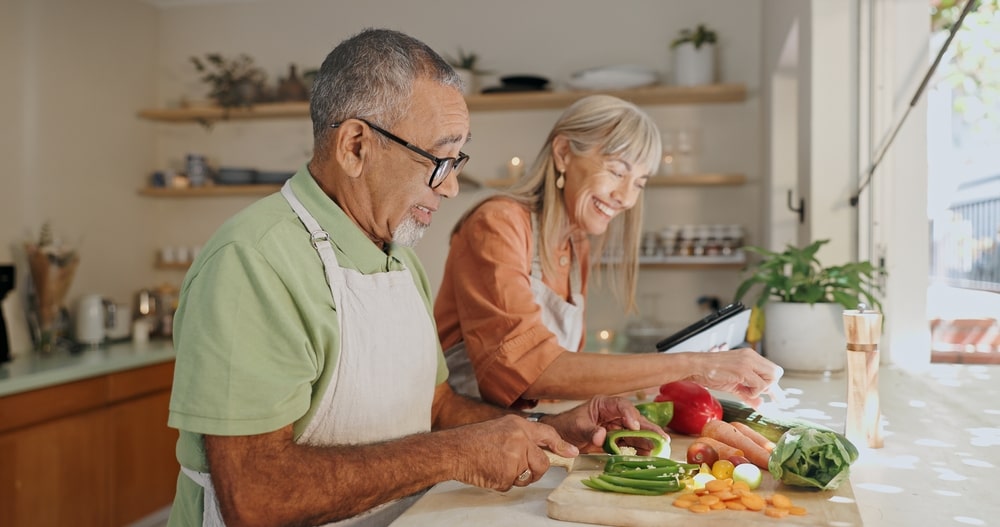
As we get older, our daily lives change in many ways. The kids have left home, our partner may have passed away, and we no longer have the social contacts we had through our working lives. For many seniors, cooking and eating become lonely activities that are hardly enjoyable anymore. Yet cooking together in old age can be a wonderful way to make new friends, maintain old friendships, and add more structure and enjoyment to everyday life. People meet in the kitchen, exchange recipes and stories, and experience community in a very natural way.
Why cooking together is so important in old age
Loneliness in old age as a social challenge
Loneliness is one of the most pressing problems in our aging society and affects far more people than many realize. After retiring from working life, losing a partner, or seeing their children and grandchildren move away, many seniors suddenly find themselves in a situation where they don't speak to anyone for days on end. Their homes become quiet, and everyday tasks such as cooking lose their appeal when you're the only one at the stove. The motivation to prepare elaborate dishes or even cook a hot meal declines rapidly when there is no one to share the food with. Cooking together in old age can make an important contribution here, as it creates regular opportunities for encounters, gives structure to the day, and allows people to be part of a community where they are needed and can contribute.
Cooking as a social glue
The kitchen has always been a place where people come together. In the past, families would gather around the stove, and even today, the kitchen is still the center of social life in many households. When cooking together, conversations about recipes, ingredients, and culinary memories from the past arise quite naturally. The elderly lady recounts how her mother used to prepare the Sunday roast, while the neighbor talks about his travels and brings exotic spices into the conversation. Chopping vegetables, stirring pots, and tasting sauces breaks down barriers and brings people together who might never have met elsewhere. This form of socializing is low-threshold and inclusive, because everyone has experiences with food and cooking that they can contribute, regardless of education, background, or social status.
Positive effects on body and mind
The benefits of cooking together are not limited to the social aspect, but also extend to physical and mental health. People who cook and eat in company generally eat better than those who stand alone in front of the refrigerator and make themselves a sandwich. Cooking itself is a complex activity that engages and trains various cognitive skills. Reading recipes, estimating quantities, coordinating several steps and keeping track of everything challenges the brain in many ways. The motor skills required for cooking, such as cutting, stirring, and handling various utensils, keep the hands dexterous and maintain mobility. In addition, many seniors who regularly cook in a group report an increased general sense of well-being and more zest for life, which in turn can have a positive effect on health.
Opportunities for cooking together in everyday life
There are numerous ways to integrate cooking in company into everyday life. Depending on personal preferences, physical fitness, and local offerings, seniors can choose between different formats, ranging from casual neighborhood get-togethers to organized cooking classes.
Cooking classes specifically for seniors
Many adult education centers, senior citizen facilities, and private providers have recognized that older people have their own needs and interests when it comes to cooking and offer cooking classes for seniors accordingly. These classes differ from regular cooking classes in that they are paced to suit older participants, take age-related limitations into account, and feature recipes tailored to the nutritional needs of older people. In such a cooking class, participants not only learn new dishes and cooking techniques, but also find like-minded people with whom they can share their passion for cooking. The atmosphere in senior cooking classes is often particularly warm and relaxed because no one is under time pressure and socializing is at least as important as the culinary result. Many classes take place regularly, about once a month, so that over time, permanent groups and even friendships can develop.
Lunch tables and senior citizens' meetings
The so-called lunch table is a proven concept that is offered in many cities and communities and gives older people the opportunity to enjoy a hot meal in company on a regular basis. Depending on the facility, the meal is prepared by a cook, or the seniors cook together under supervision. The advantage of a lunch table lies in its regularity and reliability. Participants know that they are expected every Tuesday and Thursday at noon, for example, which gives structure to the day and lowers the inhibition threshold for leaving the house. The communal lunch provides an opportunity for conversation and social contact without having to worry about planning, shopping, and preparation. For people who can no longer cook for themselves or do not want to, this is a valuable opportunity to still participate in a culinary community.
Cooking groups in the neighborhood
You don't always need a formal setting to cook together. Many seniors form their own cooking groups with neighbors, friends, or acquaintances from clubs, meeting regularly at one of the participants' homes. The concept is very simple: every week or every month, the group cooks a previously agreed-upon dish together, with the host role rotating among the participants. The shopping can be done together or divided up, and everyone contributes their skills and experience. Such private cooking groups have the advantage of being completely flexible and requiring no registration or fees. If you don't know anyone in your neighborhood who would be interested in such a group, you can look for like-minded people through local senior citizens' councils, church communities, or online platforms. Often, a notice in the supermarket or an announcement in the parish newsletter is enough to find interested parties.
Intergenerational cooking projects
Cooking together can be particularly enriching when different generations come together. In some cities, there are projects where seniors cook together with children or young people, with both sides learning and benefiting from each other. The older participants pass on their knowledge and experience, while the younger ones contribute fresh ideas, energy, and often technical know-how. For grandparents whose own grandchildren live far away, such projects offer a wonderful opportunity to stay in touch with the younger generation. At the same time, children and young people learn the value of home-cooked food and develop respect and understanding for older people. These intergenerational encounters in the kitchen can break down prejudices and create a sense of cohesion that goes beyond the actual cooking.
Practical tips for cooking together
To ensure that cooking in a group is enjoyable for everyone involved, there are a few practical aspects to consider. From choosing recipes and assigning tasks to organizing the kitchen, there are many things that contribute to a successful shared culinary experience.
Select recipes that are suitable for groups
Not every recipe is equally suitable for cooking in a group. Dishes that allow several steps to be carried out in parallel are ideal, as this keeps all participants busy and allows them to contribute. A classic example is vegetable soup, where several people can wash, peel, and chop different vegetables at the same time, while others take care of the broth. Dishes such as pancakes, pizza, or casseroles are also well suited because there are many preparatory tasks that can be divided up. When selecting recipes, attention should also be paid to the nutritional needs of the participants, such as intolerances, allergies, or special diets. Age-appropriate nutrition also takes into account that some seniors need softer food or must avoid certain foods.
Distribute tasks sensibly
In a cooking group, participants have different abilities and limitations. Some can stand at the stove for hours, while others tire quickly. Some have dexterous hands for cutting and decorating, while others find these fine motor skills difficult. A good distribution of tasks takes these differences into account and gives everyone an activity that suits their abilities and gives them pleasure. Those who can no longer stand well can clean vegetables or knead dough while sitting. Those with poor eyesight can help with tasting and seasoning, where the sense of taste is required. Even people with dementia can often still be involved in simple, repetitive tasks such as stirring or peeling, which gives them a sense of belonging to the group and contributing something. The most important thing is that no one feels overwhelmed or useless.
Making the kitchen safe and accessible
When cooking with a group in your own home, the kitchen should be set up so that all participants can work safely and comfortably. Sufficient space to stand and move around is important, as is good lighting and non-slip mats in front of the stove and sink. Frequently used utensils and ingredients should be stored at a reachable height so that no one has to climb on ladders or stools. For participants who prefer to work while seated, a stool or height-adjustable chair can be provided. In group kitchens at senior centers or adult education centers, these aspects are usually already taken into account, but it is also worth thinking about safety and accessibility in advance for private cooking groups.
Celebrating eating together
After cooking comes eating, and this part also deserves attention and appreciation. A beautifully set table, perhaps with candles or flowers, makes sharing a meal a special experience. Allow plenty of time for eating, because it's not just about consuming food, but also about conversation, laughter, and socializing. Many cooking groups have developed rituals, such as a toast or a toast to the cook of the day, which frame the meal and give it a festive touch. Cleaning up and washing up together is also part of the experience and provides another opportunity for relaxed conversation. Some groups end the evening after the meal with a game, a song, or a reading session.
Special situations when cooking together
Cooking with physical limitations
Many older people struggle with physical limitations that can make cooking difficult. Arthritis in the hands makes cutting difficult, vision problems make reading recipes difficult, and balance problems make standing at the stove for long periods of time a challenge. In a group, these limitations can often be compensated for by distributing tasks accordingly. In addition, there are numerous aids that make cooking easier, from ergonomic knives and peelers to cutting boards with holders to talking kitchen scales and timers. Anyone in a cooking group who finds certain tasks difficult should speak up, because together, a solution can almost always be found. After all, the goal is not for everyone to do everything, but for everyone to achieve a good result together and have fun in the process.
Including people with dementia
In many cases, people with dementia can still participate in cooking together and benefit from it. Cooking appeals to various senses, triggers memories, and can have a calming, structuring effect. It is important that the tasks are adapted to the current level of ability and that the person is not overwhelmed. Simple, familiar activities such as stirring dough, cutting out cookies, or washing fruit can still be successful even in advanced dementia and provide a sense of achievement. The presence of familiar people and a calm, patient atmosphere are crucial. Specially trained professionals in senior centers or nursing homes can professionally supervise cooking with people with dementia and ensure a safe, positive experience.
When hearing is difficult
A cooking group thrives on conversation and interaction. However, people with hearing problems may find it difficult to understand everything in a lively kitchen with pots clattering, oil sizzling, and several voices talking at once. Here are a few simple measures that can help: Reduce the volume of background devices such as radios or extractor fans, hold conversations face to face whenever possible, and write down important information on a small board, for example. If you wear a hearing aid, make sure it is properly adjusted and use accessories such as a directional microphone attachment if necessary. A good listening experience is essential to ensure that all participants feel included and can enjoy the community to the fullest. For social activities to be successful, it is important to be mindful of how you communicate with people who are hard of hearing.
Recipe ideas for cooking in a group
Hearty soups and stews
Soups and stews are ideal group meals because they are forgiving if a little more or less of an ingredient ends up in the pot, and they often taste even better the next day. Preparing the ingredients, washing, peeling, and dicing vegetables, potatoes, and meat can be divided up wonderfully among several people. Classics such as potato soup, vegetable stew, or chicken soup bring back memories of childhood and the cooking of mothers or grandmothers for many older people. While the stew simmers on the stove, there is time for conversation and conviviality. And in the end, a steaming bowl fills the stomach and warms the soul.
Homemade pizza or tarte flambée
Pizza and tarte flambée are popular with young and old alike and are ideal for cooking groups because everyone can top their own flatbread according to their taste. The dough can be prepared together, with kneading being a pleasantly meditative activity that can be done even with limited fine motor skills. While the dough is resting, the toppings are prepared: vegetables are chopped, cheese is grated, and sauce is mixed. When it comes to topping the pizzas, everyone can get creative and combine their favorite ingredients. The result is as individual as the group itself, and while eating together, it's fun to discuss whose pizza turned out best.
Sweet classics for dessert
Seniors can also get active together when baking and preparing desserts. Pancakes, waffles, fruit cakes, and apple strudel are dishes that require several hands and make the work fun. Stirring batter, cutting and layering apples, or decorating cakes with powdered sugar are activities that bring joy and a sense of accomplishment. Sweet dishes also often have a special emotional value because they are associated with celebrations, parties, and happy moments. A homemade cake with coffee is a wonderful way to round off an afternoon of cooking together.
Discover international cuisine
Cooking together also offers the opportunity to explore new culinary horizons and discover dishes from other countries. In a diverse group, someone might bring a recipe from their homeland, or the group might decide to cook Greek, Asian, or Mexican food. Such culinary journeys broaden horizons, stimulate conversation, and can certainly awaken a desire to experiment in older people. Of course, the recipes should not be too complicated and the ingredients should be readily available, but with a little adaptation, many international dishes can also be prepared in a senior cooking group.
Find offers and contact points
Adult education centers and educational institutions
Adult education centers in many cities offer cooking classes specifically for seniors or for mixed-age groups. The program is usually wide-ranging, from basic courses for beginners to themed courses on specific cuisines or diets to baking classes. Fees are generally moderate, and classes are held in well-equipped teaching kitchens. It is worth taking a look at the current program booklet of your local adult education center or their website to find suitable courses.
Senior centers and meeting places
Municipal or church senior centers and meeting places are often the hub of activity for older people in a neighborhood. Many of these facilities offer regular cooking groups, lunch clubs, or culinary events. The advantage is that these offerings are usually low-threshold and inexpensive, and are aimed at an older audience. In addition, the facilities are often well connected to public transportation or even offer transportation services. If you contact your local senior center, you will usually receive friendly information about all the activities on offer.
Church congregations and welfare organizations
Church communities and welfare organizations such as Caritas, Diakonie, and Arbeiterwohlfahrt are also involved in senior citizen work and often offer culinary activities. Joint lunches, soup kitchens, and baking afternoons are a regular part of the program in many communities. These activities are usually open to everyone, regardless of religious affiliation or membership, and are organized by volunteers with a great deal of passion. A call to the parish office or a visit to the website can provide information about current dates and offers.
Online platforms and social networks
In the digital age, there are also online opportunities to find like-minded people to cook with. On platforms such as nebenan.de, senior citizen portals, or in local Facebook groups, people from the neighborhood exchange ideas and arrange to do activities together. Those who are internet-savvy can search for existing cooking groups or start their own call to find fellow enthusiasts for a new group. Even though the internet may seem an unusual place to start, many seniors have already made new friends and found enriching community experiences in this way.
Take the first step
Small steps and realistic expectations
No one has to immediately start a large cooking group or sign up for a course lasting several weeks. Sometimes it's enough to invite a neighbor over to bake a cake together or drop by for lunch to see if you like what's on offer. The first step can also be to find out about existing offers by phone without committing yourself right away. Over time, familiarity grows, and a tentative attempt can become a regular habit that enriches everyday life.
Be open to new acquaintances
In a cooking group, people who didn't know each other before and who may be very different come together. This diversity is enriching, even if it may seem unfamiliar at first. Openness and curiosity about other people and their stories are good prerequisites for successful cooperation in the kitchen. Not every encounter will lead to friendship, but it almost always broadens your horizons and brings new inspiration into your life.
Sharing your own knowledge
Those who have been cooking for many years have a wealth of experience, recipes, and tricks that can be valuable to others. In a cooking group, this knowledge is sought after and welcome. The feeling of being able to contribute and be needed is an important part of the community experience. At the same time, you can learn from others and perhaps discover new dishes or techniques in your old age that will expand your own repertoire.
Cooking together in old age is much more than just a practical solution for daily meals. It is a source of joy, social interaction, and meaning that can enrich life. Whether in an organized cooking class, at a neighborhood lunch table, or in a private cooking group with friends, the culinary community offers older people the opportunity to stay active, maintain social contacts, and rediscover the pleasure of eating. Taking that first step into the community kitchen is well worth it.
Further articles
Healthy candy alternatives for seniors
For many people, craving sweets is part of everyday life. However, traditional sweets often contain large amounts of sugar and provide
Cooking together in old age
As we get older, our everyday lives change in many ways. The children have left home, our partner may be
Protein-rich nutrition in old age
As we age, our bodies change in many ways, and nutrition plays a crucial role in our health.