HÖRST
External TV speakers
September 12, 2025
11 minutes reading time
OSKAR
Portable TV voice amplifier
Advertisement
Table of contents
Modern televisions are becoming increasingly slim and powerful in terms of picture quality, for example, but sound quality often falls by the wayside. While a TV's built-in speakers may be sufficient for basic applications, they often don't provide the sound quality needed for a truly immersive viewing experience. This is where external TV speakers come in. They offer a significant improvement in sound quality and can take the viewing experience to a whole new level. Whether soundbars, compact speakers, standard speakers, subwoofers, or entire surround sound systems, external speakers deliver powerful sound that is clearer, more dynamic, and more voluminous than built-in speakers. In addition, people with hearing problems can understand dialogue better, more clearly, and more distinctly, allowing them to follow the action in movies and TV shows more easily.
The most important information in brief
- External TV speakers offer significantly better sound quality than integrated systems thanks to their larger design and powerful components.
- Modern technologies such as Dolby Atmos and DTS:X enable 3D surround sound and immersive listening experiences.
- People with hearing problems in particular benefit from improved speech intelligibility and individually adjustable sound settings.
- Wireless connections via Bluetooth and Wi-Fi simplify installation and allow for more flexible placement.
- Stronger bass reproduction and higher level stability without distortion, even during loud scenes
- Various systems available: from compact soundbars to full-fledged surround sound systems, depending on your needs and budget
What are external TV speakers?
External TV speakers are speaker systems that are used to supplement or replace the built-in speakers of a television. They significantly improve sound quality by producing a fuller, clearer, and more powerful sound. These speakers come in various designs, such as soundbars, compact speakers, standard speakers, or surround systems, and offer a flexible way to improve TV sound. External speakers are particularly valuable for TV sound enthusiasts and people with hearing problems. They offer improved dialogue clarity, making it easier to hear and understand conversations even with background noise or music.
Sound reproduction becomes more precise, which is particularly beneficial for users who have difficulty understanding dialogue clearly. External TV speakers can help optimize sound according to individual needs and thus ensure a better listening experience thanks to their flexible settings and the ability to adjust bass and treble reproduction.
Technological developments in external TV speakers
External TV speakers have evolved significantly in recent years thanks to innovative technologies. Particularly noteworthy are technologies such as Dolby Atmos and DTS:X, which take the listening experience to a new level with 3D sound and enhanced surround sound. These technologies simulate sound reproduction from different directions, giving the user the feeling of being right in the middle of the action. Many modern TV speakers are already equipped with these technologies, resulting in clearer and more spatial sound reproduction.
In addition, there have been significant advances in wireless connectivity for TV speakers. Bluetooth and Wi-Fi are now standard for transmitting TV sound without cable connections. This not only simplifies installation, but also ensures a minimalist design in modern living rooms, where visible cables or connections are often undesirable. These wireless solutions offer a high degree of flexibility and compatibility with various devices.
In addition, HDMI ports and optical inputs have become more widespread to ensure lossless audio transmission. Compared to older analog connections, these digital interfaces offer significantly improved sound quality and also support higher bandwidths to transmit modern audio formats such as uncompressed stereo and multi-channel sound.
Sound quality – What can you expect from external TV speakers?
The sound quality of external TV speakers is usually significantly better than that of the TV's built-in speakers. They offer greater volume and a wider sound stage, so that bass and high frequencies are reproduced more clearly and in greater detail. Especially for movies, series, or music that require rich bass, external speakers offer significantly stronger bass reproduction than most TV speakers.
Another important aspect is dialogue clarity. External TV speakers such as soundbars or compact speakers are often designed to emphasize mid-range frequencies, which increases speech intelligibility. This ensures that dialogue remains clear and understandable even when there is loud background noise or music. This is particularly important for people with hearing problems.
Why external TV speakers are often a better choice than internal TV speakers
External TV speakers not only enhance the overall sound experience, but are also a worthwhile investment, especially for people who struggle with hearing problems or are looking for a better experience when watching TV. The TV's built-in speakers often offer limited sound quality because there is not enough space in the devices for powerful speakers. This results in a flat sound and poor speech intelligibility, especially during dialogues in TV programs, which can be difficult for people with hearing impairments to follow.
In contrast, external speakers offer significantly stronger and more dynamic sound quality. They allow for much more precise control over the sound and can be better adapted to the conditions of the room. Systems that allow individual sound control, such as adjusting the bass or treble, are particularly helpful for people with hearing problems. This ensures that speech is clearer and more audible, which is often not the case with most integrated TV speakers.
Another advantage of external TV speakers is their higher level stability. While built-in speakers quickly distort or overdrive at higher volumes, external TV speakers maintain their sound quality even at louder settings. This is particularly important for people who have difficulty hearing soft sounds or high frequencies, or for those who want to enjoy the TV at full volume without compromising audio quality.
For a true television experience, especially when watching movies, series, or live broadcasts where clear dialogue and detailed soundscapes are crucial, speaker systems with technologies such as surround sound or Dolby Atmos offer significant added value. These systems deliver spatial sound reproduction that immerses the user in the action while improving speech intelligibility.
Differences between external TV speakers from different brands
There is a wide selection of external speakers available, and the variety of brands ensures that there is a suitable product for every need. Some brands offer high-quality soundbars equipped with Dolby Atmos, which provide a true surround sound experience. However, these are also comparatively very expensive. Other brands focus more on compact speakers, which are more affordable but can still deliver good sound quality.
The construction and design of external TV speakers also vary depending on the brand and model. While some models are very minimalist and compact, others offer greater power and performance to meet the needs of larger rooms.
For whom are external TV speakers particularly advantageous?
External TV speakers are particularly beneficial for anyone who wants to take their TV experience to the next level—whether they are movie fans, music lovers, TV enthusiasts, or people with hearing problems. In larger rooms, where the built-in speakers of a TV often do not produce enough sound and depth, external speakers offer an excellent solution. They provide significantly improved sound quality and allow for more precise adjustment to the room.
External speakers are particularly helpful for people with hearing problems, as they can help make dialogue clearer and easier to understand. Built-in speakers often struggle to reproduce high-pitched sounds or nuances in speech clearly, making it difficult to understand conversations. External TV speakers offer a decisive advantage here, as they allow for individual sound adjustment, thereby specifically improving speech intelligibility. This makes them an ideal choice for people who have difficulty following dialogue with normal TV speakers.
External speakers are virtually indispensable for home entertainment systems that aim to create a realistic cinema experience at home. They offer a more immersive soundscape than the often flat and limited built-in speakers of a TV. With advanced technologies such as Dolby Atmos or surround sound, they ensure that movies, series, or music come alive and are captivating. The improved sound quality ensures that the listening experience is not only clearer but also more intense, which is particularly important for people with hearing problems so that they can enjoy the subtleties of sound and clear dialogue.
Available speaker positions and arrangements for external TV speakers
The positioning of the external speakers is crucial for optimal sound quality. With soundbars, the position is usually directly in front of the TV, either below or above the screen, depending on preference. When placed below the TV, the soundbar provides direct sound reproduction and fills the room with clear sound.
In surround sound systems, speakers are often placed in corners or along walls to create a true surround sound experience. A subwoofer is usually placed in a corner of the room to optimally amplify the bass without compromising sound quality.
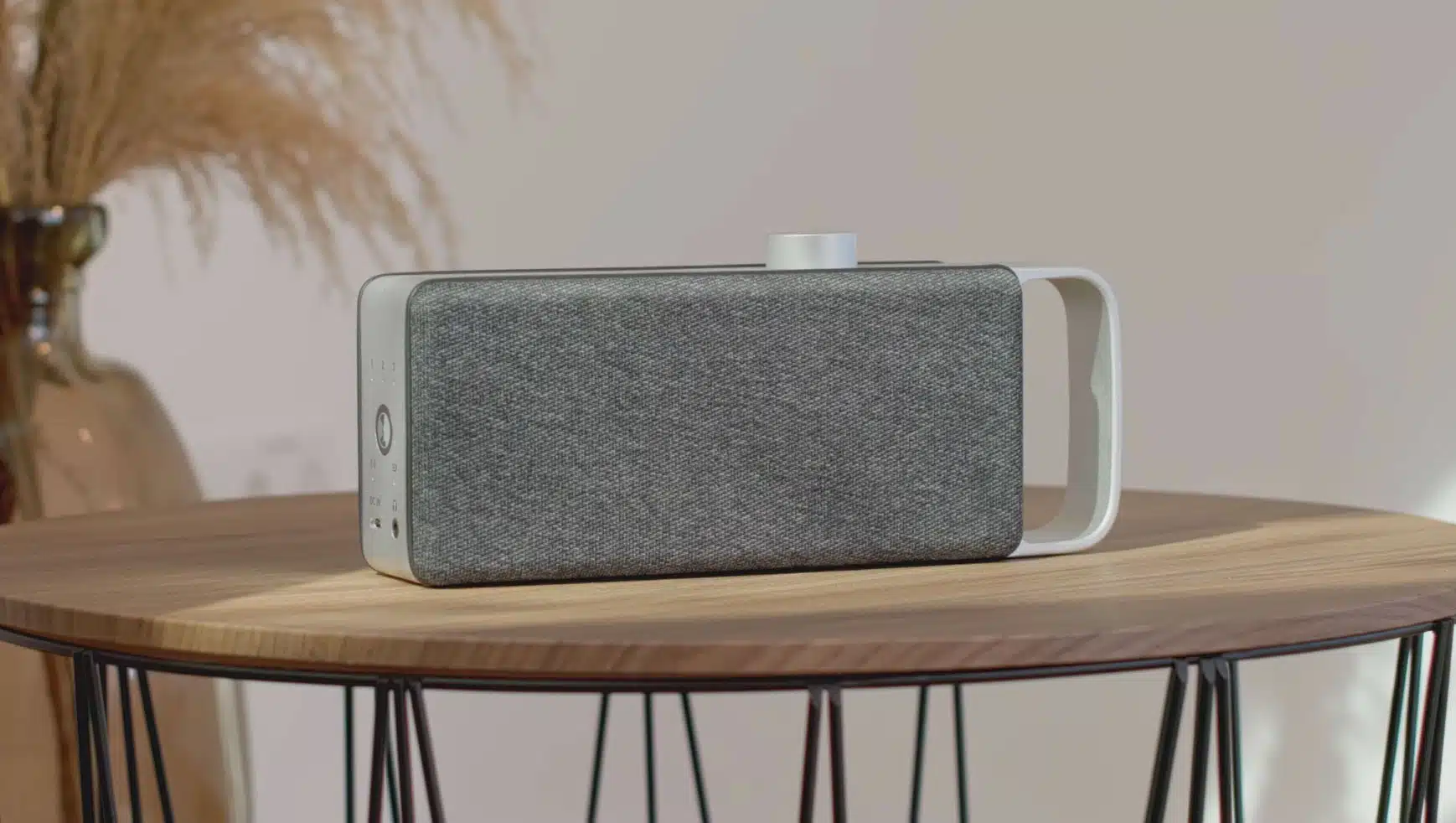
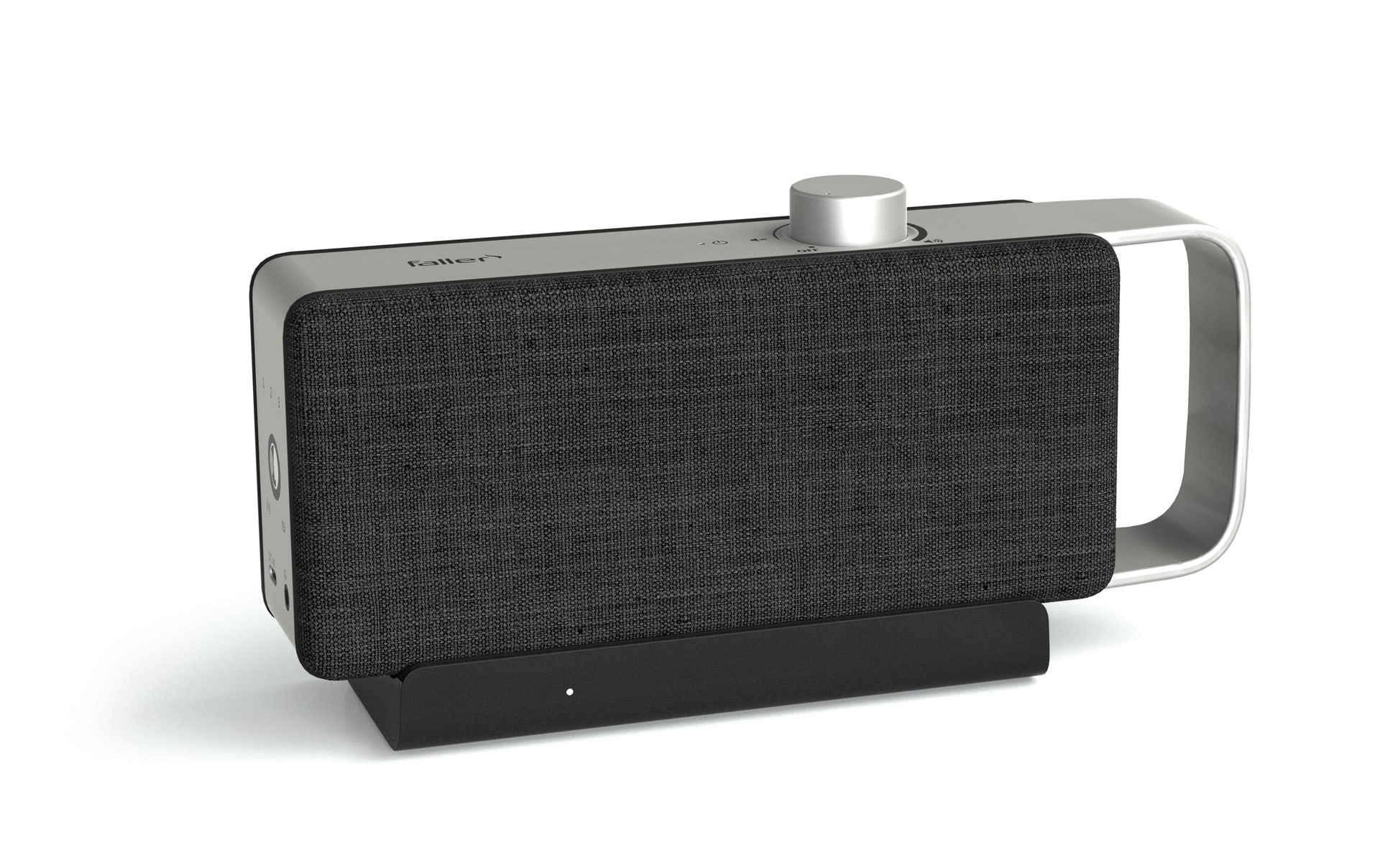
The OSKAR external TV speaker combines many of the above features in one device. It is the perfect choice for clear and precise voice reproduction. A base station enables wireless connection to a TV, allowing you to enjoy sound conveniently and without cable clutter. The compact and portable design makes it easy to transport OSKAR to different rooms – whether it's the living room, bedroom, or office. The practical carrying handle makes it easy to transport, and the long battery life of up to 16 hours ensures that the speaker can also be used on the go or during long TV evenings.
Thanks to its flexibility, OSKAR can be placed anywhere—on a table, next to a sofa, or on a shelf. Its elegant design and ease of use allow it to blend seamlessly into any home without taking up much space. OSKAR offers a user-friendly solution for clear hearing, ensuring improved speech intelligibility at all times without the need to constantly adjust the volume.
Advantages of external TV speakers
- Improved voice and sound quality: Clearer dialogue and more precise sound reproduction.
- Better bass reproduction: Stronger and deeper bass frequencies.
- Higher volume without distortion: Ideal for large rooms and/or users with hearing problems.
- Integration of modern audio technologies: Support for formats such as Dolby Atmos or DTS:X (depending on model).
- Wireless connectivity options: Easier installation thanks to Bluetooth, Wi-Fi, or base station.
- Flexible placement: No cable clutter, suitable for various room configurations.
Disadvantages of external TV speakers
- Space requirements: Require more space than integrated TV speakers.
- Correct placement required: Careful positioning is necessary for optimal sound.
- Power supply or cable connections: May be perceived as disruptive depending on the model and room design.
- Acquisition costs: Purchase of an additional device required.
- Installation effort: External device must be set up and connected.
Overall, however, there are very few disadvantages, except that an external device must be purchased and connected. However, this additional step also means that you gain greater flexibility and control over sound quality, which more than compensates for the few disadvantages.
Why external TV speakers are the better choice
External TV speakers offer a clear improvement to the television experience compared to a TV's built-in speakers. They deliver much better sound quality, which is particularly noticeable in larger rooms or for demanding applications such as movies and music. With technologies such as surround sound or Dolby Atmos, external speakers create an immersive, cinema-like experience that makes the sound more three-dimensional and vivid.
External speakers offer a decisive advantage for people with hearing problems: they enable better speech intelligibility and individually adjustable sound control, which is particularly helpful for hearing dialogue clearly and distinctly. They also improve bass reproduction and offer higher level stability, so that the sound is not distorted even at higher volumes.
In summary, external TV speakers are the better choice for anyone looking not only for improved sound quality, but also for a customizable and more flexible solution for their TV viewing experience. They offer significant support for people with hearing problems and make listening to dialogue and music much more enjoyable and understandable.
Further articles

Healthy candy alternatives for seniors
For many people, craving sweets is part of everyday life. However, traditional sweets often contain large amounts of sugar and provide

Cooking together in old age
As we get older, our everyday lives change in many ways. The children have left home, our partner may be

Protein-rich nutrition in old age
As we age, our bodies change in many ways, and nutrition plays a crucial role in our health.