HÖRST
Buying advice for TV speakers or soundbars
November 4, 2025
13 minutes reading time

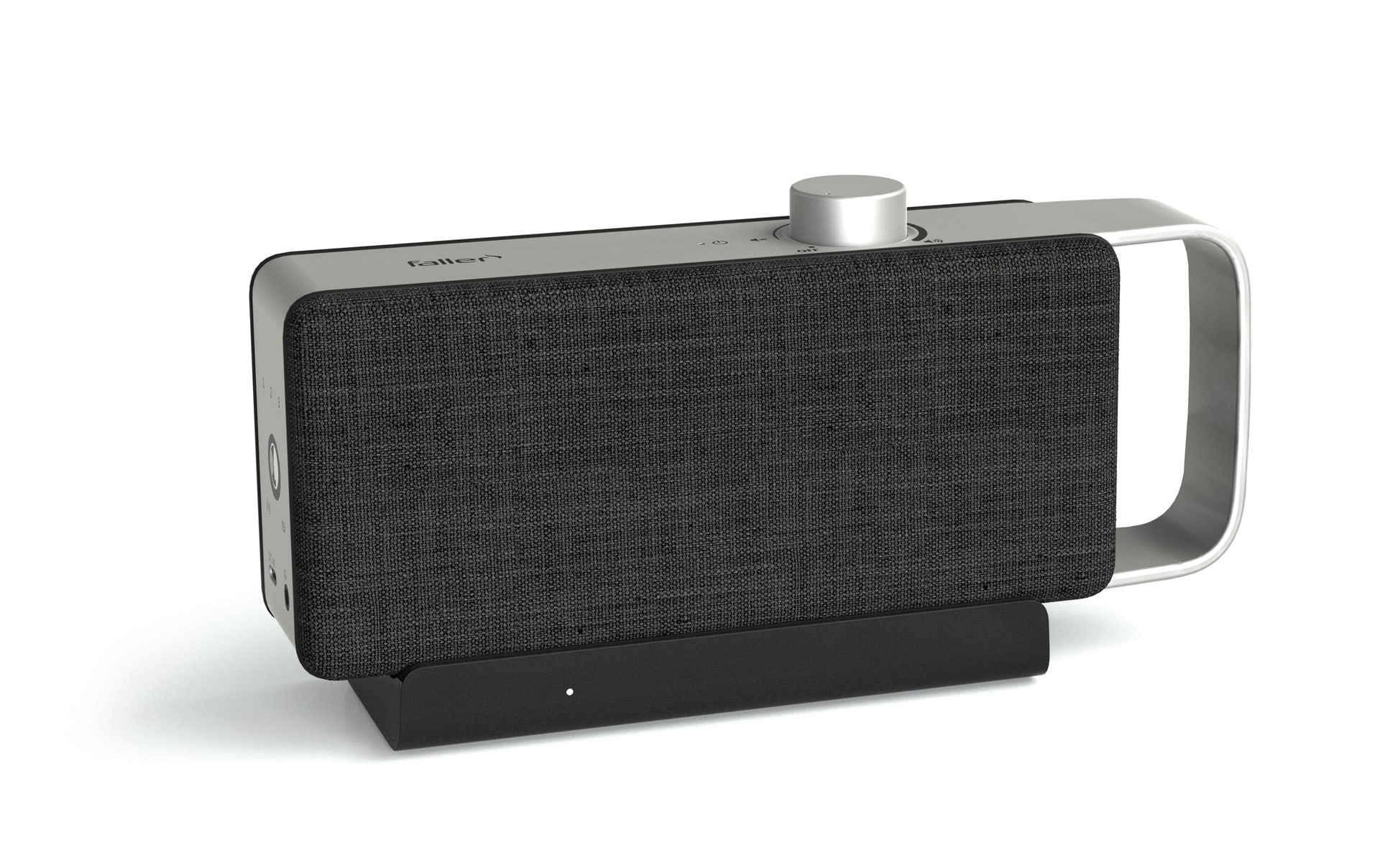
OSKAR
Portable TV voice amplifier
Advertisement
Table of contents
Choosing between TV speakers and soundbars is one of the most important decisions when it comes to enhancing your TV viewing experience. While modern TVs offer impressive picture quality, the sound often falls short. Built-in TV speakers are usually functional, but rarely offer the sound quality required for adequate TV sound. Soundbars are a very good and inexpensive option—they offer significantly improved audio quality and are a flexible solution for taking TV sound to the next level.
But which solution is best? This article helps you understand the differences between TV speakers and soundbars and shows you what criteria you should consider when making your choice. Whether it's sound quality, space requirements, flexibility of use, or budget—the right choice depends on your individual needs and circumstances. We discuss the advantages and disadvantages of both options and provide valuable tips for finding the right solution for every home.
The most important information in brief
- TV speakers are an integrated, cost-effective solution that requires no additional investment—but often produce flat, inadequate sound with poor dialogue intelligibility.
- Soundbars offer significantly better sound quality with clear dialogue, powerful bass, and Dolby Atmos for an immersive surround sound experience.
- Purchase criteria: Sound quality, connections (HDMI ARC, Bluetooth, optical), space requirements, and compatibility with existing TV setup
- Usage scenario is key: TV speakers for simple applications, soundbars for movies, music, and better speech intelligibility
- Consider room size: external solutions are almost always better than integrated speakers – noticeable sound improvement even in small rooms
- Budget varies: TV speakers free but limited, soundbars from $150 with noticeable sound improvement, premium models available up to $1,000+.
Why use TV speakers or a soundbar at all?
The built-in speakers on modern TVs are often insufficient to provide an optimal sound experience. Their small size and placement on the TV significantly limit sound quality. This becomes particularly apparent with more complex audio content such as movies or series—dialog can be difficult to understand, and action scenes often lose their dynamism. For a truly impressive TV experience, external audio solutions are a sensible choice.
The decision between TV speakers and soundbars depends on your own needs. TV speakers can be a simple solution for clear dialogue in smaller rooms and offer a fundamental improvement over built-in speakers. Soundbars, on the other hand, offer a much more comprehensive improvement in audio quality. They deliver a balanced sound that provides a more dynamic experience with modern technologies such as Dolby Atmos and optional subwoofers. Both options are designed to optimize the TV experience—they offer different solutions depending on your requirements and room size.
Important purchase criteria for TV speakers or soundbars
sound quality
Sound quality is one of the most important purchasing criteria, as it directly influences the listening experience. TV speakers are generally not designed to deliver satisfactory sound quality. They are often too flat, lack deep bass, and make it difficult to hear dialogue clearly, especially in complex soundscapes. They are only suitable for basic requirements, providing sound to accompany the picture. In comparison, soundbars offer significantly better sound quality. They cover a much wider sound spectrum, with clear highs, precise mids, and powerful bass. Many models feature subwoofers or the option to add them, and technologies such as Dolby Atmos offer an impressive surround sound experience that extends the sound beyond the speakers and makes it audible from different directions.
connections
Connectivity is another important consideration when choosing between TV speakers and soundbars. TV speakers rely on the TV's internal connections, which limits flexibility. In contrast, soundbars offer a variety of connection options, including HDMI ARC for lossless audio transmission, Bluetooth for wireless streaming, and optical inputs for older devices. HDMI ARC not only enables excellent sound quality, but also easy control via the TV remote control. Bluetooth also offers the option of streaming music directly from a smartphone or tablet, ensuring versatile use.
Size and space requirements
Another decisive factor is space requirements. TV speakers do not take up any additional space as they are integrated directly into the television. This compact solution is ideal for users with limited space. However, due to their flat design, integrated speakers are often unable to deliver high sound quality. Soundbars require a little more space, but offer significantly more flexibility in terms of placement. They can be positioned either in front of or below the TV and provide better sound reproduction. For even more compact solutions, there are models that function as sound decks and can support the TV, which is particularly practical when space is limited.
compatibility
Compatibility is another important point to consider. TV speakers are only compatible with the respective TV and do not offer any expansion options. With soundbars, you should make sure that they are compatible with your TV. Modern TVs usually support HDMI ARC or Bluetooth, which makes it easy to connect to a soundbar. Older TVs that do not offer these connection options can be retrofitted with adapters or transmitters. This provides a solution for making older models compatible with modern audio systems.
TV speakers: strengths, weaknesses, and areas of application
TV speakers offer a simple and space-saving solution for users who do not want to integrate additional devices. They are built directly into the TV, making setup quick and easy. They are perfectly adequate for simple applications such as listening to the news or occasionally watching talk shows. The biggest advantage of TV speakers is their user-friendliness and low price, as no further investment in external speakers or systems is required.
However, the weaknesses of TV speakers are particularly evident in terms of sound quality. Due to the limited size and placement of the speakers, usually on the back or bottom of the TV, the sound is often flat and offers little dynamics. Deep bass and precise treble are almost completely absent, and the intelligibility of dialogue can suffer, especially with music or complex sound effects. These limitations make them unsuitable for an immersive TV experience, especially for movies, series, or music, where more detailed sound reproduction is required.
TV speakers are ideal for users who do not have high expectations in terms of sound quality and mainly watch TV in small rooms or for simple applications such as news or sports broadcasts. However, those who value clearer dialogue or an improved sound experience would be better advised to use external speakers or soundbars.
Soundbar: What sets it apart and what to look for
Soundbars are specially designed to enhance the TV viewing experience with significantly improved sound quality. They offer considerably better audio quality than built-in TV speakers, which often sound flat and inadequate. Many soundbars can be combined with subwoofers and surround speakers to deliver powerful, deep bass and a spatial sound experience. Technologies such as Dolby Atmos or DTS:X extend the sound beyond the room and create an immersive experience that puts the viewer right in the middle of the action.
One major advantage of soundbars is their ease of installation. They can be connected to your TV in just a few minutes, either via HDMI ARC, optical cables, or Bluetooth. For even greater flexibility, many models offer wireless subwoofers that can be placed anywhere in the room without the hassle of tangled cables.
One disadvantage of soundbars compared to TV speakers is the price. Models equipped with advanced sound technologies or subwoofers in particular can require a larger investment. However, these costs are justified, as soundbars offer a significant improvement in sound quality that greatly enhances the TV experience. They are particularly suitable for larger rooms, home theaters, or users who want a high-quality, immersive audio experience.
For users who want to significantly improve the sound quality when watching TV but don't have room for a complete surround sound system, a soundbar is an excellent choice. It offers high-quality audio performance at a reasonable price and can be easily integrated into most home theater setups.
Usage scenario: What is it intended for?
The choice between TV speakers and a soundbar should always be tailored to the specific usage scenario. For simple applications such as watching news, talk shows, or series, TV speakers are usually sufficient. They provide the necessary clarity for dialogue and are adequate if there are no high demands on sound quality. However, in many cases, TV speakers do not offer the necessary precision and depth, especially with more complex soundscapes or quiet dialogue that can be drowned out by background noise.
For a more intense and precise sound experience, especially when watching movies, listening to music, or playing video games, consider purchasing a soundbar. Soundbars offer a wide sound spectrum that TV speakers cannot cover due to their limited size and positioning. Soundbars really come into their own during action scenes or dynamic music effects, as they offer deeper bass and improved clarity. When combined with a subwoofer or surround speakers, a soundbar can provide a true home theater experience that far surpasses the sound quality of TV speakers.
In addition, soundbars are an excellent choice for users who want clearer and more intelligible TV sound. Especially at lower volumes or with difficult dialogue, as found in many modern films or series, soundbars can help to make speech more prominent. This is particularly beneficial for people who have difficulty understanding the sound, whether due to hearing problems or the general clarity of the built-in speakers.
In summary, it can be said that a soundbar not only provides an optimized cinema experience, but is also a useful addition for everyday TV viewing and for people who value clear and intelligible dialogue.
Room size: How much sound is needed?
Room size plays an important role when choosing between TV speakers and an external solution such as a soundbar. TV speakers that are integrated directly into the television are very limited in their performance. They only offer basic sound reproduction and, due to their limited size and positioning within the television, are often unable to produce deeper frequencies or a balanced sound image – which means they are really only suitable for use in very small rooms.
However, external solutions such as soundbars are always the better choice if you want to hear your TV sound more clearly. They offer significantly improved sound quality, even if the room is not particularly large. Soundbars have the advantage of being specifically designed to enhance sound, and they are able to deliver clearer, more balanced sound that makes dialogue easier to understand and optimizes overall audio quality.
A soundbar unleashes its full potential in larger rooms or open-plan living areas. It ensures better sound distribution throughout the room and offers higher volume and deeper frequencies that TV speakers lack. Models with subwoofers are particularly advantageous here, as they provide a fuller and more dynamic sound, which is crucial in larger rooms in order to deliver a balanced and powerful listening experience.
Needs: Individual requirements count
The choice between TV speakers and a soundbar should always depend on the individual needs and requirements of the user. For people who can hear well and do not place a high value on TV sound, TV speakers may be sufficient. They offer basic sound quality that is sufficient for low demands and good hearing. However, for those who value clear dialogue—such as in news programs, talk shows, movies, or series—or people who have difficulty hearing the sound clearly, external solutions such as soundbars offer a significant improvement.
Soundbars not only improve overall sound quality, but often offer special features such as dialogue enhancement modes that make voices clearer and more distinct. These features make them an ideal choice for anyone who wants to get more out of their TV experience without installing a complex surround sound system.
Music lovers who value high-quality music playback in addition to television can also benefit from a soundbar. With the option of combining them with subwoofers, they offer balanced sound that perfectly brings out both deep bass and clear treble.
Ultimately, when choosing TV speakers or soundbars, it comes down to how important high-quality or at least improved sound is for your TV viewing experience and which specific features you need, such as speech clarity, bass reproduction, or multi-device compatibility. Those looking for a simple setup will be satisfied with TV speakers, while soundbars are a valuable choice for those who value flexibility, sound enhancement, and an immersive experience.
Budget: What is feasible?
Budget plays a key role in deciding between TV speakers and soundbars. TV speakers are usually the most cost-effective option, as they are already integrated into the TV or only incur a small additional cost for basic functions. They offer a simple solution for users who do not have high sound requirements and are primarily looking for minimal cost and simplicity.
Soundbars, on the other hand, vary greatly in price. Entry-level models, which offer a significant improvement over built-in speakers, are available from around $150. These models offer basic features and improve sound for users looking for a noticeable increase in audio quality. For those looking for even more power and advanced features such as Dolby Atmos or subwoofers, prices rise significantly, with premium models costing up to $1,000 or more.
If you are looking for good value for money, you should also keep an eye out for special offers or bundle options that include subwoofers or additional speakers in the set. With the right selection and a suitable budget, you can find a soundbar that meets your individual requirements and is within your price range. A high-quality yet affordable solution is the OSKAR TV speaker from Faller Audio, which can be used as a soundbar and is priced at €269.
Ultimately, the decision between TV speakers and soundbars depends not only on the available budget, but also on how important sound quality is in relation to price. Those who value an optimized listening experience can make a solid choice with a soundbar, even on a limited budget, while TV speakers are a cost-effective, simple solution for users who do not have high demands on sound quality.
Further articles

Healthy candy alternatives for seniors
For many people, craving sweets is part of everyday life. However, traditional sweets often contain large amounts of sugar and provide

Cooking together in old age
As we get older, our everyday lives change in many ways. The children have left home, our partner may be

Protein-rich nutrition in old age
As we age, our bodies change in many ways, and nutrition plays a crucial role in our health.