HÖRST
standard speaker
September 12, 2025
15 minutes reading time

OSKAR
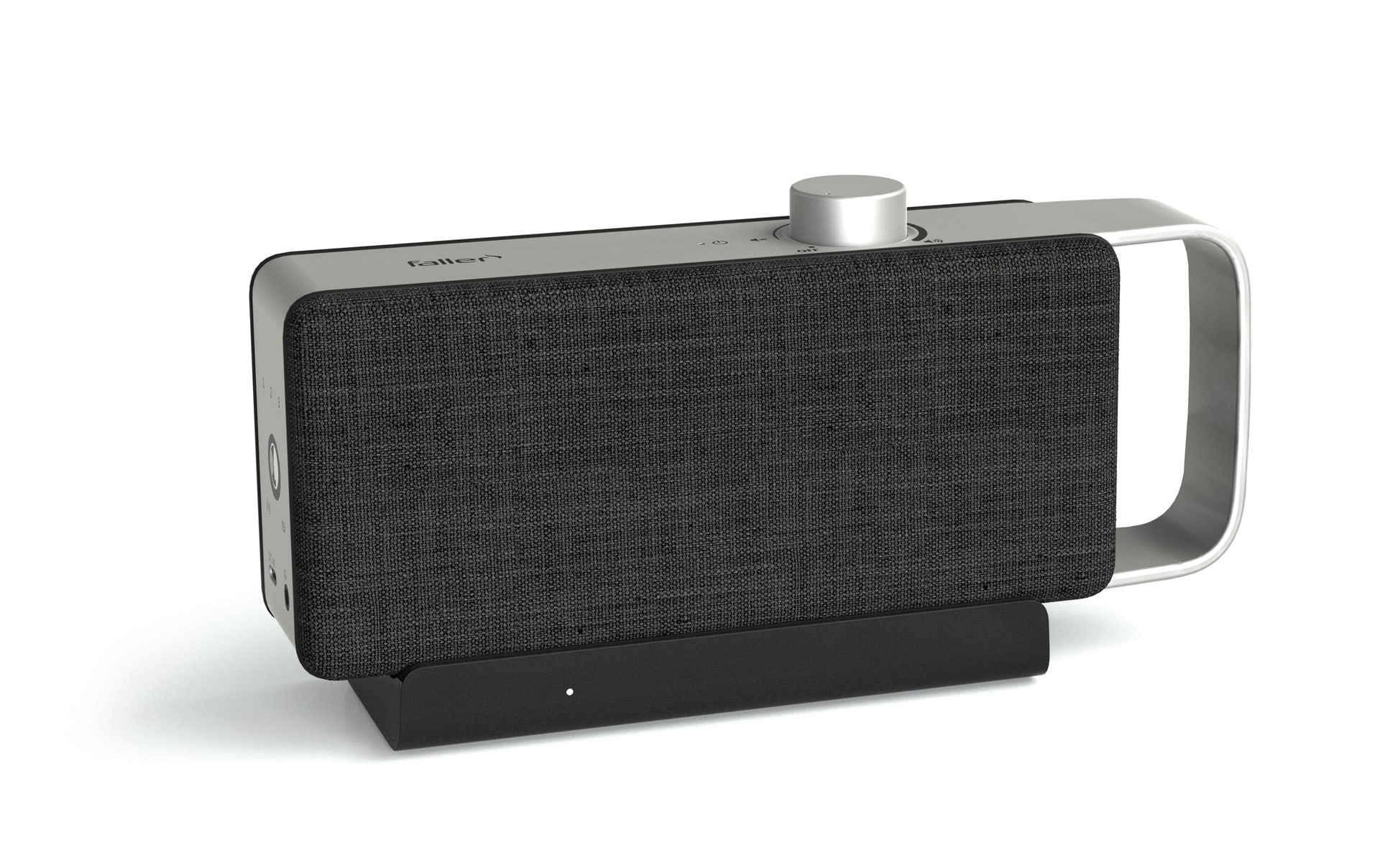
Portable TV voice amplifier
Advertisement
Table of contents
Standard speakers are a practical way to improve the sound of a TV without resorting to complex systems such as surround sound or subwoofers. They offer better sound quality than the built-in speakers of many TVs and deliver balanced reproduction of highs and bass. These speakers are a simple solution for users who want to optimize their TV sound without a lot of effort. In this article, we take a look at the key features of standard speakers, their advantages and disadvantages, and what to consider when buying them, including a comparison with the OSKAR TV speaker.
The most important information in brief
- Standard speakers are external TV speakers with balanced sound reproduction across a wide frequency range without complex surround systems.
- They offer better sound quality than built-in TV speakers, with clearer dialogue and enhanced stereo effects.
- Easy integration via HDMI, optical inputs, Bluetooth, AUX, or RCA connectors allows for straightforward installation.
- Versatile for home theater, music, and TV sound, but limited bass response without an additional subwoofer
- Larger, stationary designs require a fixed location and do not offer true surround sound like specialized systems.
- Specialized alternatives such as OSKAR offer additional targeted dialogue optimization and mobile flexibility with simple operation.
What are standard speakers?
Standard speakers are external TV speakers that are used to improve the sound quality of televisions. They offer clearer and richer sound reproduction compared to the built-in speakers, which often have limited space for good sound quality in modern flat-screen TVs. Standard speakers cover a wide frequency range, including bass and treble, ensuring a balanced sound. They are a simple solution for users who want to improve the sound of their TV without resorting to specialized speaker models such as surround sound systems or subwoofers. Standard speakers improve TV sound and are easy to connect, making them a practical choice for everyday TV viewing.
Sound quality of standard speakers
The sound quality of standard speakers generally surpasses that of a TV's built-in speakers. They offer balanced and clear sound reproduction that efficiently fills the room with sound. The improved depth and bass reproduction is particularly noticeable when playing movies, series, or music, making standard speakers the preferred choice for better sound quality.
- Sound reproduction
Compared to the built-in speakers of a TV, standard speakers deliver clearer and more balanced sound. They cover a wider frequency range, which brings out high and low tones better. This difference is particularly noticeable in movies or series with lots of sound effects, as well as in music. Standard speakers fill the room with sound without the distortion that is often associated with built-in speakers. - Dialog: Standard speakers can help improve the intelligibility of dialog in certain cases. Some models are equipped with special technologies that emphasize the mid-range frequencies that are crucial for voice reproduction. This adjustment ensures that dialog remains clear and easy to understand even in scenes with a lot of background music or intense sound effects. This feature can make a significant difference and greatly improve the listening experience, especially in films, series, or programs with complex and multi-layered soundscapes, where speech reproduction is often difficult to understand.
- Stereo effects and surround sound: Although standard speakers do not deliver true surround sound, they are capable of producing good stereo effects. They create the impression that the sound is coming from multiple directions, resulting in a wider sound stage. For users in smaller rooms, this offers a good way to experience sound in a more pleasant and balanced way.
- Dynamics and performance
Another advantage of standard speakers is their ability to deliver greater dynamics and performance. Especially during loud movie scenes or music with significant volume differences, the sound remains clear and undistorted even at higher volumes. Standard speakers deliver enough power to reproduce these sounds without distortion. Many models can also be combined with a subwoofer to produce deeper bass and greater dynamics. - Rich sound
Unlike the small, built-in speakers on a TV, standard speakers offer a fuller sound. Special speaker technologies and often the use of a subwoofer improve the sound, resulting in deeper bass and better surround sound. This ensures that the sound is reproduced fully and powerfully even in larger rooms without any loss of quality.
Functions and models of standard speakers
Standard speakers are available in various sizes and models. Some offer hi-fi quality for music lovers, while others are designed for general use in home theater systems. Models equipped with tweeters, midrange speakers, and subwoofers offer more comprehensive sound quality. Choosing an amplifier and the right sound system can also affect the performance and sound quality of standard speakers. They are also used to significantly improve TV sound and create a cinema experience without having to resort to a surround sound system.
Some models offer additional features such as Bluetooth connectivity for wireless sound streaming or impedance-matched speakers that optimally support the amplifier. The workmanship and design of standard speakers are also important factors that vary depending on the brand and model.
What should you look for when buying a standard speaker?
When purchasing standard speakers, you should pay particular attention to sound and audio quality. It is important that the TV speakers offer balanced sound reproduction, including both deep bass and clear treble, to ensure an authentic and enjoyable listening experience. Another important aspect is the compatibility of the speakers with the TV. Many standard speakers can be easily connected via HDMI, optical inputs, or aux ports, so you should pay attention to the connection options offered by the TV and whether the speakers support them. In addition, it may be useful to choose models that are compatible with a subwoofer to improve bass reproduction. If you want to use the speaker flexibly, it is advantageous to choose a model with Bluetooth or wireless connectivity so that you can also transmit the TV sound wirelessly. Furthermore, workmanship plays a role, as well-made speakers are generally more durable and provide more stable sound. When choosing the right model, you should also consider the room in which the speakers will be used, as the size and power of the speaker are directly related to the size of the room and the desired sound quality.
Connections for standard speakers
The connections on standard speakers can vary, but they usually offer a variety of options to enable easy connection to different devices. Common connections include:
HDMI: The HDMI (High Definition Multimedia Interface) connection is a digital interface that enables high-quality audio and video transmission between your TV and external TV speakers. The HDMI ARC (Audio Return Channel) is particularly practical, as it allows the TV sound to be sent to the speakers via the same cable, reducing the number of cables and enabling easy integration. This connection not only offers excellent picture and sound quality, but is also a user-friendly solution, as it can transmit both audio and video signals simultaneously without compromising sound reproduction.
Optical input (Toslink): The optical input is a digital transmission method often used in external TV speakers to ensure lossless audio quality. Instead of using electrical signals, the optical connection transmits audio data via light pulses, eliminating interference and noise. This method ensures stable and clear audio transmission, making it particularly ideal when the TV and speakers are far apart or when undisturbed, high-quality sound reproduction is required.
Auxiliary connection (3.5 mm): The 3.5 mm auxiliary connection is an analog connection that is available on many external TV speakers and offers a simple way to connect various devices such as smartphones, tablets, or laptops. Despite its practicality, this connection has the disadvantage that sound quality can vary depending on the cable and device, as it does not offer the digital precision of modern connections such as HDMI or optical inputs. Nevertheless, the aux connection is a simple and easily accessible solution for users who do not require complex setup.
Bluetooth: Bluetooth allows TV speakers to be connected wirelessly to smart TVs, smartphones, or other Bluetooth-enabled devices, making them very flexible and convenient to use. This wireless technology is particularly beneficial for users who want a simple, cable-free solution for enjoying their TV sound without additional connections. However, the sound quality of Bluetooth connections can vary depending on the standard and distance between devices, with newer Bluetooth versions such as 5.0 offering improved transmission quality and more stable performance.
RCA connector: The RCA connector, also known as RCA, is an older analog connection often found in traditional TV speakers or hi-fi systems. This connection uses two separate cables for stereo audio transmission, allowing for easy connection to older devices. Although the RCA connector is still in use, modern digital connections such as HDMI or Toslink offer far better sound quality and more stable transfer rates, which is why the RCA connector is increasingly being replaced by these more advanced options. However, it remains a useful choice for integrating older devices into your speaker system.
These connection options ensure versatile use and make it easy to connect standard speakers to various devices.
Advantages and disadvantages of standard speakers
Advantages:
- Versatility: Standard speakers are suitable for various applications such as home theater, music, and TV sound. They offer a good solution for improving the sound of a TV without the complexity of a surround sound system.
- Easy integration: These speakers can be easily connected to your TV or other audio devices, usually via standard connections such as HDMI, optical inputs, or aux ports. This makes them a practical and user-friendly solution.
- Improved sound quality: Standard speakers deliver better sound quality compared to the built-in speakers of a TV. They offer balanced reproduction of bass, midrange, and treble frequencies, enhancing the overall listening experience.
Disadvantages:
- Limited bass response: The bass produced by standard speakers is often not as deep and powerful as that produced by specialized speakers such as subwoofers. For users who particularly value powerful bass, this can be a limitation.
- No true surround sound: Standard speakers do not provide a true surround sound experience. They can fill the room with sound, but they lack the immersive effect that surround systems offer.
- Build quality and sound quality vary: Depending on the model, the quality and build of standard speakers can vary significantly. Some models may not offer the same precision and clarity as higher-end TV speakers.
- Size: Standard speakers often take up a lot of space and are therefore more suitable for large rooms.
Comparison: OSKAR TV speakers vs. standard speakers
Compared to standard speakers, the OSKAR TV speaker offers a specialized solution that addresses speech intelligibility and TV sound in addition to the conveniences of standard speakers. Dialogues become clearer and more precise, and it is much easier to understand the TV sound. While standard speakers offer general sound improvement, OSKAR focuses on the clear reproduction of dialogues and the reduction of background noise.
Sound and speech intelligibility
A key difference between OSKAR and standard speakers lies in speech optimization. Standard speakers improve overall sound quality by reproducing bass, midrange, and treble in a balanced manner. They offer good sound quality, but without specific technology to improve speech intelligibility. In scenes with a lot of music or loud sound effects, it can be difficult to understand dialogue clearly.
OSKAR, on the other hand, uses specialized dialogue optimization that ensures that dialogue always remains clear and understandable, even when the TV sound is overlaid by other elements such as music or sound effects. With three voice filter settings, OSKAR allows users to adjust the intelligibility to their individual needs, which is not the case with standard speakers.
Dynamics and performance
Both types of speakers offer good performance and dynamics, but in different ways. Standard speakers are designed to reproduce sound across a wide frequency range, covering both bass and treble well. However, their performance usually remains constant, and at higher volumes, the sound can become slightly distorted, especially with complex sound mixes in movies or music.
OSKAR offers the advantage of dynamic sound adjustment, which means that speech intelligibility is always maintained even when the volume changes during a movie. Speech optimization ensures that dialogue remains clear even during intense scenes without having to manually adjust the volume.
Design and flexibility
A major difference between OSKAR and standard speakers is their size and flexibility. Standard speakers are usually larger, stationary devices that often require more space in the room. They must be positioned close to the TV or on a shelf to achieve the best sound. Depending on the model and brand, the sizes of the speakers vary, and they often take up more space, especially when combined with additional components such as subwoofers or surround speakers.
OSKAR, on the other hand, is more compact and offers a high degree of flexibility. Thanks to its portable design and wireless functionality, the TV speaker can be taken to different rooms. With a practical carrying handle and a long operating time of up to 16 hours, OSKAR is easy to transport and ideal for use in different environments. While standard speakers require a fixed location, OSKAR allows for easy and mobile use.
Technological advantages
Standard speakers offer wide sound reproduction, but they are not specifically designed to improve speech intelligibility. They typically use simple speaker technology that allows for the reproduction of different frequencies, but does not offer any special features for improving dialogue.
OSKAR, on the other hand, uses advanced dialogue optimization technology that specifically ensures that dialogue remains clear and understandable, even when background noise or music drowns out the sound. This technology continuously adjusts the sound to maximize speech intelligibility.
Easy operation and use
Standard speakers offer many features that usually need to be controlled via remote controls or menus. With more complex models, users often have to adjust several settings to optimize the sound.
OSKAR, on the other hand, is characterized by its ease of use. With just two buttons, you can turn the TV speaker on or off, adjust the volume, and control the dialogue optimization. This user-friendliness makes OSKAR a particularly attractive and enjoyable choice.
value for money
Standard speakers are available in various price ranges and offer a general improvement in sound quality. However, models equipped with subwoofers or Dolby technologies may command higher prices without being specifically designed for speech intelligibility.
OSKAR offers a targeted solution for improving speech intelligibility at a relatively low price, ensuring that users can hear more clearly and enjoy longer evenings watching television without suffering from fatigue.
Summary
Compared to standard speakers, OSKAR offers an additional specialized solution for speech intelligibility, while standard speakers primarily provide general sound enhancement. OSKAR is particularly beneficial for people who have difficulty understanding dialogue, as it offers continuous speech optimization. While standard speakers deliver versatile and balanced sound reproduction, OSKAR complements this with more precise and intelligible speech reproduction without the need to constantly adjust the volume. OSKAR also offers high flexibility, a compact design, and ease of use, making it a particularly user-friendly choice.
At a glance
| feature | OSKAR TV speaker | Conventional standard speakers |
|---|---|---|
| sound quality | Optimized speech reproduction with clear dialog and dynamic tone adjustment | Improve the overall sound, especially the loud tones |
| dialogue intelligibility | Intelligent dialogue optimization, three filter settings for individual speech clarity | No speech optimization; dialogues may be drowned out by sound effects or music. |
| Dynamics and performance | Continuous dynamic volume adjustment, clear performance without distortion | Offer good sound quality, but no automatic adjustment for changing volumes. |
| Flexibility and mobility | Wireless connection, portable, up to 16 hours of battery life, can be taken to other rooms | Larger and stationary, requires a fixed location and connection to the TV. |
| Technological advantages | Specially developed technology for improved speech intelligibility, passive drivers for better bass | No special technology to improve speech intelligibility. |
| Operation and use | Simple operation with only two buttons, intuitive, also suitable for older people | Offer many functions that often need to be controlled via remote control or complex menus. |
| value for money | Good value for money for targeted improvement of TV sound and speech reproduction | Available in various price ranges, without a focus on speech optimization |
Further articles

Healthy candy alternatives for seniors
For many people, craving sweets is part of everyday life. However, traditional sweets often contain large amounts of sugar and provide

Cooking together in old age
As we get older, our everyday lives change in many ways. The children have left home, our partner may be

Protein-rich nutrition in old age
As we age, our bodies change in many ways, and nutrition plays a crucial role in our health.