HÖRST
Why am I having problems with the TV sound?
September 12, 2025
7 minutes reading time
OSKAR
Portable TV voice amplifier
Advertisement
Table of contents
For many people, TV sound is an often overlooked aspect of the viewing experience. While the focus is often on picture quality, the importance of clear and powerful sound is just as often underestimated. But even the best TVs can quickly disappoint with poor sound quality. The reasons for poor sound reproduction are manifold, ranging from the design of the TVs themselves to the sound technologies used in modern devices. In this article, we look at why sound quality in TVs often leaves something to be desired, what developments in TV technology have contributed to this, and how the sound problem can be solved with external TV speakers and other solutions.
The most important information in brief
- Modern televisions prioritize picture quality, while sound quality is severely limited by flat designs.
- Built-in TV speakers are too small to deliver powerful bass and low frequencies, resulting in thin, flat sound.
- Digital compression and bandwidth limitations reduce audio quality in streaming and TV broadcasts.
- Unfavorable speaker placement (downward/backward) further degrades sound direction and precision.
- Advanced sound technologies such as Dolby Atmos cannot be used optimally without the appropriate hardware.
- External TV speakers are an important improvement in speech intelligibility, especially for seniors and people with hearing problems.
Why the sound quality on TVs is often unsatisfactory
Modern televisions offer impressive picture quality, but the sound quality often falls short of expectations. This is mainly due to the design of the devices. TV speakers are usually small and adapted to the flat TV body. There is limited space for powerful TV speakers that can also produce low frequencies and bass. The result is a rather flat, thin sound that often loses out in dialogues or music and is particularly inadequate in films with intense sound effects and deep tones.
In addition, digital transmissions, which are standard on many modern televisions, also play a role. Compressed audio signals and bandwidth limitations lead to a significant reduction in sound quality, which is particularly noticeable when playing back dialogue.
The evolution of televisions – Where sound quality suffers
The development of television technology has led to increasingly thinner devices. This is a major advantage from an aesthetic point of view, but the sound performance suffers greatly from the reduction in device status. Especially with Ultra HD and 4K televisions, which deliver ever more image detail, acoustic quality is often lost. The built-in TV speakers are simply not capable of producing low frequencies that would cover the full sound range.
Earlier televisions, which were thicker, had more space for larger speakers that were capable of delivering a fuller, clearer sound. With the focus on slimmer models, manufacturers had to make compromises when it came to sound.
Sound technologies – How they can improve or worsen sound quality
Sound technologies such as Dolby Atmos and DTS:X have revolutionized the sound quality of home theater systems by enabling surround sound and three-dimensional sound reproduction. However, these technologies are not always perfectly matched to a TV's built-in speakers. Users often have to connect additional devices such as soundbars or external TV speakers to exploit the full potential of these technologies.
The challenge lies in the fact that not all televisions optimally support these technologies. Without correct calibration or compatible TV speakers, the use of surround sound technologies can even lead to a poorer experience. Incorrect mixing of music and sound effects can lead to unclear dialogue in particular.
How TV speakers work – Why they are often insufficient
The speakers built into modern televisions typically function using small drivers and limited space. These speakers are primarily designed to produce high and mid-range frequencies, while lower frequencies such as bass are often absent or greatly reduced. To reproduce bass, larger TV speakers would be required, which simply do not fit into the flat devices.
Another problem is the placement of the TV speakers. Many TV sets have speakers that face downwards or backwards, resulting in less precise sound because the sound is not directed directly towards the viewer. This leads to less clear and diffuse sound.
For whom are external TV speakers the right solution?
External TV speakers, soundbars, or surround sound systems are an excellent choice for those who want to improve the sound of their TV. Such TV speakers offer a significant improvement, especially for people who regularly watch movies or series where clear dialogue and richer sound are important. External speaker systems are also an ideal solution for home theater fans who want to add more depth to sound effects and music.
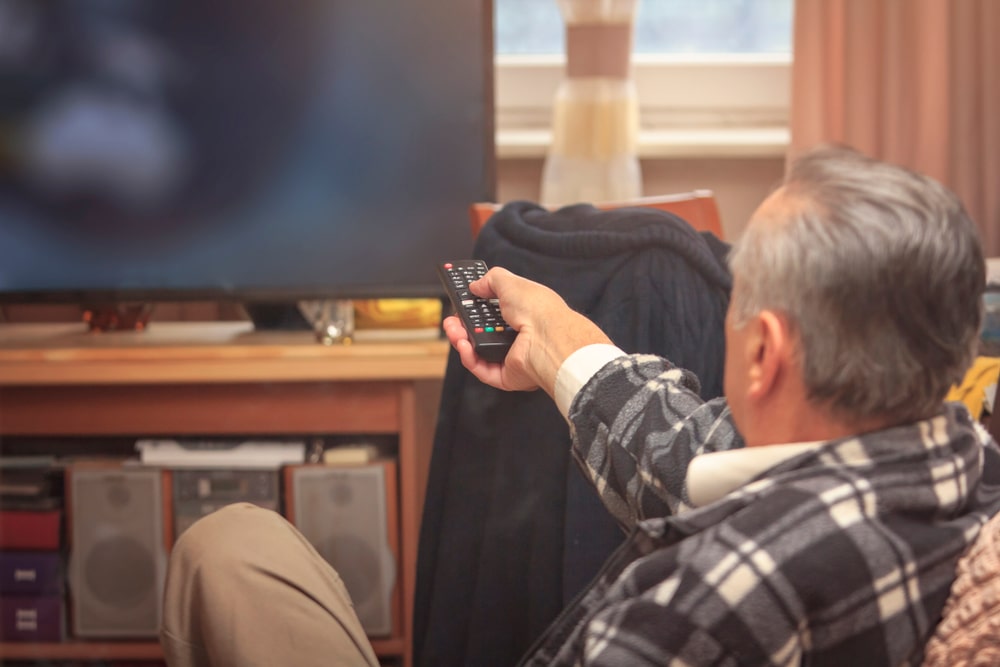
One particularly important advantage of TV speakers is their suitability for seniors. With age, the ability to hear high frequencies and certain nuances in sound decreases significantly. This is a natural process called presbycusis, and it affects many older people. As a result, sounds and tones that were clear and distinct in younger years become difficult to understand. Especially with televisions, whose built-in speakers are already weak in bass reproduction and higher frequencies, older people often find it difficult to understand dialogue in movies or series. Music and sound effects often dominate the sound, causing speech to disappear in the chaos of sound.
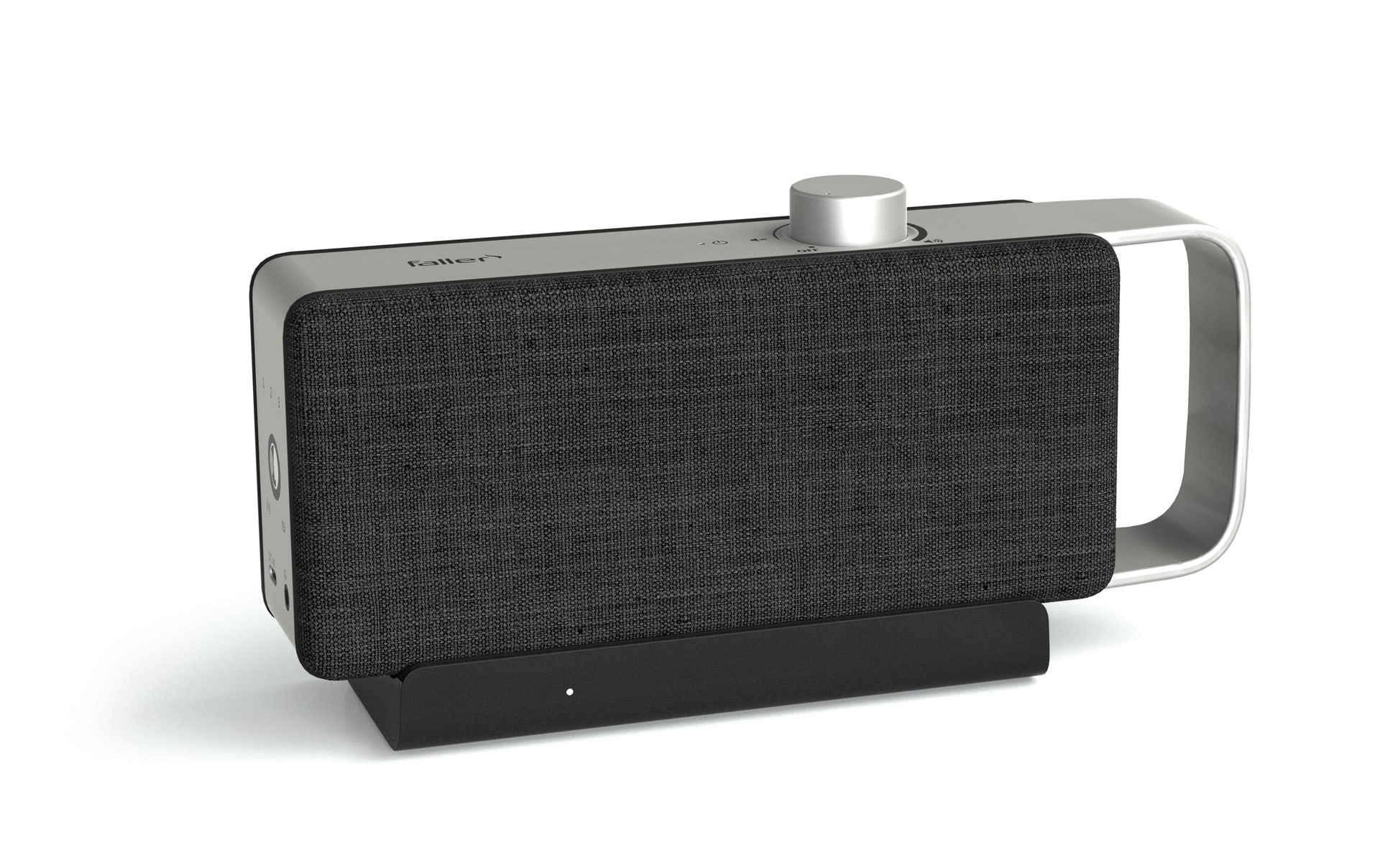
TV speakers or soundbars such as the OSKAR, which are specifically designed to improve speech intelligibility, can be a huge help here. Some models offer features such as a "dialogue mode," which emphasizes the high and mid frequencies while reducing the lower frequencies. This ensures that dialogue remains clear and understandable. Many of these TV speakers also offer the option of customizing the sound so that seniors can adjust the audio to suit their needs.
In addition, external speakers can offer the advantage of reproducing sound from an optimal direction. On most televisions, the speakers are either directed downward or backward, which further reduces sound clarity. External TV speakers ensure that the sound is directed directly at the viewer, which is a huge advantage for anyone who has difficulty understanding details when the sound direction is inaccurate.
Compact TV speakers are an excellent choice for seniors who live in an apartment or small room where the distance to the TV is short. Not only do they save space, they also offer clear and powerful sound reproduction that meets the needs of older people.
External TV speakers are an essential upgrade for any TV enthusiast who wants to take their viewing experience to the next level. Not only do they offer a significant improvement in sound quality, but they also ensure that dialogue is reproduced clearly and intelligibly. They are an excellent solution for people with mild to severe hearing problems in particular, significantly improving speech intelligibility and the overall listening experience.
Further articles

Healthy candy alternatives for seniors
For many people, craving sweets is part of everyday life. However, traditional sweets often contain large amounts of sugar and provide

Cooking together in old age
As we get older, our everyday lives change in many ways. The children have left home, our partner may be

Protein-rich nutrition in old age
As we age, our bodies change in many ways, and nutrition plays a crucial role in our health.