HÖRST
audio therapy
August 7, 2025
7 minutes reading time
OSKAR
Portable TV voice amplifier
Advertisement
Table of contents
People who suffer from sudden hearing loss or hearing impairment face many challenges. They must learn to live with these limitations, restructure their daily lives, adapt their communication, and usually also learn to use a new hearing aid.
Special audio therapies are available to support those affected in these situations. Below, you can find out more about the treatment options, the therapy process, cost coverage, and much more.
What is audio therapy?
Audiotherapy, also known as hearing therapy, is a form of therapy that deals with coping with hearing impairment and restoring hearing ability in people with hearing damage.
It can be used preventively, alongside medical treatments, or as a supplement to technical aids such as hearing aids or cochlear implants.
The aim of audiotherapy is to help those affected by providing information, advice, and practical support to make it easier for them to cope with their new life situation, such as hearing loss or new hearing aids, while at the same time improving their hearing, listening, understanding, and communication as much as possible.
This requires the active involvement of the individuals affected, who can gradually improve their hearing ability through various exercises and auditory training. These include, for example, exercises
perceiving speech patterns, strategies for communicating in noisy environments, using technical hearing aids, coping strategies for tinnitus, and many other areas.
Psychosocial support for affected individuals can also be part of audio therapy.

Who offers audio therapy?
Audiotherapy specialists, known as audiotherapists, can be found in various fields such as medicine and hearing aid acoustics, self-help, psychology, and audiology.
Audiotherapy is offered, for example, by ENT doctors or in rehabilitation clinics, by hearing aid acousticians, audiologists, speech therapists, or freelance audiotherapists. The term "audiotherapy" is not a protected term and is not a direct job title. The qualification is obtained through further training courses offered, for example, by the German Association for the Hard of Hearing (Deutscher Schwerhörigenbund e.V.) or the European Union for Hearing Acoustics (Europäische Union für Hörakustik e.V.) for experienced hearing aid acousticians.
Audiotherapy can be provided in individual sessions or in groups.
How does audio therapy work?
Audiotherapy encompasses a range of different treatment methods and techniques that are used depending on the target group and individual situation. In addition to diagnosis and assessment, counseling, education, and psychosocial support, these include hearing and communication training, noise management, tinnitus management and coping therapy (TRT), and the use of technical hearing aids.
Diagnostics and assessment
The diagnosis and assessment of hearing problems is usually carried out by an ENT doctor. They can correctly classify the symptoms and determine the appropriate treatment. Audiotherapists can provide support by carrying out various tests to determine hearing ability or assess speech intelligibility.
Counseling, education, and psychosocial support
It is particularly important that those affected are informed about hearing loss and the possible effects of hearing loss, hearing impairment, etc. Comprehensive counseling highlights useful treatment options and can help them make informed decisions and receive the best possible support. It should also help them develop acceptance and a realistic self-image, and use this as a basis for developing individual behavioral strategies.
Together with the audio therapist, perspectives for private life and work are also identified and coping strategies for dealing with the situation are developed.
Family members of people with hearing loss can also receive information on these topics during an audiotherapy consultation and learn important tips on how to interact with those affected.
Hearing and communication training
Hearing training and communication training comprise a variety of different exercises that help people with hearing loss improve their hearing on the one hand and facilitate everyday interaction on the other.
For example, patients are trained in the areas of auditory training and noise management. This includes exercises for differentiating and perceiving sounds and noises, such as directional hearing or distinguishing between noises, as well as speech comprehension in noisy environments, and exercises for desensitization in cases of hyperacusis (noise sensitivity).
These listening and speaking exercises are designed to help improve your ability to understand spoken language in everyday situations.
In addition, hearing and communication training can include alternative communication methods such as lip reading, sign language, or the use of written communication aids.
Using technical hearing aids
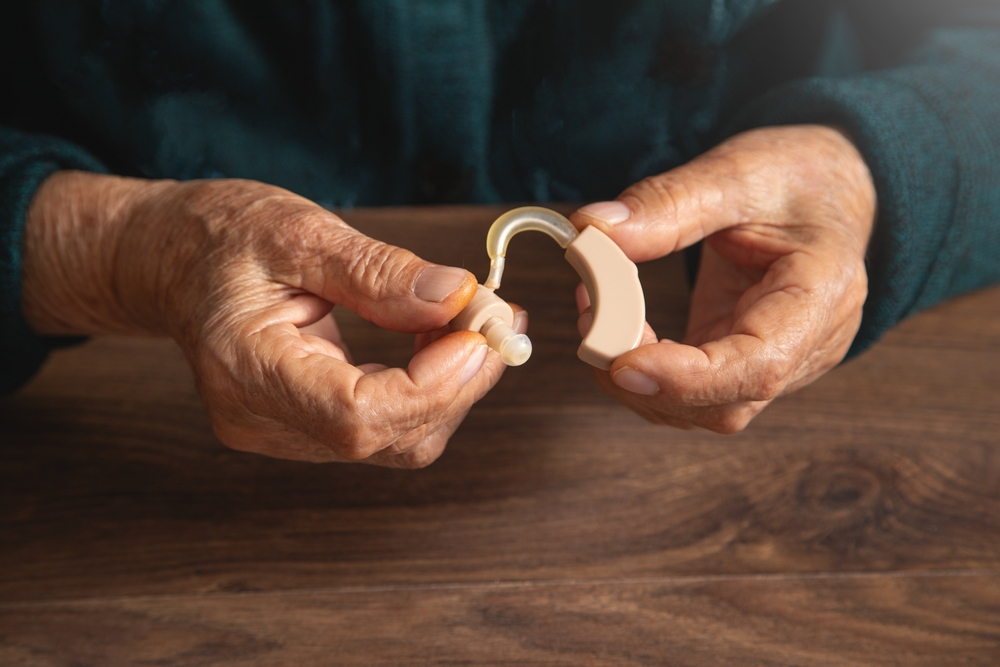
Another important part of audiotherapy is training in the use of technical hearing aids. People who need a hearing aid or, for example, a cochlear implant due to hearing impairment or hearing loss learn more about the possibilities and differences between hearing systems and how to use them as part of audiotherapy. They also learn about and how to use other aids and apps.
Tinnitus management
Tinnitus management is also one of the typical tasks of audiotherapy. In addition to various relaxation techniques for reducing stress and tinnitus perception, this includes what is known as tinnitus retraining therapy (TRT). This is a combination of audiological counseling and therapeutic training with the aim of minimizing the noises in the ear that occur with tinnitus.
Who can benefit from audio therapy?
In principle, audio therapies are beneficial for all people with hearing loss.
However, the scope and respective treatment strategies must be defined individually for each patient or target group in order to take into account the specific needs and life situations of those affected—from older to younger people, from mild hearing problems to severe hearing loss, from chronic to sudden hearing loss, from tinnitus patients to hearing aid users.
If you are unsure whether and how you can benefit from audio therapy, it is best to consult your ENT doctor.
Audiotherapy procedure
The audiotherapy process is individualized, i.e., based on the patient's underlying hearing impairment, the respective hearing system, etc.
However, an initial consultation with the audio therapist always takes place first. After taking a detailed medical history, a diagnosis is made. Based on this, treatment options and the content of the therapy are defined and discussed, and an individual treatment plan is drawn up, setting out the joint short- and long-term therapy goals.
This therapy plan forms the basis for the subsequent therapy sessions, the hearing and communication training, which can be carried out individually or as group therapy.
During audiotherapy, progress is regularly documented and evaluated, and exercises are adjusted accordingly. Ongoing support and regular follow-up appointments are designed to ensure the success of the therapy, optimize hearing in the long term, and continue the therapy if necessary.
Costs for audio therapy
Like the therapy itself, the costs of audio therapy vary from person to person. As a rule, the price for an hour of audio therapy is around 40 euros. However, prices depend on factors such as the audio therapist, the duration of the therapy, the type of therapy (e.g., individual or group sessions), and the specific content.
The costs of audio therapy are usually not covered by statutory health insurance, or only in individual cases. One reason for this is that audio therapy is not always recognized as a necessary medical treatment, but is considered a complementary measure. It is therefore best to check with your health insurance provider about possible subsidies before starting therapy.
Further articles

Healthy candy alternatives for seniors
For many people, craving sweets is part of everyday life. However, traditional sweets often contain large amounts of sugar and provide

Cooking together in old age
As we get older, our everyday lives change in many ways. The children have left home, our partner may be

Protein-rich nutrition in old age
As we age, our bodies change in many ways, and nutrition plays a crucial role in our health.