HÖRST
Hearing screening – early detection of hearing disorders
August 7, 2025
7 minutes reading time
OSKAR
Portable TV voice amplifier
Advertisement
Table of contents
Good hearing is important for a child's language development and social integration. This makes it all the more important to detect hearing disorders as early as possible. Hearing screening offers precisely this opportunity—ideally immediately after birth. In this guide, you will learn why hearing screening is so important, how it works, and what to do if the results are abnormal.
What is a hearing screening?
A hearing screening is a special examination performed to detect hearing disorders in newborns and infants at an early stage. The aim is to identify any abnormalities in hearing ability in the first few days of life so that treatment can be started in good time. This is because hearing disorders that are detected early can be treated more effectively, and the chances of normal speech development are maintained.
Hearing screening is now part of the legally recommended early detection examinations and is carried out as standard in many clinics immediately after birth. This is not a diagnosis, but rather an initial check to see whether the hearing is functioning normally.
Why is hearing screening so important?
In Germany, around 1,000 children are born with congenital hearing loss every year. Without systematic hearing screening, many of these hearing impairments initially go unnoticed, as babies respond to many environmental stimuli even without intact hearing. Without specific testing, important indications of hearing loss can therefore be overlooked.
However, an undiagnosed hearing impairment has significant consequences for a child's language development, school performance, and social integration. Therefore, the earlier hearing loss is detected, the better the opportunities for targeted support measures.
How does a hearing screening work?
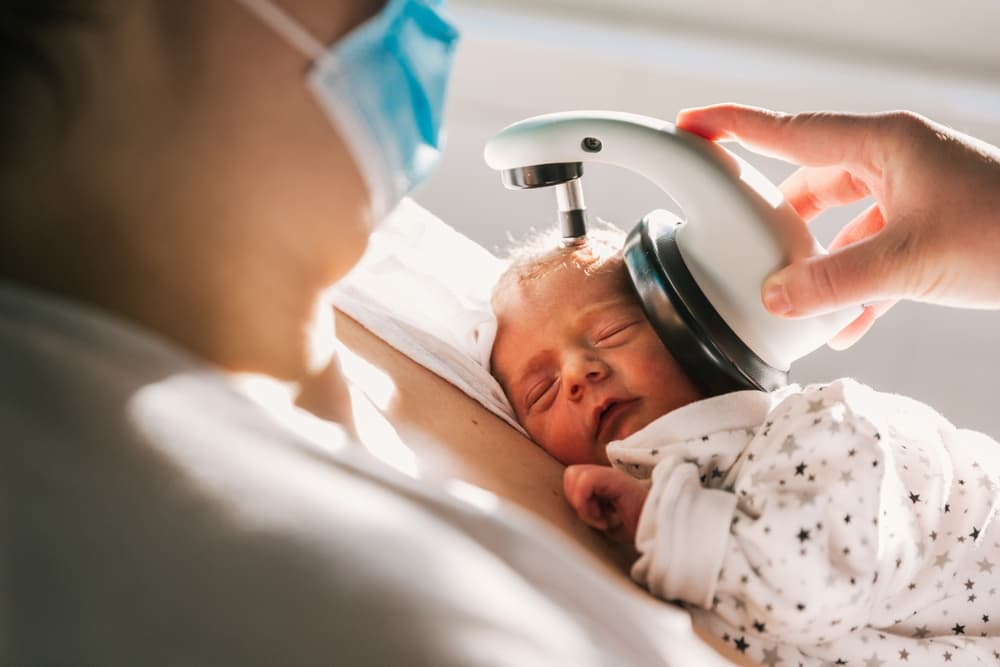
Hearing screening usually takes place immediately after birth in the maternity clinic – usually between the 2nd and 4th day of life. It is carried out either by medical professionals at the clinic or by specially trained staff at a screening center.
Hearing screening is painless, takes only a few minutes, and is ideally performed while the newborn is asleep or lying quietly. There are two recognized methods for performing the test:
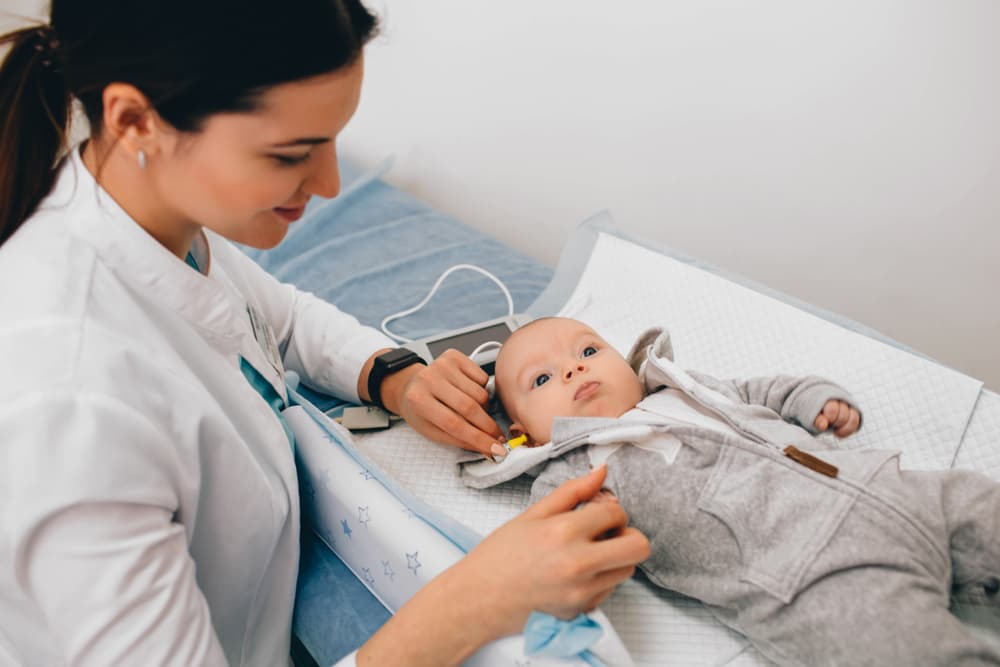
Tone-evoked otoacoustic emissions (TEOAE)
With this method, clicking sounds are transmitted into the child's ear canal via a small earpiece device. If the hair cells in the cochlea (inner ear) are healthy, they send back weak acoustic signals in response to these sound waves—known as otoacoustic emissions. These are recorded by the device.
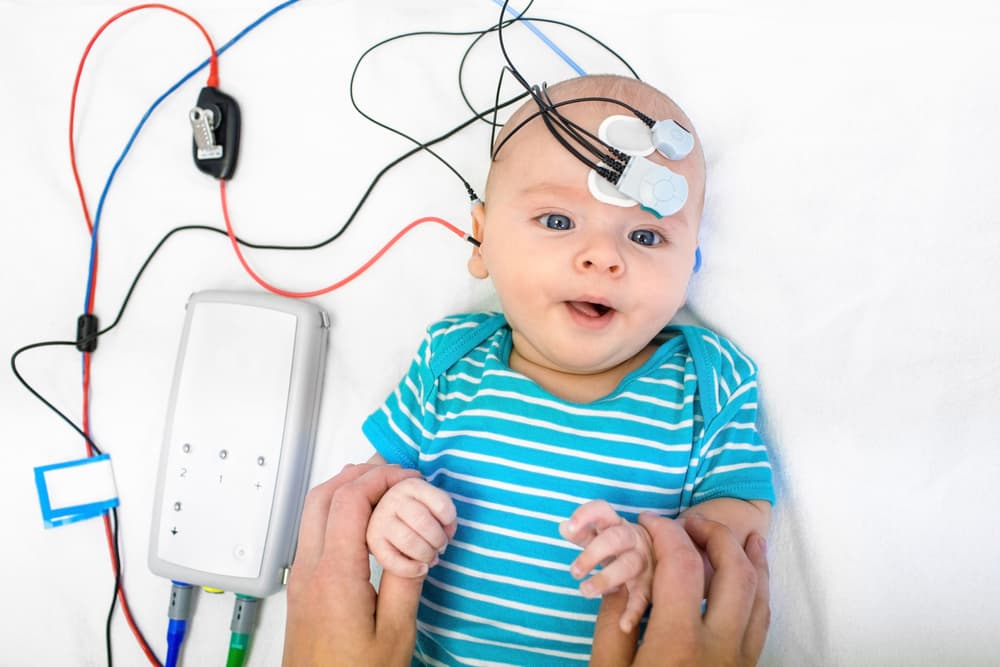
Brainstem audiometry (BERA or AABR)
This involves measuring the brain stem's responses to acoustic stimuli using small electrodes placed on the scalp. This method is more accurate than TEOAE measurement and is mainly used in cases of abnormal initial findings or at-risk children, such as premature babies.
Both methods provide objective measurements rather than subjective assessments. This means that hearing screening can be reliably performed even on newborns.
What happens if the results are abnormal?
An abnormal result does not automatically mean that the child is hard of hearing. Sometimes the cause is simply blocked ear canals or residual fluid in the inner ear that has not yet completely disappeared after birth. In these cases, a follow-up examination is advisable.
If the results are repeatedly abnormal, further pediatric audiological diagnostics are recommended. This involves specialized examinations such as extended brainstem audiometry or other measurement methods. The aim of these confirmatory diagnostics is to precisely determine the type and degree of hearing impairment.
In this case, parents are entitled to a referral to a pediatric audiology practice or to the relevant department at a university hospital. There, informed statements can be made about hearing function and possible therapies.
Which children are particularly in need of supervision?
Not all children have the same risk of hearing impairment. There are a number of factors that require special attention to hearing ability:
- Premature birth before the 33rd week of pregnancy
- Notable birth with oxygen deprivation
- Family history of hearing disorders
- Infections during pregnancy (e.g., rubella or CMV)
- Malformations in the head or facial area
- Stays in the intensive care unit after birth
In these cases, hearing screening is particularly thorough—sometimes with immediate use of the BERA method—and follow-up appointments are arranged at pediatric audiology centers at an early stage.
What role does hearing screening play in speech development?
Functioning hearing is the basis of all language development. In the first few months of life, children learn to recognize and imitate speech patterns and sounds from their environment. If this acoustic feedback is missing due to an undiagnosed hearing impairment, the child cannot learn language as usual.
Studies show that children whose hearing loss was detected and treated before the age of six months have significantly better linguistic and cognitive development opportunities. If, on the other hand, hearing loss is only detected after the age of two, it is often almost impossible to catch up.
Hearing screening is therefore an important pillar of early language detection—and can help prevent problems later on.
Who performs the hearing screening—and when?
In most cases, newborn hearing screening is performed in the maternity clinic immediately after delivery. Almost all clinics throughout Germany participate in this program. The examination is usually carried out within the first 72 hours of life, but no later than the 10th day of life.
If screening at the clinic is not possible—for example, because the child was born at home—the examination can also be carried out by an ENT doctor in private practice or at a hearing screening center. Parents should be actively informed of this option.
How is hearing screening regulated by law?
Hearing screening has been part of the recommended U1/U2 early detection examination for several years. The costs for this examination are covered by statutory health insurance companies, regardless of the findings.
Documentation is carried out by a nationwide screening center that cooperates with maternity clinics. If no result is documented or a follow-up examination is necessary, this is also noted. The aim is to ensure that no affected infant is "lost" but receives targeted further treatment.
What can parents do if they notice something unusual?
If parents receive information that the hearing screening was abnormal, the first thing to do is stay calm. In many cases, there are temporary factors that influence the result.
It is important to attend the recommended check-up and, if necessary, to be referred to a specialist pediatric audiology practice or phoniatrics department. There, a comprehensive hearing test will be carried out, which will also include a detailed assessment of the auditory nerve and the inner ear.
The child's further development—especially in terms of language, response to sounds, and interaction—should be closely monitored. If doubts remain, it may be advisable to consult the ENT specialist again.
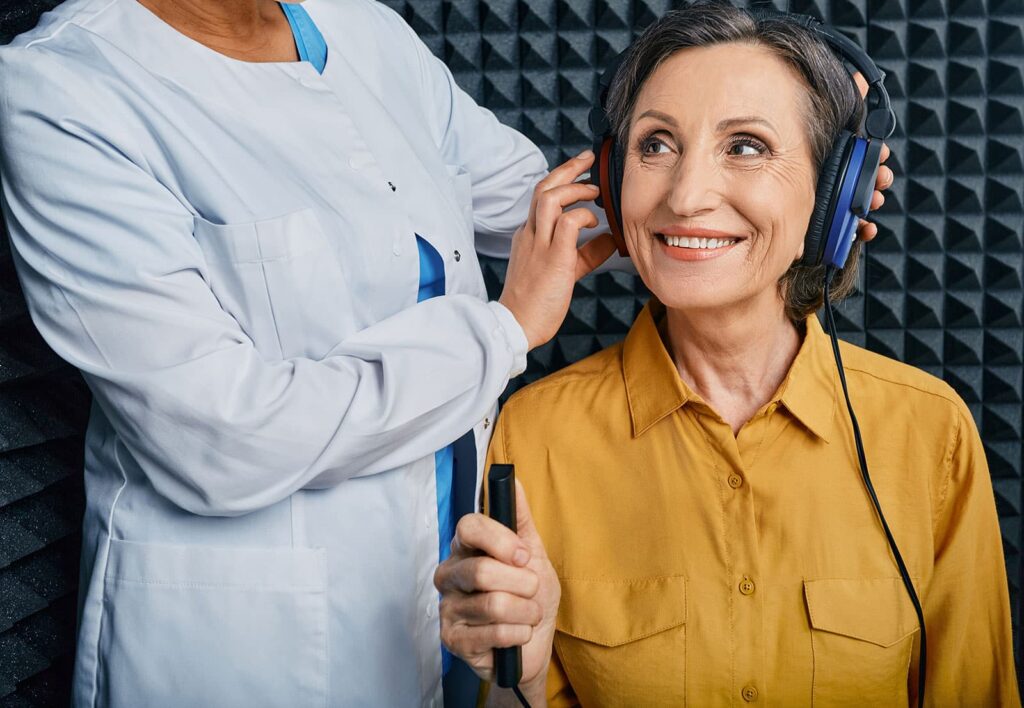
Hearing screening in adulthood: preventive care from middle age onwards
Hearing screening also plays an important role later in life. From the age of 50, the risk of hearing loss increases significantly – often gradually and initially unnoticed. Many people unconsciously get used to the gradual loss of hearing and only notice limitations when conversations in groups or in noisy environments become increasingly difficult. Early hearing screening can help to identify changes in hearing ability in good time and take countermeasures at an early stage. The tests used are similar to those used for children: they include a simple hearing test, tone or speech audiometry, and, if necessary, further measurements of the inner ear or auditory pathway, such as brainstem audiometry.
Regular screenings from middle age onwards can not only detect hearing loss at an early stage, but also prevent secondary diseases. Studies show that untreated hearing loss can be associated with an increased risk of social isolation, depression, and even cognitive impairments such as dementia. This makes it all the more important to include hearing in general health checks—ideally at the ENT doctor or as part of an occupational health checkup. Some health insurance companies support appropriate hearing tests as a voluntary service. Taking early action, such as fitting modern hearing aids, not only preserves communication skills but also quality of life.
Further articles

Healthy candy alternatives for seniors
For many people, craving sweets is part of everyday life. However, traditional sweets often contain large amounts of sugar and provide

Cooking together in old age
As we get older, our everyday lives change in many ways. The children have left home, our partner may be

Protein-rich nutrition in old age
As we age, our bodies change in many ways, and nutrition plays a crucial role in our health.