HÖRST
Ossicles – Structure, Function & Importance for Hearing
August 7, 2025
5 minutes reading time

OSKAR
Portable TV voice amplifier
Advertisement
Table of contents
The ossicles are tiny, but they are extremely important: without them, hearing as we know it would not be possible. In this article, you will learn how the malleus, incus, and stapes work, what role they play in the middle ear, and why disorders in this area can have such a serious impact on hearing.
What are the ossicles?
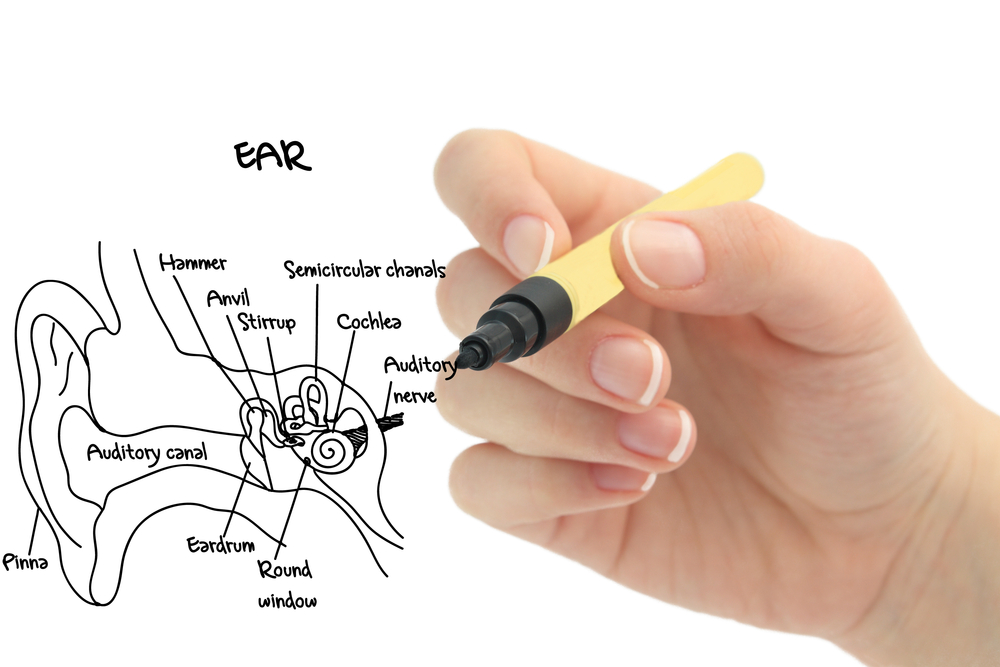
There are three small bones in the middle ear, known as the ossicles. These three tiny structures are called the malleus, incus, and stapes. Together, they form the ossicular chain and are the smallest bones in the human body. Their function is to receive the vibrations of the eardrum and transmit them to the inner ear. Despite their size of only a few millimeters, they play a crucial role in hearing.
Structure and position in the middle ear
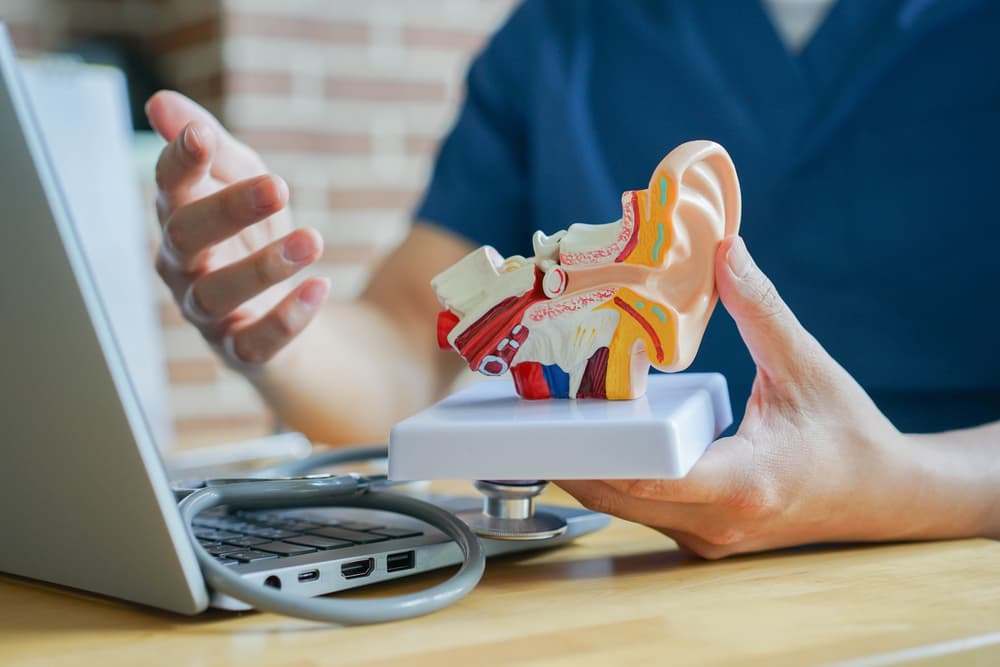
The ossicles are located in the tympanic cavity, an air-filled cavity in the middle ear. There, they are connected to each other by joints and form a mechanically highly precise chain. The malleus is fused with the eardrum and receives its vibrations. The incus is the next link in the chain and transmits the movement to the stapes. The footplate of the stapes lies in the oval window, which forms the transition to the inner ear. This is where the perilymph begins, a fluid that is responsible for transmitting stimuli to the hair cells.
The function of the ossicles in sound transmission
Sound waves first hit the outer ear and travel through the ear canal to the eardrum. The eardrum vibrates as a result of the air vibrations. The ossicles pick up these vibrations and transmit them mechanically to the inner ear. The ossicles act like a lever mechanism: they amplify the sound pressure, which is ultimately transmitted to the fluid in the inner ear at the oval window. Without this amplification, the movement of the fluid would be too small to stimulate the hair cells in the cochlea (inner ear). This means that the ossicles are crucial for efficient sound conduction.
The role of the individual ossicles
Hammer (Malleus): The hammer is directly connected to the eardrum and moves as soon as the eardrum vibrates due to incoming sound waves. It is only a few millimeters long, but nevertheless acts as the "first lever" in the chain.
Anvil (Incus): The anvil is located between the hammer and the stapes. It acts as an intermediate link and transmits the movement from the hammer to the stapes. Its special joint shape enables low-loss transmission of vibrations.Stapes: The stapes is the smallest bone in the human body. Its footplate rests in the oval window and transmits mechanical impulses to the fluid-filled inner ear. Its movement is crucial for triggering nerve impulses in the auditory nerve.
Protective mechanisms in the middle ear
The middle ear is not only responsible for sound transmission, but also has protective mechanisms. One of these is the stapedius reflex. This is an automatic muscle reaction: when very loud noises reach the ear, the stapedius muscle contracts and stiffens the ossicular chain. This dampens excessive vibrations and protects the sensitive hair cells in the inner ear from overstimulation.
The tensor tympani muscle, another muscle in the middle ear, also contributes to this regulation. This finely tuned protective function is important for protecting the ear from acute damage.
Diseases and functional disorders of the ossicles
When the ossicles no longer function properly, this is referred to as conductive hearing loss. This can have various causes. One common cause is otosclerosis, in which the stapes footplate ossifies, preventing it from moving freely. This significantly impairs sound transmission.
Chronic middle ear inflammation can also impair the mobility of the ossicles. Inflammation or fluid buildup in the tympanic cavity disrupts the transmission of vibrations. Sometimes injuries or congenital malformations can also impair function.
Typical symptoms include a dull sensation in the ear, difficulty in determining the direction of sounds, and a subjective reduction in hearing. In such cases, an examination by an ENT specialist and an audiometric hearing test can provide clarity.
Medical procedures and prostheses
If the ossicles are permanently damaged, surgery may be necessary. One well-known procedure is stapes plasty. This involves removing the immobile footplate of the stapes and replacing it with a titanium prosthesis. This prosthesis takes over the function of the ossicular chain and restores sound conduction.
In the case of other damage, for example, a destroyed chain as a result of inflammation, ossiculoplasty can be performed. This involves reconstructing one or more ossicles or replacing them with prostheses. The aim of such procedures is to restore the mechanical function of the chain and improve hearing.
The success of such operations depends heavily on the cause of the disorder, the general health of the ear, and the experience of the surgeon. In many cases, however, a significant improvement in hearing can be achieved.
Importance of the ossicles for hearing
Despite their microscopic size, the ossicles are indispensable for hearing. Without them, it would not be possible to transmit airborne sound to the fluid-filled inner ear. The mechanical amplification provided by the ossicular chain makes it possible to perceive even soft sounds and understand speech in a differentiated manner.
The combination of fine bone structure, precise movement, and sensitive coordination with other parts of the ear makes the ossicles a central component of the auditory organ. Any disturbance in their function has a direct impact on the entire auditory system. Their function is therefore of fundamental importance for hearing.
Further articles

Healthy candy alternatives for seniors
For many people, craving sweets is part of everyday life. However, traditional sweets often contain large amounts of sugar and provide

Cooking together in old age
As we get older, our everyday lives change in many ways. The children have left home, our partner may be

Protein-rich nutrition in old age
As we age, our bodies change in many ways, and nutrition plays a crucial role in our health.