HÖRST
The history of hearing aids
August 7, 2025
5 minutes reading time
OSKAR
Portable TV voice amplifier
Advertisement
Table of contents
The technology behind modern hearing aids is impressive today. Small, digital, powerful, and barely visible, they help millions of people hear better. But the road to get there was long and full of innovations. What today disappears almost invisibly into the ear began with a simple metal tube. This article traces the exciting development of hearing aids—from the first mechanical aids to today's digital miniature technology.
The beginnings – ear trumpets and mechanical amplification
The first hearing aids became known in the early 19th century: so-called ear trumpets. These funnel-shaped instruments were made of metal, horn, or other solid materials and were designed to capture sound and direct it into the ear canal. Their function was purely acoustic: the physical shape concentrated and amplified the sound. The effect was limited, but for many people with mild hearing loss, it was a first aid.
The devices were conspicuous and often unwieldy, but they were constantly being refined. Some models were built into hats, fans, or furniture to make them less noticeable. So even back then, the desire for discretion was already an issue.
The first electric hearing aid – a milestone
A technical breakthrough was achieved by American engineer Miller Reese Hutchison, who developed the first portable electric hearing aid in 1898. It worked with a carbon microphone and was based on the principle of the telephone. The incoming sound was amplified and transmitted by means of electrical voltage.
On November 15, 1901, Hutchison applied for a patent for his device. It became known as the "Akouphone" and was one of the first devices to be electrically powered. One of the earliest prominent users was Queen Alexandra of Denmark, who used the device at the coronation of Edward VII—a powerful symbol of the social acceptance of hearing aids.
Vactuphone and electron tubes
In the 1920s, naval architects developed a more powerful device: the so-called Vactuphone. It was based on electron tubes and provided significantly better amplification. Unlike earlier models, however, it relied on two large batteries, which were expensive and heavy.
These models marked the beginning of the electronic era. For the first time, their volume could be adjusted, but they were still bulky and were often worn on the body or carried in bags.
From transistor technology to the digital revolution
The next major development came with the introduction of transistors in the 1950s. These enabled smaller, more energy-efficient, and more robust devices. Hearing aids could now be embedded in the ear or worn behind the ear. Sound quality also improved significantly.
A major milestone was the introduction of digital signal processors (DSP) in the 1980s. The first prototypes were presented in 1982 and went into series production in 1990. These marked the beginning of the era of fully digital hearing aids. The devices were now not only able to amplify sound, but also to analyze, filter, and adjust it in a targeted manner.
Miniaturization and convenience in mass production
In the 1990s, hearing aids not only became digital, but also increasingly smaller. The classic "behind-the-ear" device became more compact, and "in-the-ear" models came onto the market. The new generation of devices was easier to wear, more discreet in design, and individually customizable.
Microphones, batteries, and speakers also improved. Users could switch between different programs optimized for different listening environments (e.g., conversations, street noise, music). Comfort and suitability for everyday use thus became key features.
Modern hearing aid technology today
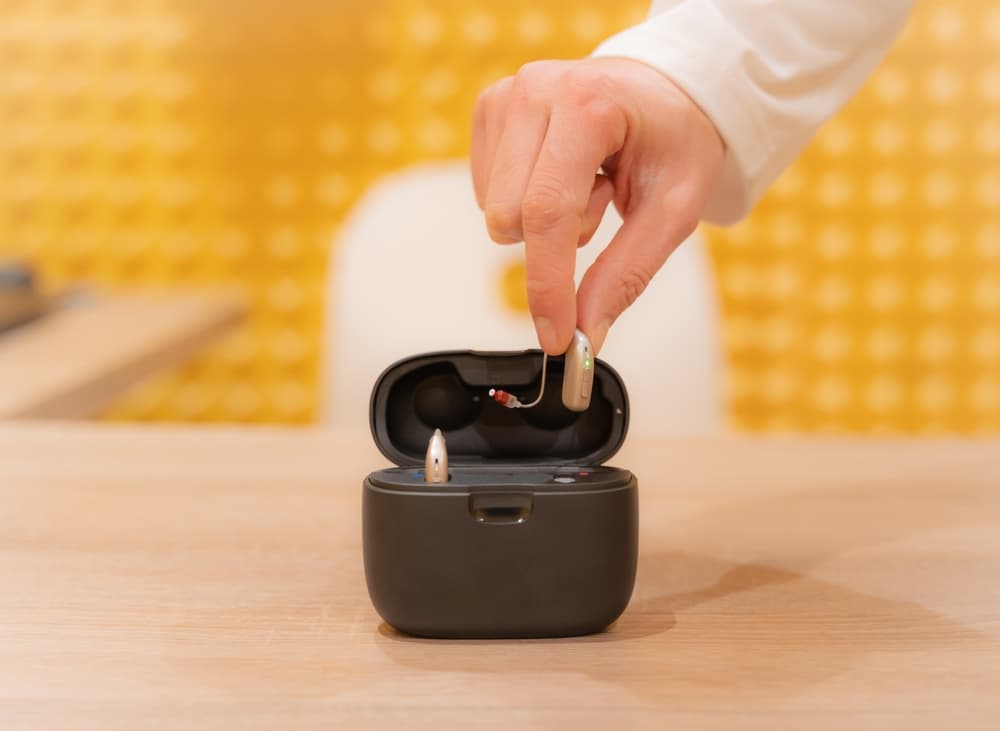
Today's digital hearing aids are small marvels of technology. They work in real time, automatically detect the acoustic environment, and adapt dynamically. Many models can be controlled via a smartphone app, store individual hearing profiles, and connect to phones, TVs, or assistance systems via Bluetooth.
The latest devices are virtually invisible and can even learn which environments are preferred using AI-supported algorithms. Some models offer health features such as pedometers or fall detection. Battery technology has also advanced, with more and more devices now being rechargeable.
Symbolic significance: Queen Alexandra and the first electric hearing aid
An often forgotten moment in the history of technology: in 1901, Queen Alexandra of Denmark wore Hutchison's electric hearing aid at the coronation of Edward VII. Its royal use brought attention and respect to the invention. At a time when assistive devices tended to be hidden away, she showed them publicly and with confidence.
This moment symbolizes a change that continues to this day: the integration of technology into everyday life without stigmatization—and with growing demands on design, comfort, and performance.
Outlook – Where is the journey headed?
Future hearing aids will be even smarter. Implants with real-time translation, biometric sensors, or interfaces to smart home systems are conceivable. Researchers are working on noise-canceling technologies at the neural level and on systems that can selectively amplify speech even in very noisy environments.
What began with a simple tube in the ear is now high-tech in the smallest of spaces. And development is far from over.
Further articles

Healthy candy alternatives for seniors
For many people, craving sweets is part of everyday life. However, traditional sweets often contain large amounts of sugar and provide

Cooking together in old age
As we get older, our everyday lives change in many ways. The children have left home, our partner may be

Protein-rich nutrition in old age
As we age, our bodies change in many ways, and nutrition plays a crucial role in our health.