HÖRST
The cocktail party effect
August 7, 2025
6 minutes reading time

OSKAR
Portable TV voice amplifier
Advertisement
Table of contents
The special ability to pay attention to certain sounds amid a level of noise, for example, to follow conversations, is referred to as the "cocktail party effect."
How our brain functions in noisy environments
If you've ever been to a loud party, you may be familiar with the phenomenon known as the "cocktail party effect." But what exactly is this effect, and how does it work?
What is the cocktail party effect?
Imagine the following scenario: You are at a party. Music is playing in the background, laughter echoes, drinks are being poured, and many conversations overlap. Yet you are able to focus easily on what the person you are talking to is saying. This special ability to pay attention to certain sounds amid a level of noise is often referred to as the "cocktail party effect."
This refers to how ourhearingis able to focus specifically on a voice or sound while ignoring other background noises. Our mind filters out unimportant sounds, allowing us to concentrate on what is essential.
This is possible thanks to sophisticated processing in our heads. Whileour earspick up all the sounds around us, our brains select which ones we should actually pay attention to.
It is fascinating that abrupt sounds or even recognizing one's own name in a nearby conversation can disrupt this concentration. This proves that our mind remains alert even when it is actually engaged in something specific.
The cocktail party effect is not only a fascinating phenomenon, but also has practical applications, for example in the development ofhearing aidsor in acoustics research.

How we hear: The ear and the brain
Our hearing does not consist solely of the ear itself. It is a complex combination of signal processing in the brain and the ear's ability to recognize and process sound sources. The brain is able to distinguish between important signals and unimportant ambient noise.
The scientific background of the cocktail party effect
The cocktail party effect is an important topic of research in neuroscience and acoustics. Understanding the underlying mechanisms helps us recognize the impressive capabilities of our hearing and our brain.
Selective listening and the art of attention
The human brain has an incredible capacity to process information. It can simultaneously take in a wealth of sensory data, from sounds and images to smells. But not all of this data is always relevant. This is where "selective listening" comes into play.
Put simply, selective hearing is the ability to focus on a specific sound source and ignore others. It is like using a spotlight to illuminate only a certain area in a dark room.
Why is selective listening beneficial?
- Communication in noisy environments:Think of a busy marketplace or a crowded club. Without focused listening, all sounds would merge into an inextricable din.
- Defense against sensory overload:If we paid equal attention to every sound around us, we would soon be overwhelmed. The brain separates unimportant sounds from important ones so that we can focus on what is necessary.
- Focusing on meaningful sound sources: Whensearching for a familiar melody or voice nearby, focused listening enables us to quickly identify it.
Studies and experiments on the cocktail party effect
The question of how our brain accomplishes this amazing task has already prompted a number of scientific studies in the past.
Modern technologies such as fMRI (functional magnetic resonance imaging) have shown which areas of the brain are activated when we concentrate on certain sounds. This has revealed that signal processing in the brain is highly complex, both spatially and temporally.
In various tests with headphones, in which the sound sources presented to the participants were controlled, it was found that test subjects can follow a single conversation even when many different voices are heard simultaneously.
Cocktail party effect: applications and implications
In our daily lives, we constantly encounter situations that require our ability to listen selectively. This could be meeting friends in a busy restaurant, waiting at a noisy bus stop, or listening to a street musician amid the noise of the city. We often take the cocktail party effect for granted, without realizing how crucial it is to our communication and interaction with the world.
The ability to separate relevant sounds from irrelevant ones has a significant impact on technology, medicine, and our daily lives.

Hearing aids and the technology of tomorrow
The challenge of clearly understanding individual voices or sounds in noisy environments is particularly evident for people with hearing impairments.
Modern hearing aids are therefore no longer just simple amplifiers. They are equipped with advanced technology that aims to mimic the human ability to hear selectively.
Directional microphones are just one example of these technological advances. By focusing on sounds coming from a specific direction and suppressing background noise, these microphones can enable hearing aid users to understand better in noisy environments.
The OSKAR TV hearing amplifier
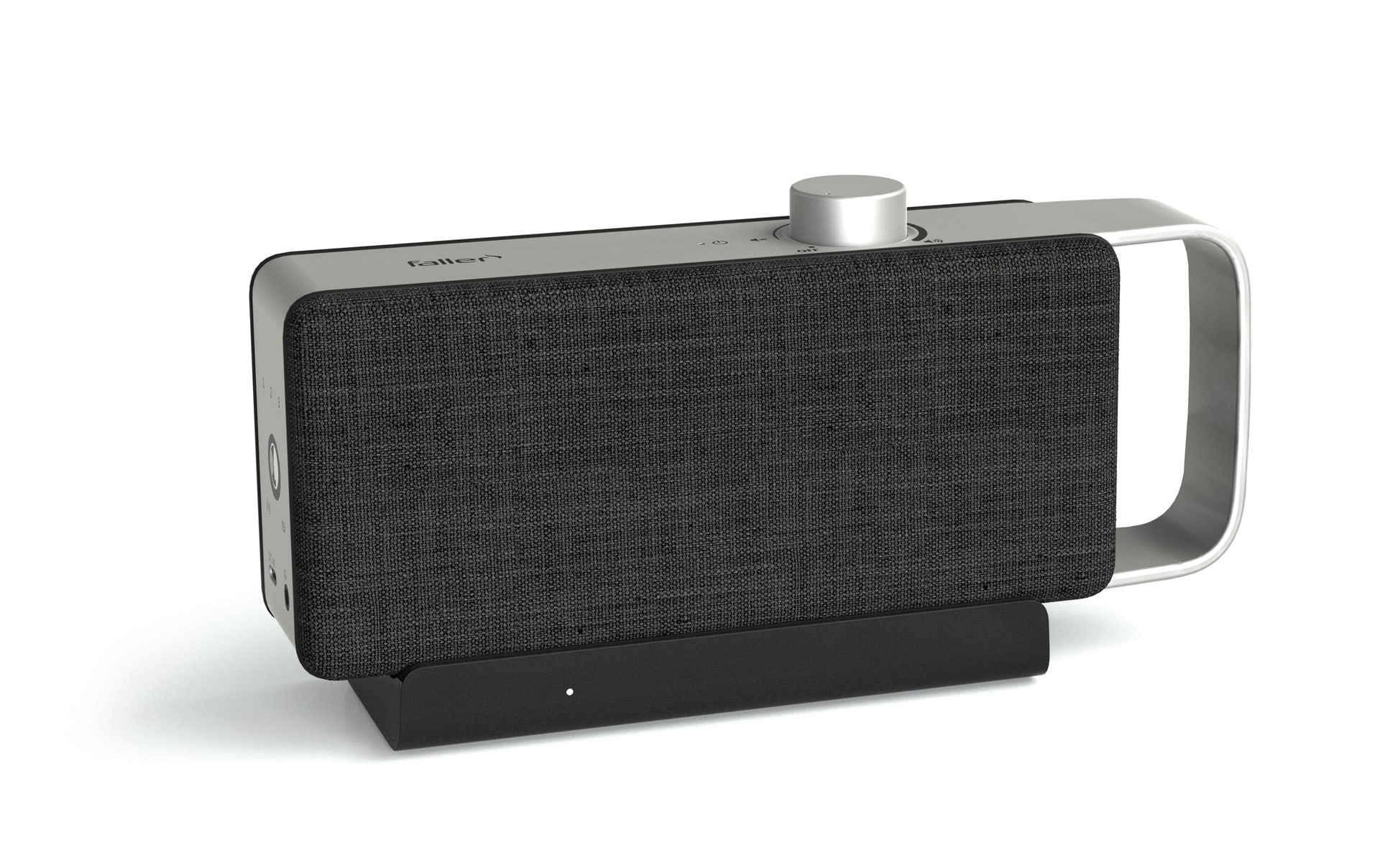
In addition to traditional hearing aids, there are also specialized hearing aids designed to improve the listening experience in specific situations. One such device is theOSKAR TV hearing amplifierfrom faller audio. It was specially developed to optimize the television experience for people with hearing impairments. Through special dialogue optimization, the hearing amplifier highlights conversations and ensures that they stand out clearly above background noise and music. This allows users to enjoy their favorite shows and movies without effort. It is a good example of how technology and science come together to improve the lives of people with hearing impairments.
Further articles

Healthy candy alternatives for seniors
For many people, craving sweets is part of everyday life. However, traditional sweets often contain large amounts of sugar and provide

Cooking together in old age
As we get older, our everyday lives change in many ways. The children have left home, our partner may be

Protein-rich nutrition in old age
As we age, our bodies change in many ways, and nutrition plays a crucial role in our health.