HÖRST
ClearVoice technology
December 12, 2025
19 minutes reading time

OSKAR
Portable TV voice amplifier
Advertisement
Table of contents
Clearvoice technology was developed to solve a common problem when watching television: unclear dialogue that is drowned out by background music and noise. This innovative audio technology automatically analyzes sound signals and specifically boosts the frequency range of the human voice, while actively filtering out distracting background noise. The technology is used in modern soundbars and TV speakers as well as in medical hearing aids such as cochlear implants. Intelligent signal processing allows users to enjoy movies, series, and news at a comfortable volume without having to constantly readjust the settings.
The most important information in brief
- Clearvoice technology automatically boosts the frequency range of the human voice and reduces distracting background noise for better speech intelligibility.
- The technology is used in consumer audio devices such as soundbars and TV voice amplifiers, as well as in medical hearing aids.
- In TV sets, this feature solves the problem of muffled dialogue on modern flat-screen televisions.
- The effectiveness of medical hearing aids has been clinically proven, especially in children, with significant improvements.
- Activation typically occurs at the touch of a button and can be deactivated again at any time.
- Modern devices often combine this technology with additional adjustable speech filters for individual hearing needs.
Basic principle and functioning of speech optimization
The core objective of Clearvoice technology is to guarantee optimal speech intelligibility for a variety of audio content. Whether it's news, movies, sports broadcasts, or TV series, the technology ensures clear dialogue and a pleasant listening experience. This should make the frequent question of "What did they say?" a thing of the past. Users can enjoy their favorite content at normal volume without missing any details or disturbing others in the household.
The technology works by using intelligent signal analysis. The system automatically analyzes the incoming audio signal and identifies the frequency range of the human voice. This is typically between 300 and 3,000 hertz and contains the most important information for speech comprehension. The technology specifically increases the volume in this range to make voices more prominent.
Active filtering of noise interference
At the same time, Clearvoice technology reduces distracting background noise and actively filters out extraneous sounds. This is achieved using intelligent algorithms that can distinguish between speech and other audio elements such as music, sound effects, or ambient noise. Filtering is dynamic and continuously adapts to changing content. The system works differently in a quiet dialogue scene than in an action-packed sequence with explosions and background music.
An important aspect is that, despite these technical adjustments, the sound experience should remain completely natural. The TV sound is not distorted or artificially altered, but simply optimized so that speech is easier to understand. The balance between dialogue and the rest of the soundtrack is maintained so that the emotional impact of music and sound effects is not lost. This distinguishes high-quality Clearvoice implementations from simpler solutions that alter the sound too much, making it sound unnatural.
Adaptation to different content types
The technology can adapt to different types of content. For news programs, where speech is the main focus, the system works differently than for music programs or concert broadcasts, where the natural sound must be preserved. Modern implementations often automatically recognize the type of content being played and adjust their parameters accordingly. This happens in the background without the need for manual intervention by users.
Use in consumer audio devices
The use of Clearvoice technology solves a well-known problem with modern, flat-screen televisions. Due to their slim design, these often have limited space for powerful speakers. The integrated speakers are usually directed downwards or backwards, which means that dialogue sounds muffled and is drowned out by background noise. Especially in movies with loud background music or action scenes, speech is often difficult to understand.
Clearvoice optimization prevents the need for constant manual adjustment of the volume. Many people are familiar with the problem: during quiet dialogue passages, the volume has to be increased, but during loud action sequences or commercials, it becomes too loud. With the Clearvoice function activated, speech intelligibility remains consistently good without large volume differences between different scenes. This leads to a more relaxed viewing experience without constant remote control acrobatics.
Integration into soundbars and TV speakers
The technology is integrated into various modern audio devices. Soundbars are particularly common, as they offer an easy way to significantly improve the sound of a TV. Sound projectors and sound decks also use the Clearvoice function. Many manufacturers use the technology in all their current models, from entry-level to top-of-the-range. This makes speech enhancement accessible to a wide range of buyers.
The function is typically activated at the touch of a button on the remote control or the device's control panel. Some models offer different intensity levels, allowing users to determine the degree of speech enhancement themselves. The function can be deactivated at any time, for example when watching music programs or concerts where natural sound is more important than maximum speech intelligibility. This flexibility allows the system to be adapted to different content and personal preferences.
Portable TV voice amplifiers with Clearvoice function
Clearvoice technology offers additional benefits for portable TV sound amplifiers. These devices transmit the TV sound wirelessly directly to the listener, allowing the overall volume of the TV to be reduced. This means that other people in the room are not disturbed, while the user of the voice amplifier receives the sound in optimal quality and at an individually adjusted volume. This is particularly advantageous when people with different levels of hearing want to watch TV together.
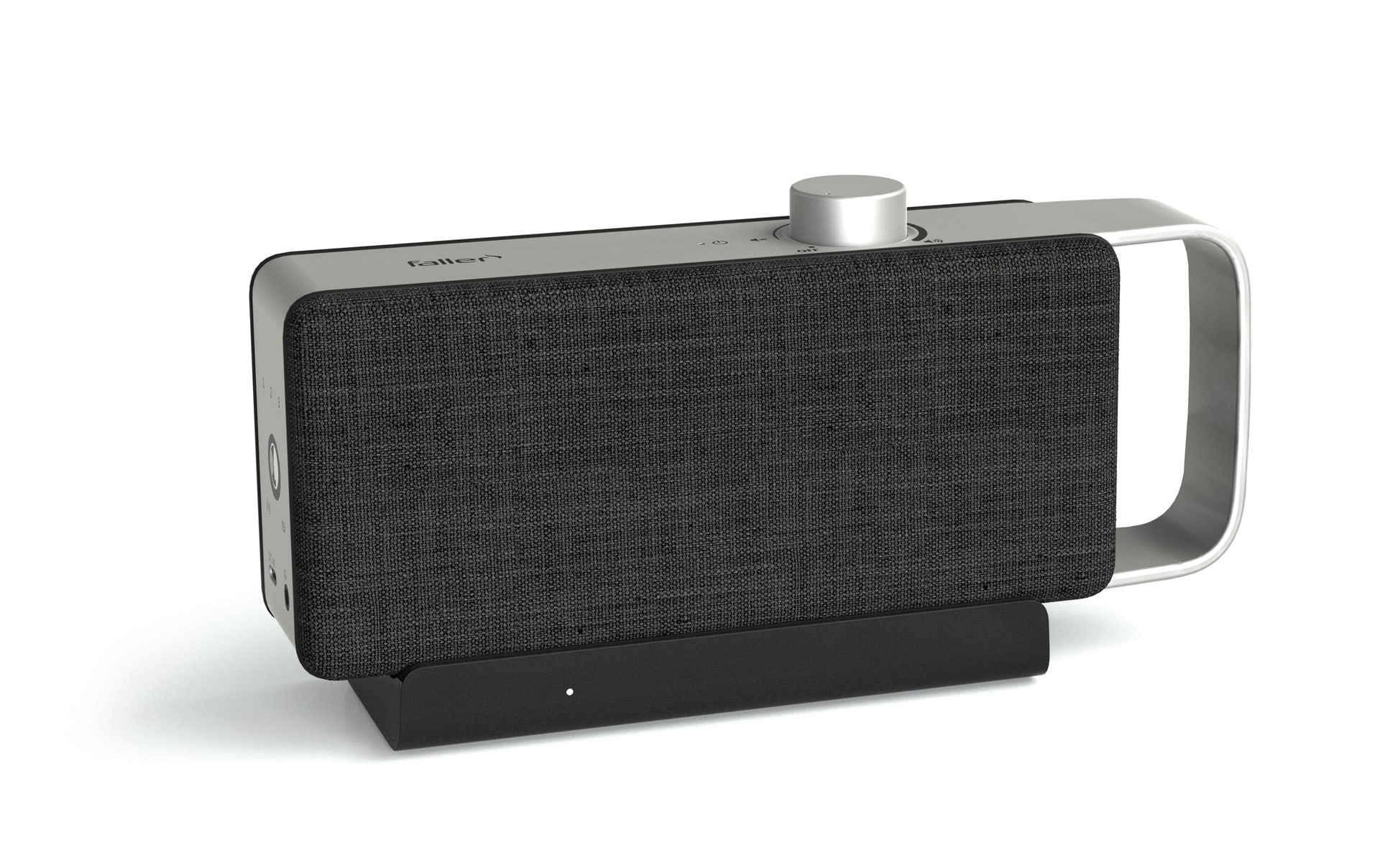
A prominent example of this device category is the OSKAR TV voice amplifier from faller audio. This device was developed specifically for people who want clear dialogue and an appropriate volume when watching television. The OSKAR uses innovative Clearvoice technology for voice optimization, enabling a relaxed television experience. The three adjustable voice filters are particularly helpful, as they allow the device to be adapted to individual hearing needs. As a portable TV hearing amplifier, it transmits the TV sound wirelessly directly to the listening position, which means that the TV volume can be significantly reduced. The German company faller audio specializes in the development of audio products that make everyday life easier for people with hearing impairments.
Practical use in everyday life
The use of Clearvoice technology offers concrete advantages in various everyday situations. Older people and those with early hearing loss in particular benefit from improved speech intelligibility. Often, their hearing is not yet so severely impaired that a hearing aid is necessary, but they still have difficulty understanding television dialogue. The Clearvoice function can offer a simple solution here without the need for additional hearing aids.
The benefits are also evident in households with several people of different ages. While younger family members can often hear the TV clearly at moderate volumes, older people may need higher levels. With Clearvoice technology activated, a volume level acceptable to everyone can be found, as dialogue remains clearly understandable even at lower levels. This prevents conflicts and enables a harmonious shared TV experience.
Advantages of different transmission formats
Clear speech intelligibility is particularly important in news broadcasts, as the information conveyed must be understood precisely. The Clearvoice function ensures that every word can be understood, even when newsreaders speak quickly or reports are broadcast from noisy environments. In feature films, the technology makes it possible to understand even complex dialogues or whispered scenes without having to turn up the volume significantly.
Sports broadcasts also benefit from the technology. Commentary and analysis remain clearly understandable even with a noisy stadium audience. In live broadcasts with varying sound quality, such as when switching between the studio and outside reporters, the Clearvoice function compensates for differences and ensures consistent intelligibility. This contributes to a more professional and pleasant listening experience.
Clearvoice in medical hearing aids
In addition to its use in consumer audio devices, Clearvoice technology also plays an important role in medical audio technology. Here, it was developed as a clinically proven innovation in sound processing to significantly improve speech comprehension in noisy environments. The medical version of the technology is described as the only sound processing technology in the industry whose superior hearing performance in noisy conditions has been clinically proven.
The aim is to enable users of implantable hearing aids such as cochlear implants to converse more easily in noisy environments and communicate clearly at all times. This application differs from the consumer version in that it is tailored to the specific needs of people with severe hearing impairments. The signal processing requirements are significantly higher here, as natural hearing ability is severely limited or non-existent.
Advanced noise cancellation
Clearvoice medical technology is based on proprietary high-resolution sound processing technology. It was developed to automatically analyze and adapt to any listening situation. The system actively separates distracting noises from the most important auditory information, namely speech. This sophisticated functionality enables clear and easy communication in challenging listening situations such as restaurants, cars, or classrooms.
A particular advantage is that users do not need to make any manual adjustments to the sound processor. The technology works fully automatically in the background and continuously adapts its parameters to changing environments. This reduces the cognitive load on hearing aid wearers, as they can concentrate on communication instead of constantly changing settings. Automatic adjustment takes place in real time and responds to changes in the acoustic environment within fractions of a second.
Relief and improved listening experience
Clearvoice medical technology is designed to provide an effortless listening experience in everyday environments, from quiet to loud. Users report that they have to listen less intently thanks to the reduction in background noise such as traffic or driving noise. This leads to a more relaxed and less stressful listening experience. The reduced listening effort can have a positive effect on overall quality of life and reduce fatigue.
A special aspect of the technology's development is its support in understanding the lyrics of favorite songs on the radio. This often poses a particular challenge for users of implantable hearing aids, as music contains complex acoustic signals and the voice is often overlaid by instruments. The Clearvoice function can help to better distinguish vocals from the overall sound of the music without significantly affecting the music itself.
Clinical evidence and efficacy
The effectiveness of Clearvoice medical technology has been proven in clinical studies. Initial results showed improvements in adults' ability to hear speech in noisy environments. The effects were particularly noticeable in children. Studies showed a significant improvement in test results in noisy environments when the technology was activated. This significant improvement can make a considerable difference to speech development and school performance.
Parents reported in surveys that the technology was useful in everyday life. Its usefulness was particularly frequently mentioned in conversations in the car, where the vast majority of respondents had positive experiences. When listening to the teacher in the classroom, most respondents rated the Clearvoice function as helpful. These high satisfaction ratings underscore the practical benefits of the technology in real-life situations, which are often particularly challenging for children with hearing impairments.
Importance for language development in children
For children with cochlear implants, good speech comprehension is particularly important in all situations. Speech development takes place primarily in the first years of life, and any missed information can affect language acquisition. Clearvoice technology helps children understand speech well even in noisy environments such as kindergartens, schools, or playgrounds. This can have a positive impact on language development and facilitate social integration.
Combination with other technologies
The Clearvoice strategy can be combined with other advanced technologies to further improve results. In particular, the synergy with next-generation wireless technologies shows promising possibilities. This combination is designed to make speech comprehension in noisy situations even clearer and easier than was previously possible. Together, these advanced technologies are designed to provide even better speech comprehension than if they were used in isolation.
In consumer audio devices, Clearvoice is often combined with other sound optimization technologies. These include surround sound processing, bass optimization, and room sound adjustment. The various technologies work together to create both optimal speech intelligibility and an impressive overall sound experience. Modern soundbars can thus optimally reproduce dialogue-intensive films as well as action-packed blockbusters and music programs.
Integration into smart home systems
Audio devices with Clearvoice technology are increasingly being integrated into smart home systems. This enables automatic adjustments based on the time of day, the current program, or user preferences. Voice assistants can be used to activate or deactivate the Clearvoice function via voice command. Some systems even learn the listening habits of users and activate the function automatically for certain programs or at certain times.
AI-supported Clearvoice functions in computers
A specialized, AI-powered version of the ClearVoice speaker feature exists for computers and is linked to specific audio drivers. This AI ClearVoice Speaker feature is activated as soon as communication software such as Microsoft Teams is used for calls. AI-based processing can distinguish between speech and background noise even more accurately than conventional algorithms and adapts to changing conditions in real time.
Since this feature can display a constant notification on the desktop, the device settings offer mechanisms to disable either the notification or the Clearvoice speaker function itself. This gives users control over the feature and prevents disruptive notifications during video conferences or presentations. The AI-powered version is particularly useful for remote work and virtual meetings, where clear communication is essential.
Use in professional video conferences
In professional environments where video conferences are frequently held, the AI Clearvoice feature can significantly improve intelligibility. Especially when participants from different environments with varying background noise are connected, the technology helps to clearly transmit the speech of all participants. This reduces misunderstandings and makes meetings more efficient. The AI can also identify different speakers and optimize their speech characteristics individually.
Differences between various implementations
Although the term Clearvoice technology is used by various manufacturers and in different product categories, the specific implementations can vary. In consumer audio devices, the focus is on user-friendly operation and natural sound. The function should be activated at the touch of a button and deliver immediately audible improvements. The algorithms are often less complex than in medical applications, but do not have to cope with extreme listening situations.
The technology used in medical hearing aids is significantly more sophisticated and must meet stricter requirements. The algorithms must function reliably even in very noisy environments with many competing sound sources. Latency, i.e., the delay between the incoming and processed signal, must be minimal so as not to cause asynchrony between seeing and hearing. In addition, the technology must be energy-efficient so as not to drain the battery life of the hearing aids too much.
Quality differences and performance characteristics
The quality of Clearvoice implementation can vary significantly between different devices. High-quality systems use complex algorithms and powerful processors to perform speech optimization in real time without causing audible artifacts or delays. Less expensive solutions may use simpler filtering, which improves speech intelligibility but can also have a greater impact on natural sound.
Another key factor in quality is how well the technology can process different types of content. Good implementations automatically detect whether dialogue, music, or sound effects are in the foreground and adjust their processing accordingly. Less sophisticated systems apply the same processing to all content, which can result in unnatural sound during music programs or concerts. The ability to enable or disable the Clearvoice function depending on the content is therefore an important quality feature.
Selection criteria when purchasing equipment
If you want to purchase an audio device with Clearvoice technology, there are several aspects to consider. First, it is important to determine the main purpose for which the device will be used. If the focus is on speech intelligibility for news and talk shows, a pronounced Clearvoice function is particularly valuable. On the other hand, if you mainly watch music programs or concerts, you should make sure that the function can be deactivated and that the natural sound is also convincing without Clearvoice.
Ease of use plays an important role. The Clearvoice function should be easy to activate, ideally via a dedicated button on the remote control. Some devices offer different intensity levels or additional voice filters that can be used to fine-tune the optimization. For people with impaired hearing or older users, intuitive operation without complicated menu navigation is particularly important.
Value for money and additional features
The price range for devices with Clearvoice technology is wide. Entry-level models start at moderate prices and offer basic speech optimization. Premium devices cost significantly more, but offer more sophisticated algorithms, better overall sound quality, and more extensive additional features. It is important to note that even lower-priced models from reputable manufacturers can often offer significant improvements over TV speakers.
Additional features such as Bluetooth connectivity, HDMI connections, or the option to add more speakers may be relevant. For portable TV voice amplifiers, aspects such as battery life, comfort, and wireless range should be considered. Consulting a specialist retailer or supplier can help you find the best device for your individual needs.
Setup and optimization
After purchasing a device with Clearvoice technology, setup is usually required. For soundbars, the first step is to connect them to the TV, typically via HDMI ARC or an optical cable. The positioning of the soundbar is important for optimal sound: it should be placed at the same height as the listeners' ears and not be covered by any objects.
After physical installation, various parameters can be adjusted in the settings. Many devices offer a setup wizard that guides you through the most important steps. The intensity of the Clearvoice function can often be adjusted. It is worth trying out different settings for different content to find your preferred configuration. Some users prefer subtle voice enhancement, while others prefer a more pronounced emphasis on dialogue.
Fine-tuning for optimal results
The optimal setting for the Clearvoice function depends on several factors. Room acoustics play a role: in rooms with a lot of reverberation, a stronger speech enhancement may be useful. The distance to the TV and the usual listening volume also influence the ideal setting. With portable TV speech amplifiers, individual hearing characteristics also come into play: people with high-frequency hearing loss may benefit from different filter settings than those with balanced hearing.
Modern devices often offer different preset modes for different types of content. A news mode optimizes intelligibility for speech programs, a movie mode balances dialogue with sound effects, and a music mode preserves the natural sound. Trying out these modes with different content helps you develop a feel for the possibilities of Clearvoice technology and find the best setting for each situation.
Limitations and additions to the technology
As helpful as Clearvoice technology is, it also has its limits. When the original audio signal is very poor, such as in old film recordings or low-quality broadcasts, even the best speech optimization cannot work miracles. The technology works with the existing signal and cannot improve its basic quality beyond a certain level. In such cases, subtitles can be a useful addition.
For people with more severe hearing loss, the ClearVoice function in consumer audio devices may not be sufficient. In these cases, it may be necessary to combine them with hearing aids or special hearing devices. Many modern hearing aids can be connected to TVs or soundbars via Bluetooth, offering customized sound transmission. Reducing background noise when watching TV sometimes requires several measures that complement each other.
Additional measures for improved speech intelligibility
In addition to technical solutions such as Clearvoice technology, simple measures can also improve speech intelligibility when watching television. Good room acoustics with not too much reverberation help. Carpets, curtains, and upholstered furniture dampen sound and reduce disturbing reflections. Minimizing background noise while watching TV, for example by turning off household appliances or closing windows facing noisy streets, can also increase intelligibility.
The optimal seating position also plays a role. The distance to the TV should not be too great, and the line of sight should be directed as directly as possible at the screen. This also enables lip reading, which further aids speech comprehension. In communal areas, clear agreements about TV viewing times can help to avoid disruptive side activities during important programs.
Future prospects for Clearvoice technology
The development of Clearvoice technology is advancing continuously. Artificial intelligence and machine learning are opening up new possibilities for even more precise speech optimization. Future systems could learn which settings a user prefers for different types of content and apply them automatically. The analysis of speech patterns could be refined to better capture and process nuances such as irony or emotion.
Integration with other smart home technologies will increase. In the future, Clearvoice systems could work together with lighting, room climate, or other parameters to create a holistically optimized television experience. Personalization will also continue to advance: systems could recognize different users in the household and automatically load their preferred settings.
Improvement through greater computing power
As powerful processors become increasingly available in consumer electronics, the algorithms used in Clearvoice technology will also become more complex. This will enable real-time processing with greater precision and fewer artifacts. Multidimensional sound analysis could take into account the direction from which different sound components originate and use this information for speech optimization. Latency, i.e., the delay between the original and processed signal, will continue to decrease.
Combining Clearvoice with other advanced audio technologies such as object-based 3D sound or wave field synthesis could open up new dimensions of immersive listening while maintaining optimal speech intelligibility. Such systems could create a virtual acoustic space in which speech always seems to come from the optimal position for the listener, while background noise and music fill the space naturally. These developments will further enhance the television experience and make it more accessible to people with hearing impairments.
Further articles

Healthy candy alternatives for seniors
For many people, craving sweets is part of everyday life. However, traditional sweets often contain large amounts of sugar and provide

Cooking together in old age
As we get older, our everyday lives change in many ways. The children have left home, our partner may be

Protein-rich nutrition in old age
As we age, our bodies change in many ways, and nutrition plays a crucial role in our health.