HÖRST
Reduce background noise from the TV
September 4, 2025
9 minutes reading time
OSKAR
Portable TV voice amplifier
Advertisement
Table of contents
Many people are familiar with this phenomenon when watching television: during exciting action scenes and emotional background music, important dialogues and speech often remain incomprehensible. Disturbing background noise drowns out the speech and significantly detracts from the viewing experience. Fortunately, there are various methods and technical solutions for reducing background noise on the television and significantly improving speech intelligibility.
The most important information in brief
- Modern televisions often have a slim design with weak internal speakers that reproduce dialogue unclearly.
- Technical aids such as TV hearing amplifiers with dialogue optimization can effectively reduce background noise.
- Optimized TV settings such as "Night Mode" or "Clear Speech" significantly improve speech intelligibility.
- The right room acoustics with soft materials reduce disruptive echo effects.
- Special audio tracks and alternative audio sources provide clearer speech reproduction
Why is background noise a problem when watching television?
The problem of distracting background noise when watching television affects not only people with hearing problems, but many viewers. Modern film productions increasingly rely on bombastic sound effects, atmospheric music, and complex soundscapes to create a cinematic experience. However, this multi-layered soundtrack can cause important dialogue to be lost in the background noise.
This becomes particularly problematic when speakers speak quietly or unclearly while loud background music or sound effects are playing. The human voice typically ranges between 85 and 300 hertz for male voices and 165 to 265 hertz for female voices. If these ranges overlap with background music or other sound effects, it becomes difficult for the human ear to filter out the relevant speech information.
Causes of annoying background noise on TV
The main causes of annoying background noise when watching television are varied and technical in nature. Due to their slim design, modern flat-screen televisions often only have small, underpowered internal speakers. These are unable to reproduce the complex frequency range of modern audio tracks in a balanced way, resulting in speech sounding flat and unclear, while bass and effect frequencies are overemphasized.
Another factor is the type of sound production for films and series. The soundtrack is primarily mixed for movie theaters with optimal acoustics and professional sound systems. When transmitted to conventional TV speakers, important nuances in speech reproduction are lost. In addition, compression techniques used in satellite, cable, or streaming transmission can further impair sound quality.
Room acoustics also play a crucial role. Rooms with hard surfaces such as tiles, glass, or bare walls create reflections and echo effects that can further impair speech intelligibility.
Technical solutions for reducing background noise
One of the most effective technical solutions is specially developed TV hearing amplifiers with dialogue optimization. These devices analyze the incoming audio signal and specifically amplify the frequency ranges in which human speech occurs, while reducing distracting background noise. Modern algorithms can distinguish between speech and other sound content and adjust the ratio accordingly.
External soundbars and speaker systems can also bring about a significant improvement, as they have larger and more powerful speakers than the systems built into televisions. Many soundbars offer special modes such as "dialogue enhancement" or "voice clarity," which are optimized for better speech intelligibility.
Modern surround sound systems with separate center speakers are particularly effective, as dialogue is mainly reproduced via the center channel. By specifically amplifying this channel, speech and background noise can be better separated from each other.
Optimize TV settings for better speech intelligibility
Most modern televisions offer various audio settings that can help reduce background noise. "Night mode" is a particularly useful feature that automatically lowers loud passages and raises quiet areas, creating a more balanced sound. This setting significantly reduces the volume differences between dialogue and effects.
Many devices have a "dialogue mode" or "speech mode" that is specifically designed to improve speech intelligibility. These modes amplify the mid-range frequencies and reduce bass and treble emphasis.
The equalizer settings can also be adjusted manually. Boosting the mid frequencies between 1000 and 4000 hertz can significantly improve speech intelligibility, while reducing the bass frequencies below 200 hertz minimizes distracting low tones.
For televisions with multiple audio outputs, choosing the right output signal can be crucial. PCM signals often offer clearer speech reproduction than compressed Dolby Digital formats, especially through the TV's internal speakers.
Special tools for clearer dialogues
People with hearing problems in noisy environments can benefit from specially developed technical aids. TV headphones with noise cancellation allow you to hear the TV sound directly and without distracting ambient noise. Wireless models offer maximum freedom of movement.
Inductive hearing systems can be an excellent solution for hearing aid users. These systems transmit the audio signal directly to the hearing aid, which largely blocks out ambient noise. Many modern hearing aids are already equipped with the necessary receivers.
TV hearing amplifiers with special dialogue optimization are an innovative solution. These portable devices can be positioned flexibly at the listening location and offer individually adjustable volume and clarity controls. Special acoustic profiles are used to optimally adjust the ratio between speech and background noise.
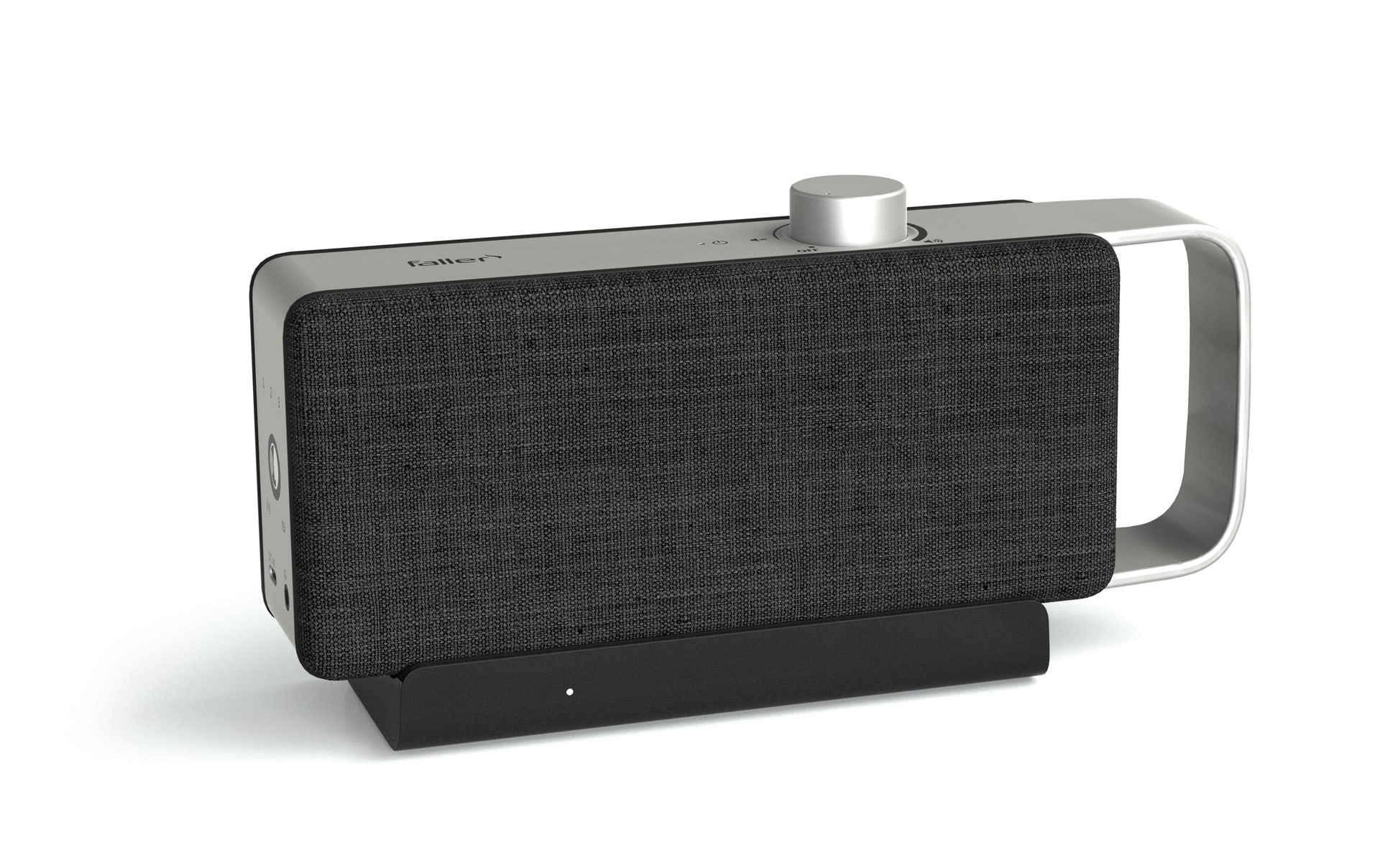
The OSKAR TV speech amplifier is a particularly sophisticated solution for reducing background noise when watching television. The device was specially developed to solve the common problem of loud sound effects and quiet dialogue. An integrated algorithm analyzes the incoming audio signal and specifically highlights the speech frequencies that are important to the human ear, while automatically reducing distracting background noise. Wireless transmission with a range of up to 30 meters allows for flexible placement, and simple operation with just two buttons makes the device accessible even to users who are less tech-savvy.
Improve room acoustics for better TV sound
The acoustic properties of the room have an enormous influence on the quality of sound reproduction. Hard surfaces such as tiles, glass, or bare walls reflect sound waves and can cause disruptive echo effects that impair speech intelligibility.
Soft materials such as carpets, curtains, upholstered furniture, or wall hangings absorb sound waves and reduce unwanted reflections. A well-designed interior with a mix of absorbent and reflective surfaces can significantly improve acoustics.
The optimal positioning of the seats also plays an important role. The ideal distance from the TV should be about 1.5 times the screen diagonal. For a 65-inch TV, this corresponds to about 2.5 meters. This position not only ensures an optimal viewing experience, but also the best sound quality.
Disturbing sources of noise such as air conditioners, refrigerators, or computers should be minimized or turned off while watching television, if possible, in order to reduce the basic acoustic volume.
Use alternative audio sources and soundtracks
Many modern television stations now offer alternative audio tracks that are specially optimized for better speech intelligibility. The Clear Speech System, which has been used by some public broadcasters since 2022, technically reduces background noise and highlights dialogue.
These audio tracks can be activated via the TV's audio menu functions or via HbbTV. On HbbTV-enabled devices, simply pressing the red button on the remote control is often sufficient to access the available audio options.
Some streaming services also offer optimized audio versions of their content. In the audio settings of the respective apps, you can often select different audio tracks, including those with improved speech intelligibility.
Subtitles can serve as additional support without compromising sound quality. Most modern televisions and streaming services offer easy-to-read subtitle options that can be activated as needed.
Practical tips for everyday life
Optimal times and environment
The right time of day can have a surprising effect on sound perception. In the evening hours, the general background noise is usually lower, making it easier to concentrate on the television program. At the same time, noisy household activities should be avoided during important programs.
Solutions for shared television evenings
When watching television together, different listening preferences can lead to conflicts. In this case, the use of wireless headphones for individual persons can be a solution, while others can continue to listen through the normal speakers.
Maintenance and care
Regular cleaning of the TV speakers can also help improve sound quality. Dust accumulation can impair sound reproduction and should be removed with a soft brush or compressed air.
Professional advice
For people with age-related hearing changes, it is advisable to have your hearing checked regularly. Professional advice on age-related hearing loss can help you identify the best technical aids and improve your TV viewing experience in the long term.
Simple additional solutions
Placing small portable speakers near the seating area can be a simple and inexpensive solution. These can be connected to the TV via headphone output or Bluetooth and allow individual volume adjustment without disturbing others in the room.
Frequently asked questions about background noise on the TV
Why do dialogues often sound quieter than effects?
Many film and series productions are mixed for large cinemas with a high dynamic range. In living rooms, this leads to significant differences between voices and effects. Activating night mode or selecting the stereo track instead of the surround track can reduce this problem.
What are the benefits of night mode on TVs and soundbars?
Night mode automatically limits loud peaks and boosts quiet speech passages. This significantly reduces perceived background noise and volume jumps between different scenes, resulting in a more balanced listening experience.
When is the PCM format useful?
PCM is a compatible, uncompressed output format that is particularly well suited for TV speakers, soundbars, and headphones. When the focus is on speech intelligibility, PCM or simple stereo playback is often more advantageous than complex surround formats.
What is the difference between TV speakers and soundbars?
TV speakers with voice focus are positioned close to the seating area and specifically emphasize voices. Soundbars offer a wider sound image and often have a dedicated center channel for dialogue. The better choice depends on the size of the room, the seating distance, and whether you want to control it using the TV remote control.
Do TV headphones help with loud ambient noise?
TV headphones completely bypass room acoustics and effectively reduce interference from external noise. They are particularly suitable when background noise in the room cannot be adequately controlled or when you do not want to disturb other people.
Legal notices and securityThis article provides general information on optimizing audio output on televisions and is not a substitute for medical advice. If you have persistent hearing problems, you should consult an ENT specialist or hearing care professional. All settings described on the device are made at your own risk and should be tested step by step to achieve optimal results.
Further articles

Healthy candy alternatives for seniors
For many people, craving sweets is part of everyday life. However, traditional sweets often contain large amounts of sugar and provide

Cooking together in old age
As we get older, our everyday lives change in many ways. The children have left home, our partner may be

Protein-rich nutrition in old age
As we age, our bodies change in many ways, and nutrition plays a crucial role in our health.