HÖRST
pressure on the ears
August 8, 2025
6 minutes reading time

OSKAR
Portable TV voice amplifier
Advertisement
Table of contents
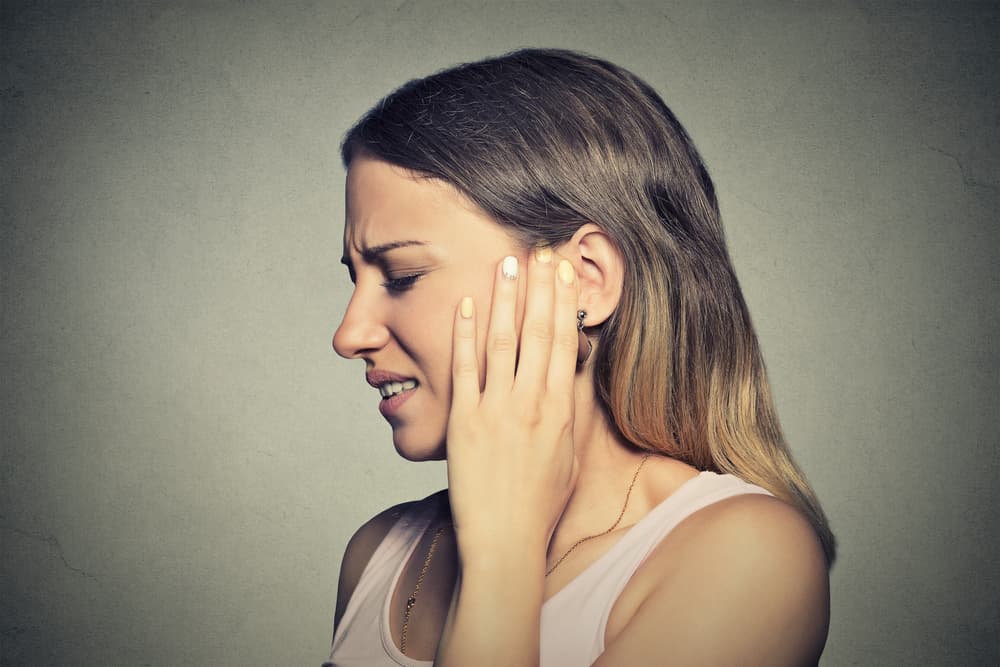
Some notice it when driving or hiking in the mountains, others when taking off or landing in an airplane. Still others notice it when they have a cold or during a particularly stressful phase in their lives: they suddenly feel pressure in their ears.
Suddenly, it feels like you have "cotton wool in your ears." You may not be able to hear as well, and you may even have ear pain in addition to the pressure.
In this article, you will learn what ear pressure is all about, what triggers it, and, above all, what you can do about it.
What is pressure on the ear and how does it occur?
Our ear is a complex organ consisting of many individual parts, from the outer ear to the ear canal to the sensitive hair cells and the eardrum, a thin membrane at the end of the ear canal. Behind the eardrum begins the middle ear, which is connected to the Eustachian tube, which connects the ear to the nasopharynx.
The Eustachian tube is responsible for ventilating the ear and equalizing pressure in the ear. If the Eustachian tube is blocked, for example due to colds, earwax, or changes in altitude, an imbalance between the external pressure and the pressure in the middle ear occurs. The eardrum bulges inward or outward. This manifests itself in a feeling of pressure on the ears or unilateral pressure on the ear.
Causes: Why do you feel pressure in your ears?
The reasons for pressure in the ears can vary greatly and be both physical and psychological in nature. We would like to present some of the causes below.
- Pressure in the ear when you have a cold: The most common reasons for pressure in the ears include colds, sniffles, and the flu. Pressure in the ears occurs when the Eustachian tube in the ear becomes blocked. This is caused by increased mucus production when you have a cold.
- Pressure in the ears during infections: Various infectious diseases can also cause a feeling of pressure in the ears or in one ear. Sinusitis, in which the mucous membranes of the sinuses become inflamed, is a particularly common example. Here too, a blocked Eustachian tube can be the cause of ear pressure.
- Pressure in the ear caused by stress: Prolonged psychological stress often causes physical symptoms. One symptom can be pressure in the ear. It is important to monitor the symptoms closely, as they may indicate impending hearing loss, the onset of tinnitus, or other ear diseases.
- Pressure on the ears during flight: The reason why you often feel pressure on your ears when flying or after a flight is due to changes in air pressure. This pressure is often particularly noticeable during takeoff or landing. Incidentally, the same thing happens when diving. Here, too, pressure differences arise, for example when descending and ascending.
- Pressure on the ears due to ear diseases: Pressure on the ear is one of the symptoms of various ear diseases. These range from middle ear infection or ear canal inflammation to sudden hearing loss and Meniere's disease. Depending on the disease and its stage, the pressure in the ear can vary in intensity. If the pressure does not subside or is accompanied by ear pain, you should always consult an ENT doctor.
- Ear pressure due to water in the ear: Water in the ear is often harmless and drains out on its own. In some cases, however, it can become trapped in the ear, for example due to too much earwax. In this case, in addition to ear pain and "muffled" hearing, there is often pressure in the ear
.
- Pressure on the ear due to earwax: Earwax is a common but usually harmless cause of pressure on the ear. Too much earwax can form a plug, which leads to a blockage in the ear, which in turn causes the feeling of pressure.
- Pressure on the ear due to dental and jaw problems: Pressure on the ears is not always directly related to them. Tension in the jaw joint can also cause ear pressure. In addition, dental problems can lead to ear pain, as the jaw and ears are closely connected.
Relieving pressure on your ears: How pressure equalization works
The feeling of pressure in your ears can be very uncomfortable. However, there are a few simple tips or methods you can use to equalize the pressure, which in turn relieves the pressure in your ears.
These include:
- Swallowing: Eating or drinking can work wonders when your ears are blocked. Chewing and swallowing usually equalizes the pressure. If you don't have any food to hand, simply swallowing your saliva is often enough.
- Chewing gum: Chewing gum has proven particularly effective for equalizing pressure in the ears. Chewing gum continuously can also help reduce pressure on the ears preventively, for example before takeoff or landing.
- Yawning: As with swallowing, yawning also causes the muscles in the palate to tense up. The muscle that keeps the Eustachian tube closed relaxes and opens it. If you can't yawn on command, you can simply imitate yawning. The movement, i.e., opening the mouth and moving the lower jaw, is usually enough to equalize the pressure.
- Valsalva method: In the so-called Valsalva maneuver, pressure equalization is controlled by breathing. Those affected breathe out gently while keeping their mouth and nose closed. To do this, they press their lips together and briefly hold their nose closed with their fingers.
Pressure in your ears won't go away: Better to see a doctor
Pressure in the ears is often harmless and disappears quickly, but it can also be a sign of a serious illness. For this reason, you should consult an ENT doctor if you experience pressure in your ears and
- the pressure does not disappear on its own after a short time
- You experience ear pressure very frequently and repeatedly.
- You notice other symptoms, such as earache, dizziness, fever, headache, or nausea.
- You notice hearing impairment or hearing loss in addition to pressure in your ear.
- You feel that your ear is blocked and the blockage does not clear up on its own.
- You feel uncomfortable in connection with ear pressure
What does an ENT doctor do for ear pressure?
The ENT doctor will first diagnose the ear pressure, i.e., determine the cause and, if necessary, identify any underlying disease.
Based on this diagnosis, the doctor will determine the treatment, for example, medication, professional earwax removal or nasal irrigation, or, if necessary, surgery to stretch the Eustachian tube so that the blockage can be cleared.
Further articles

Healthy candy alternatives for seniors
For many people, craving sweets is part of everyday life. However, traditional sweets often contain large amounts of sugar and provide

Cooking together in old age
As we get older, our everyday lives change in many ways. The children have left home, our partner may be

Protein-rich nutrition in old age
As we age, our bodies change in many ways, and nutrition plays a crucial role in our health.