HÖRST
When do you need a hearing aid?
July 25, 2025
6 minutes reading time

OSKAR
Portable TV voice amplifier
Advertisement
Table of contents
It is completely normal to experience hearing loss at some point in old age. However, sometimes illness or injury can also cause hearing loss. Hearing loss can occur at any age. Sometimes it is only temporary, but sometimes the problems become chronic. If this is the case,hearing aidsare oftennecessaryto improve hearing and enhance quality of life.
But when do you actually need a hearing aid? How do you find out whether you need a hearing aid and which hearing aid is the right one? We would like to answer these questions below.
Do I need a hearing aid?
These indicators can provide clues
Hearing problems do not necessarily mean that you need a hearing aid. However, there are some general indications that you may need a hearing aid:
Difficulty understanding conversations
Problems following conversations and frequently asking people to repeat themselves may indicate hearing problems.
Hearing problems with background noise
Difficulty understanding speech in the presence of loudbackground or ambient noisesuch as music or conversations, street noise, etc.
Loud TV
Do you often have to turn up the volume on your TV or radio to hear it better? Does this bother others? This could also be a sign of hearing loss.
Feedback from friends, colleagues, and family
Close friends are often the first to notice when someone's hearing isn't as good as it used to be.
Hearing tests
ENT doctors or hearing aid specialists can objectively determine whether you have hearing loss and to what extent.
Degrees of hearing loss: A hearing aid is recommended from this level onwards.
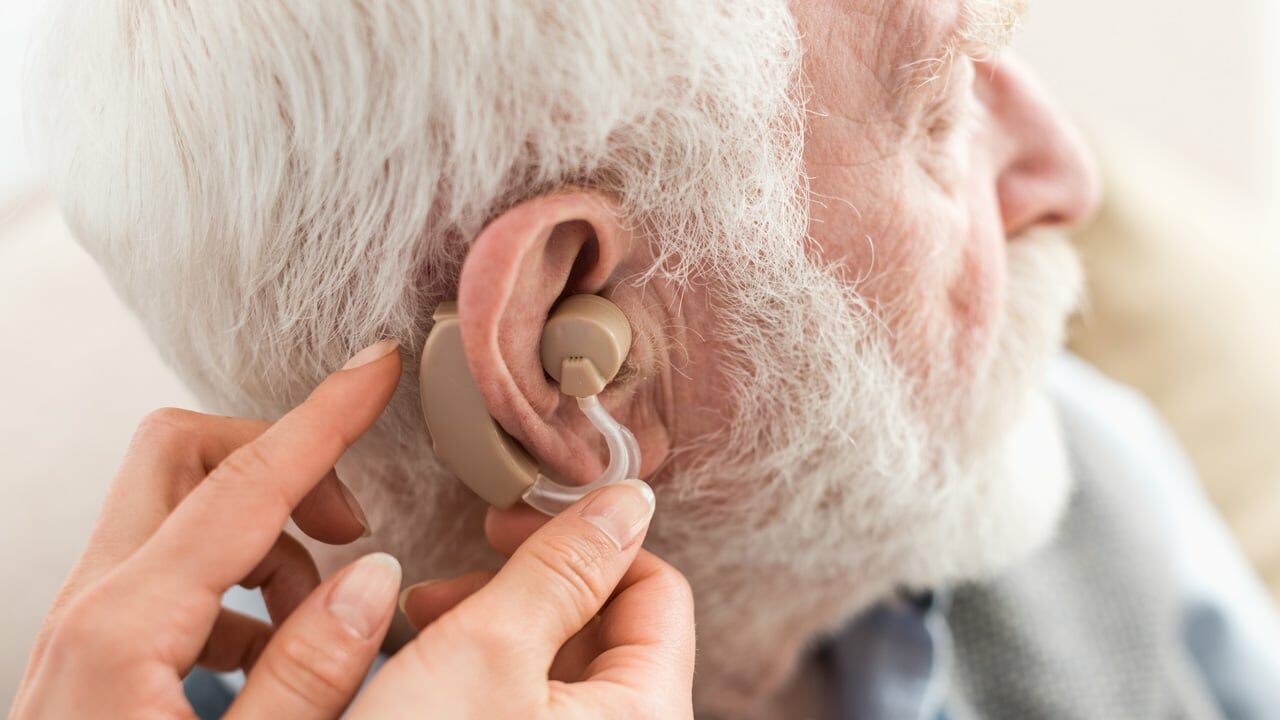
Hearing aids are state-of-the-art technical devices designed to help people with hearing problems or hearing loss to hear and communicate better. There are a variety of different types of hearing aids, manufacturers, etc.
Basically, it can be said that a hearing aid is always recommended when there is significant hearing loss that affects daily life. This, in turn, depends on various factors, including the individual needs and lifestyle of the person affected.
However, there are different degrees of hearing loss. These are usually divided into four categories:
Mild or slight hearing loss:
Hearing ability deviates by 20 to 40 dB from the defined hearing threshold. Those affected have difficulty hearing quiet or distant conversations, for example. Background noise can also make understanding difficult.
Moderate hearing loss:
Hearing ability deviates from the defined hearing threshold by 41 to 60 dB. Those affected may have difficulty hearing and understanding normal conversation.
Severe or profound hearing loss:
Hearing ability deviates from the defined hearing threshold by 61 to 80 dB. Without a hearing aid, it is almost impossible for those affected to understand conversations. Even louder noises must be closer in order to be heard.
Hearing loss bordering on deafness:
Hearing loss is greater than 81 dB. Only very loud noises can be heard. Communication is generally not possible without hearing aids or sign language.
A value of 0 to 20 decibels (dB) is considered normal. If hearing loss is20% to 30% or more than 25 dB,hearing aids are usually recommended.
How can I find out if I need a hearing aid?
If you notice one or more of the above indicators in yourself, it is advisable to investigate further.
The best way to find out if you need a hearing aid is to take a hearing test. Ouronline hearing testwill give you an initial impression of whether you have difficulty understanding speech against background noise.
However, if you have hearing problems, it is advisable to have a professional hearing test carried out by a doctor or hearing care professional.
A tone audiogram is often used to measure hearing loss. To do this, the patient is played different tones at different volumes—through headphones and separately for each ear. The person must then indicate which tones they can no longer hear in each ear.
By comparing the hearing curve with a normal hearing curve on the diagram, it is possible to determine the degree and type of hearing loss.
In which cases of hearing loss does a hearing aid help or not help?
Depending on the degree of hearing loss, but also depending on physical conditions, etc., there are different types of hearing aids that differ in how they work.
However, there are circumstances in which hearing aids do not help those affected, for example in cases of hearing loss bordering on deafness, various anatomical obstacles, or a lack of function in the auditory nerve. Possible intolerance or psychological and cognitive limitations can also be reasons why a hearing aid is not useful or functional.
In these cases, however, other forms of treatment or technologies may help. These include, for example, cochlear or middle ear implants, as well as alternative communication methods such as sign language, lip reading, or transcription apps.
You should therefore always consult a hearing specialist to find the best solution for your individual case.

When am I entitled to a hearing aid?
Whether you are eligible for a hearing aid, i.e., whether your health insurance will cover the cost of a hearing aid, depends on your hearing loss or hearing ability. This is diagnosed by an ENT doctor.
According to the "Guideline of the Joint Federal Committee on the Prescription of Medical Aids in Contract Medical Care," the prerequisite for a single-ear hearing aid is that ...
"Tone audiometric hearing loss (DIN ISO 8253-1) in the worse ear of at least 30 dB in at least one of the test frequencies between 500 and 4000 Hz" and "the speech audiometric comprehension rate in the worse ear with headphones (DIN ISO 8253-3) using the Freiburg monosyllabic test at 65 dB is no more than 80%."
(Source: Guideline of the Joint Federal Committee on the prescription of medical aids in statutory health insurance)
What costs for a hearing aid does health insurance cover?
If an ENT doctor diagnoses hearing loss and prescribes a hearing aid for the patient, the costs are covered by statutory health insurance.
However, this only includes medically necessary hearing aids that meet the necessary requirements to enable sufficient improvement in hearing ability.
You can find out what costs, i.e. what specific amounts, are covered on your health insurance company's website, for example.
If you want a modern device with additional features or greater convenience, you will usually have to bear the costs or additional costs yourself.
Further articles

Healthy candy alternatives for seniors
For many people, craving sweets is part of everyday life. However, traditional sweets often contain large amounts of sugar and provide

Cooking together in old age
As we get older, our everyday lives change in many ways. The children have left home, our partner may be

Protein-rich nutrition in old age
As we age, our bodies change in many ways, and nutrition plays a crucial role in our health.