HÖRST
When to see an audiologist
January 7, 2026
10 minutes reading time
OSKAR
Portable TV voice amplifier
Advertisement
Table of contents
Hearing loss often develops gradually, meaning that many people do not notice their declining hearing at first. It is often friends, partners, or family members who are the first to notice changes. But when is the right time to visit a hearing care professional? We explain the most important warning signs, the process of a professional hearing test, and show why early intervention can make a big difference.
The most important information in brief
- If you have difficulty following conversations in noisy environments, we recommend making an appointment with a hearing care professional.
- Frequently asking people to repeat themselves and feeling that others are mumbling can indicate hearing problems.
- If you regularly need to turn up the volume on your TV or radio, you should have your hearing checked.
- Regular hearing tests are recommended as a preventive measure from the age of 50 onwards.
- The first visit to the hearing care professional is straightforward and includes a medical history and various hearing tests.
- A prescription from an ear specialist is required for the costs to be covered by health insurance.
First signs that a hearing test is necessary
In most cases, hearing loss does not develop overnight, but gradually over months or years. This slow change means that those affected often do not notice or ignore their impairment for a long time. However, certain situations and behaviors can serve as warning signs and indicate that a visit to a hearing care professional would be advisable.
Difficulties understanding during conversations
One of the most common early signs of incipient hearing loss is difficulty following conversations in noisy environments. Restaurants, family gatherings, or public places with a lot of background noise become challenging. Voices can no longer be clearly distinguished from ambient noise, and it becomes difficult to follow individual conversation partners. This phenomenon is sometimes referred to as the cocktail party effect. If such situations regularly cause stress or are avoided, it is advisable to have your hearing checked.
Frequent questioning and the impression of mumbling
Anyone who finds themselves asking others to repeat themselves more and more often, or who has the impression that people are speaking unclearly, should take note. Often, it is certain high frequencies or consonants such as s, f, p, or t that are no longer perceived correctly. Speech then appears as indistinct mumbling, even though the speaker is articulating clearly. The feeling of guessing words instead of understanding them can also be an indication of declining hearing ability.
Increased volume on TV and radio
A typical warning sign is the constant need to turn up the volume on the television or radio. Often, those affected do not notice this themselves, while family members or roommates find the increased volume disturbing. Anyone who regularly receives feedback that the television is set too loud should take this as an opportunity to have their hearing checked. Tips on how to improve the volume in the room when watching television can also be helpful.
Social and emotional warning signs
In addition to purely acoustic signs, there are also changes in behavior and social life that can indicate hearing problems. These warning signs are often underestimated, even though they are important indicators.
Social withdrawal and avoided situations
An important indication that a visit to a hearing care professional is necessary is a change in social behavior. If invitations are declined or certain situations are avoided because conversations have become too exhausting, this should be taken seriously. Group conversations in restaurants or at parties become a burden, and many affected individuals increasingly withdraw. This social withdrawal can be a warning sign that requires early action to avoid psychological consequences such as loneliness.
Fatigue and exhaustion after conversations
An often overlooked warning sign is exhaustion after normal conversations or prolonged listening situations. When hearing is impaired, the brain has to compensate for missing information. This constant effort costs energy and can lead to physical and emotional fatigue. Anyone who notices that normal conversations are disproportionately strenuous should consider making an appointment with a hearing care professional.
Special situations for visiting a hearing care professional
There are certain situations and circumstances in life when a visit to a hearing care professional is particularly recommended. These include age-related changes as well as sudden symptoms.
Regular preventive care from age 50 onwards
As the risk of age-related hearing loss increases with age, regular hearing tests are particularly recommended for people over the age of 50. The hair cells in the inner ear wear out over the course of a lifetime and cannot be replaced. A routine check-up helps to detect changes at an early stage. Statistically speaking, the first hearing aid is often not fitted until the end of the 60s, although earlier treatment would make more sense from a medical point of view.
Tinnitus and ear noises
Not only problems with understanding, but also constant ringing or whistling in the ears, known as tinnitus, can be an indication of incipient hearing loss and should be investigated. Paradoxically, hypersensitivity to loud noises can also indicate hearing impairment, as the dynamic range of hearing may be limited. In such cases, a hearing care professional can advise whether hearing aids may also alleviate tinnitus.
Unilateral hearing loss and orientation problems
Hearing with both ears is important for spatial hearing and orientation. If you have difficulty locating sound sources or feel that you hear less well in one ear, it is advisable to seek clarification as soon as possible. Only by treating both ears can spatial understanding and the brain's ability to distinguish between important and unimportant sounds be preserved.
Possible consequences of untreated hearing loss
Hearing loss not only affects the ear, but can also have far-reaching consequences in various areas of life. Being aware of these potential consequences can increase motivation to consult a hearing care professional at an early stage.
Connection with cognitive changes
Scientific studies indicate a possible link between untreated hearing loss and cognitive impairment. When hearing is impaired, the brain has to use more resources to process what it hears. This constant additional strain can tie up cognitive capacity in the long term. In addition, the social isolation associated with hearing loss can be another risk factor. More information is available in the guide on hearing loss and dementia.
Avoid auditory deprivation
A rarely considered but important aspect is what is known as auditory deprivation. If the brain does not receive sufficient acoustic stimuli over a long period of time, it can literally forget how to understand speech. The longer you delay visiting a hearing care professional, the more difficult it can be to retrain your brain to process speech. Early intervention prevents this deterioration process and improves the chances of success of later treatment.
The first appointment with the hearing care professional
Many people put off visiting a hearing care professional because they are unsure what to expect. However, the process is straightforward and painless. An overview of the individual steps can help alleviate any reservations.
Medical history and ear canal inspection
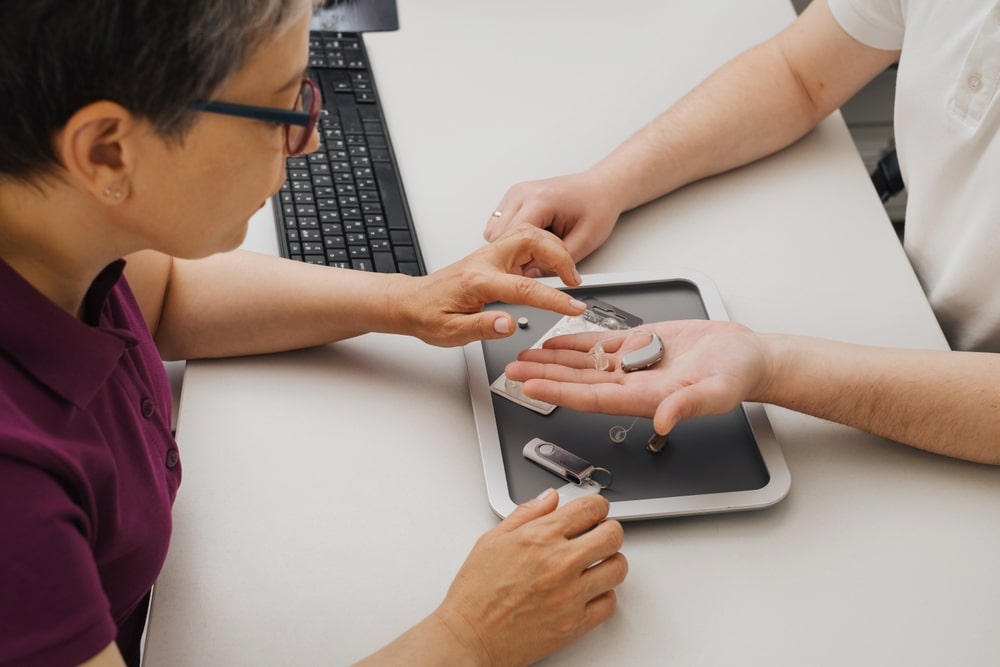
The first appointment begins with a detailed medical history, during which your living situation and individual hearing needs are discussed. The hearing care professional will ask about situations in which hearing problems occur, your professional environment, and personal habits. This is followed by an inspection of the ear canal with an otoscope to rule out physical obstacles such as earwax or other abnormalities. This examination is painless and takes only a few minutes.
Tone and speech audiometry
The actual hearing test involves various measurement methods. In tone audiometry, sounds of different frequencies and volumes are played through headphones. The person being tested indicates when they hear a tone. In speech audiometry, words or numbers are played back and must be repeated. This allows the tester to determine how well speech is understood in quiet environments and when there is background noise. The entire procedure takes about 30 to 45 minutes and forms the basis for individual consultation.
Advice and next steps
After the hearing test, the hearing care professional discusses the results and explains whether and to what extent hearing loss is present. If necessary, various treatment options are presented, from hearing aids to other hearing aids. Many hearing care professionals offer the option of testing hearing aids in everyday life without obligation before a final decision is made. For the costs to be covered by health insurance, a prescription from an ENT doctor is required.
Hearing care professional or ENT doctor as the first point of contact
There is often uncertainty as to whether a hearing care professional or an ENT doctor should be consulted first if hearing problems are suspected. Both options are possible and have their merits.
Low-threshold access to hearing care professionals
A non-binding hearing test at an audiologist is often the easiest first step. Many hearing care professionals offer free hearing tests that can be taken without a referral. The hearing care professional can provide an initial assessment and, if necessary, recommend a visit to an ENT doctor. If the suspicion of hearing loss requiring treatment is confirmed, a prescription from an ear doctor is mandatory for the costs to be covered by health insurance.
The medical route via the ENT doctor
In the event of sudden hearing loss, ear pain, or other symptoms, an ENT specialist should be consulted first to determine any medical causes. The ENT specialist will conduct a comprehensive examination and can determine whether the hearing loss is treatable or whether hearing aids would be beneficial. The medical diagnosis forms the basis for the prescription of hearing aids and the coverage of costs by health insurance.
What happens after the initial hearing test
A visit to the hearing care professional should not be seen as a one-off event, but rather as the start of a longer process. Several appointments are usually necessary, particularly when fitting hearing aids.
Fine-tuning and familiarization phase
When a hearing aid is fitted, the initial appointment is followed by further sessions for fine-tuning. After a trial period in everyday life, the settings are adjusted, for example if the user's own voice sounds unfamiliar or certain noises are disturbing. This phase is important to ensure acceptance of the devices and maximize hearing success. The brain needs to get used to the new acoustic information, which can take several weeks.
Regular inspections and maintenance
Even after initial treatment, it is advisable to visit your hearing care professional regularly. Professional cleaning and maintenance of the devices ensures their typical service life of five to seven years. In addition, your hearing should be retested at regular intervals to detect any changes and readjust the hearing aids accordingly. A good hearing care professional offers these services and annual check-ups as part of the treatment.
Further articles

Healthy candy alternatives for seniors
For many people, craving sweets is part of everyday life. However, traditional sweets often contain large amounts of sugar and provide

Cooking together in old age
As we get older, our everyday lives change in many ways. The children have left home, our partner may be

Protein-rich nutrition in old age
As we age, our bodies change in many ways, and nutrition plays a crucial role in our health.