HÖRST
Background music in the film too loud
December 19, 2025
9 minutes reading time
OSKAR
Portable TV voice amplifier
Advertisement
Table of contents
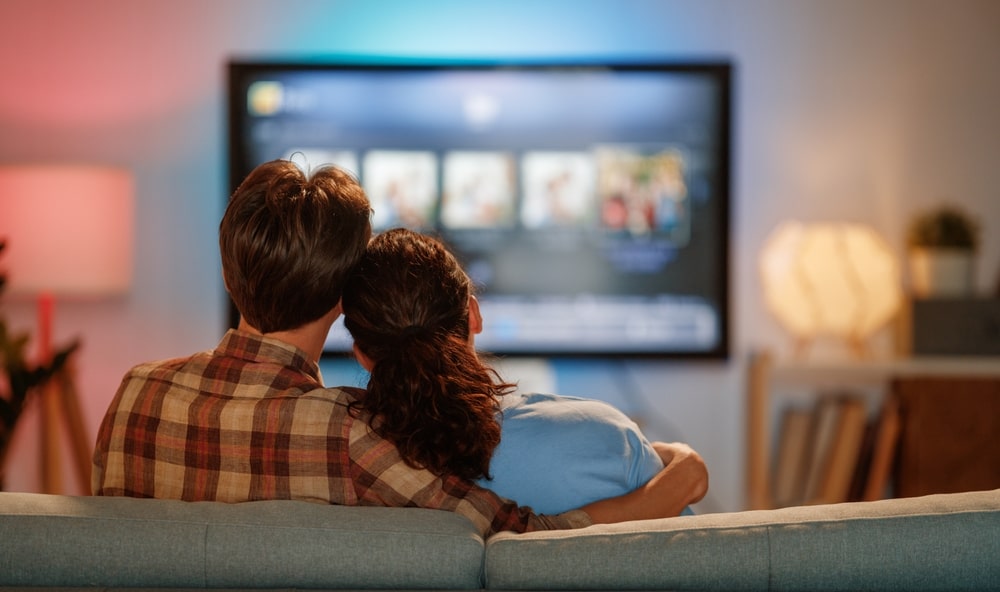
Does anyone else have the problem that when watching TV, the music is deafeningly loud, while the dialogue is barely audible? This phenomenon affects many viewers and has various technical and acoustic causes. Constantly reaching for the remote control to turn the volume down during action scenes and up during conversations can significantly spoil the enjoyment of a film. Below, we explain why the background music in movies often seems too loud and offer practical solutions for a more relaxed TV experience.
The most important information in brief
- The high dynamic range of modern film productions results in large differences in volume between quiet dialog and loud effects.
- Movies are mixed for movie theaters with professional sound systems, which can cause problems on home TV speakers.
- When downmixing multi-channel audio tracks to stereo, dialogue is often drowned out by music and effects.
- The room acoustics in the living room have a significant impact on speech intelligibility.
- TV settings such as night mode or dialogue enhancement can significantly alleviate the problem.
- External speakers or TV voice amplifiers offer an effective solution for better speech intelligibility.
Why film music often seems louder than dialogue
There are several reasons for the imbalance between background music that is too loud and dialog that is too quiet. These range from professional sound mixing in the studio to the limitations of home playback devices. Understanding these relationships helps in taking appropriate countermeasures.
The dynamic range of modern film productions
Sound engineers in professional studios use a high dynamic range to create the most realistic and immersive sound possible. The dynamic range describes the difference between the quietest and loudest sounds in a production. In a movie, this range can extend from whispered dialogue to a booming explosion. What sounds impressive in a movie theater with its optimal acoustics and powerful sound systems quickly becomes a problem in the living room at home. At lower volume levels, subtle nuances of speech are lost, while sudden volume peaks can be startling or distracting.
The problem with downmixing multichannel audio
Modern films are usually mixed for multi-channel systems such as 5.1 or Dolby Atmos with up to 64 channels. In these formats, the dialogue is isolated on the center channel, while music and effects are distributed across the other channels. If these complex audio tracks are played back on a simple stereo system or through the TV's built-in speakers, all channels must be downmixed to two speakers. In this process, known as downmixing, the dialogue, music, and effects tracks are layered on top of each other, with the quieter dialogue tracks often being drowned out by the more powerful music.
The difference between studio mixing and living room mixing
Film sound mixes are created in acoustically optimized studios that resemble movie theaters. These studios are completely silent, and powerful speaker systems reproduce every nuance. Sound engineers can hear details that cannot be reproduced clearly on small TV speakers. What was intended as atmospheric whispering in the studio quickly becomes an incomprehensible murmur in the cacophony of music and effects at home.
Technical and acoustic influencing factors
In addition to the sound mix, other factors play a role in why background music on TV seems too loud. Room acoustics, frequency response, and individual hearing ability also have a significant impact on perception.
Room acoustics and reverberation in the living room
Modern living rooms with hard surfaces such as glass, tiles, or few textiles often produce a lot of reverberation. This reverberation significantly impairs speech intelligibility. Loud effects and deep bass stimulate the room more strongly and reverberate longer than short speech impulses. This means that subsequent words are drowned out by the reverberation of the previous explosion. This acoustic effect makes it difficult for the brain to filter speech out of the resulting noise.
Frequency masking by deep bass
Low-frequency sounds have a lot of energy and can mask higher-frequency sounds such as speech. Especially when a subwoofer is set too loud or booms, spoken dialogue is acoustically swallowed up. A dominant bass range is therefore a common but easily remedied reason for incomprehensible films. Adjusting the bass settings can already bring about a noticeable improvement here.
Hearing ability and age-related changes
With age, hearing deteriorates in the high-frequency range, where the consonants that are important for speech comprehension are located. At the same time, the ability to isolate speech from background noise may decline. Music is then perceived as disturbing noise that makes it difficult to understand dialogue. In such cases, the problem is not the volume itself, but the frequency separation. If you suspect you have hearing loss, it is advisable to visit a hearing care professional.
Solutions via TV settings
Before purchasing external devices, it is worth taking a look at the audio settings on your TV. Many modern TV sets offer features that can significantly reduce the problem of background music being too loud.
Use dynamic compression and night mode
Almost all modern televisions and AV receivers offer features such as dynamic compression, night mode, or midnight mode. These features adjust the volume in real time by lowering loud passages and raising quiet dialogue. This creates a more even sound without extreme volume jumps. Although this reduces the original sound fidelity somewhat, it is one of the most effective free immediate measures for improving speech intelligibility.
Choosing the right audio track on streaming services
Streaming services often play the 5.1 surround track by default, even if only stereo speakers are available. This results in a poor automatic downmix. A simple solution is to manually switch to the stereo audio track in the streaming provider's menu, which is often listed as German without a 5.1 label. This stereo version has been professionally mixed and usually provides better speech intelligibility than the automatically calculated downmix.
Enable sound modes and dialogue enhancement
Many televisions have different sound modes such as movie, music, sports, or dialogue. The dialogue mode or speech mode emphasizes the mid-range frequencies in which the human voice lies. This makes conversations easier to understand, while music and effects fade into the background. Some devices also offer separate dialogue optimization for television, which specifically amplifies voices.
External speakers and hearing aids as a solution
If the TV's internal settings are not sufficient, external devices can make a significant improvement. From soundbars and separate speaker systems to specialized TV audio amplifiers, there are various options available.
Soundbars
Modern soundbars often offer special modes to improve dialogue clarity. These devices emphasize the mid-range frequencies and provide better separation between speech and other sounds. Compared to the flat built-in TV speakers, soundbars deliver a significantly fuller and clearer sound image. Some models feature a dedicated center channel that is specifically optimized for dialogue playback.
TV voice amplifier
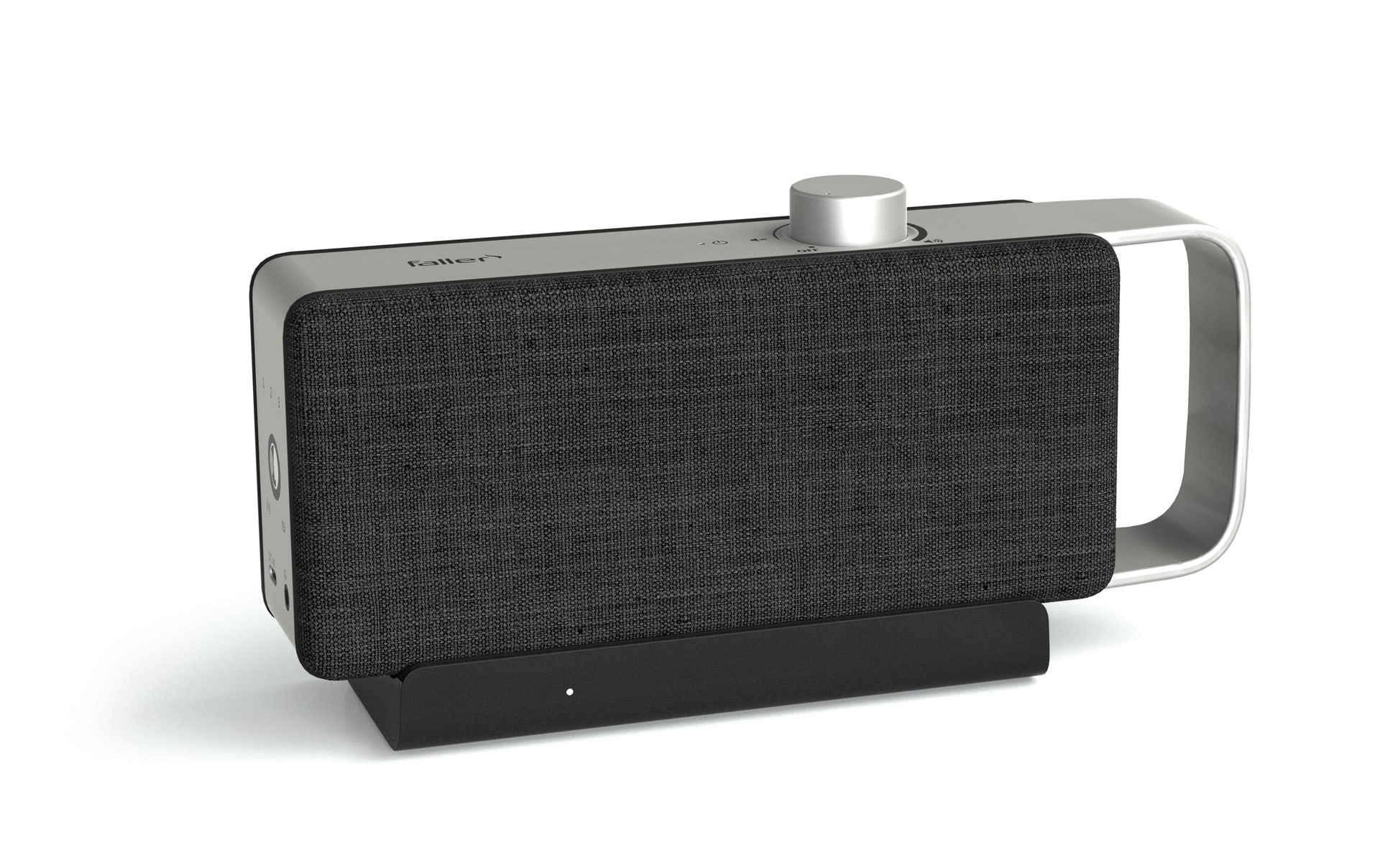
TV speech amplifiers offer a specialized solution for people who have particular difficulty understanding speech. These devices use intelligent algorithms to isolate dialogue frequencies and smooth out volume peaks. The OSKAR TV hearing amplifier from faller audio, for example, features special speech optimization that filters out distracting background noise and makes voices stand out clearly. This technology is particularly helpful for people with hearing loss.
surround sound systems
A high-quality solution for home theater enthusiasts is a 3.0 or 3.1 speaker system with a dedicated center speaker. Since movie dialogues are almost exclusively mixed through the center channel, such a system allows the voice volume to be controlled separately from music and effects. Information on optimal placement can be found in the guide on how to set up a TV soundbar correctly.
Practical tips for everyday life
In addition to technical solutions, there are a few practical measures that can alleviate the problem of overly loud movie soundtracks in everyday life. Often, even small adjustments can help improve the listening experience.
Improve room acoustics
Soft materials such as carpets, curtains, and upholstered furniture absorb sound and reduce annoying reverberation in the room. A living room with fewer hard surfaces sounds more pleasant, and conversations remain easier to understand. Even a large rug in front of the TV area or thicker curtains can make a noticeable difference.
Optimize speaker position
The alignment of the speakers has a significant impact on speech intelligibility. Ideally, the sound should be directed directly at the listening position. On many televisions, the built-in speakers point downwards or backwards, which reduces clarity. External speakers positioned at ear level usually deliver better results.
Use subtitles as a supplement
If, despite all measures, individual dialogues remain incomprehensible, subtitles can be a useful addition. Most streaming services and many TV stations offer this option. Subtitles make it possible to follow the plot without having to turn up the volume excessively.
Special aspects of sound mixing
Understanding some of the background to film sound production can help to better classify the problem and find more targeted solutions.
Artistic decisions in sound mixing
Sometimes, poor dialogue intelligibility is not a technical problem, but a conscious artistic decision. Some directors use unintelligible dialogue and overly loud music as stylistic devices to simulate disorientation or stress. In war films, for example, this can make the atmosphere seem more authentic, even if the informational content of the dialogue takes a back seat.
Differences between the original and dubbed versions
One aspect that is often overlooked is the difference between the original soundtrack and the dubbed version. In the original recording, voices are often recorded directly on set with ambient noise, while dubbed versions are recorded separately in a sterile studio and added later. Paradoxically, German dubbed versions are often easier to understand than the original English soundtrack, as the voices are more clearly separated from the background noise.
Historical development of clay production
Older films, such as those from the 1960s, are often easier to understand than modern productions. The reason for this lies in the mono production of that era, in which speech, music, and sound effects inevitably had to be balanced on a single track. Since sound production was complex and expensive at the time, music was used more sparingly, allowing speech to stand out more clearly. Today's multi-channel technology, on the other hand, tempts filmmakers to constantly fill the acoustic space with music and effects.
Further articles

Healthy candy alternatives for seniors
For many people, craving sweets is part of everyday life. However, traditional sweets often contain large amounts of sugar and provide

Cooking together in old age
As we get older, our everyday lives change in many ways. The children have left home, our partner may be

Protein-rich nutrition in old age
As we age, our bodies change in many ways, and nutrition plays a crucial role in our health.