HÖRST
Set up your TV soundbar correctly
November 7, 2025
11 minutes reading time
OSKAR
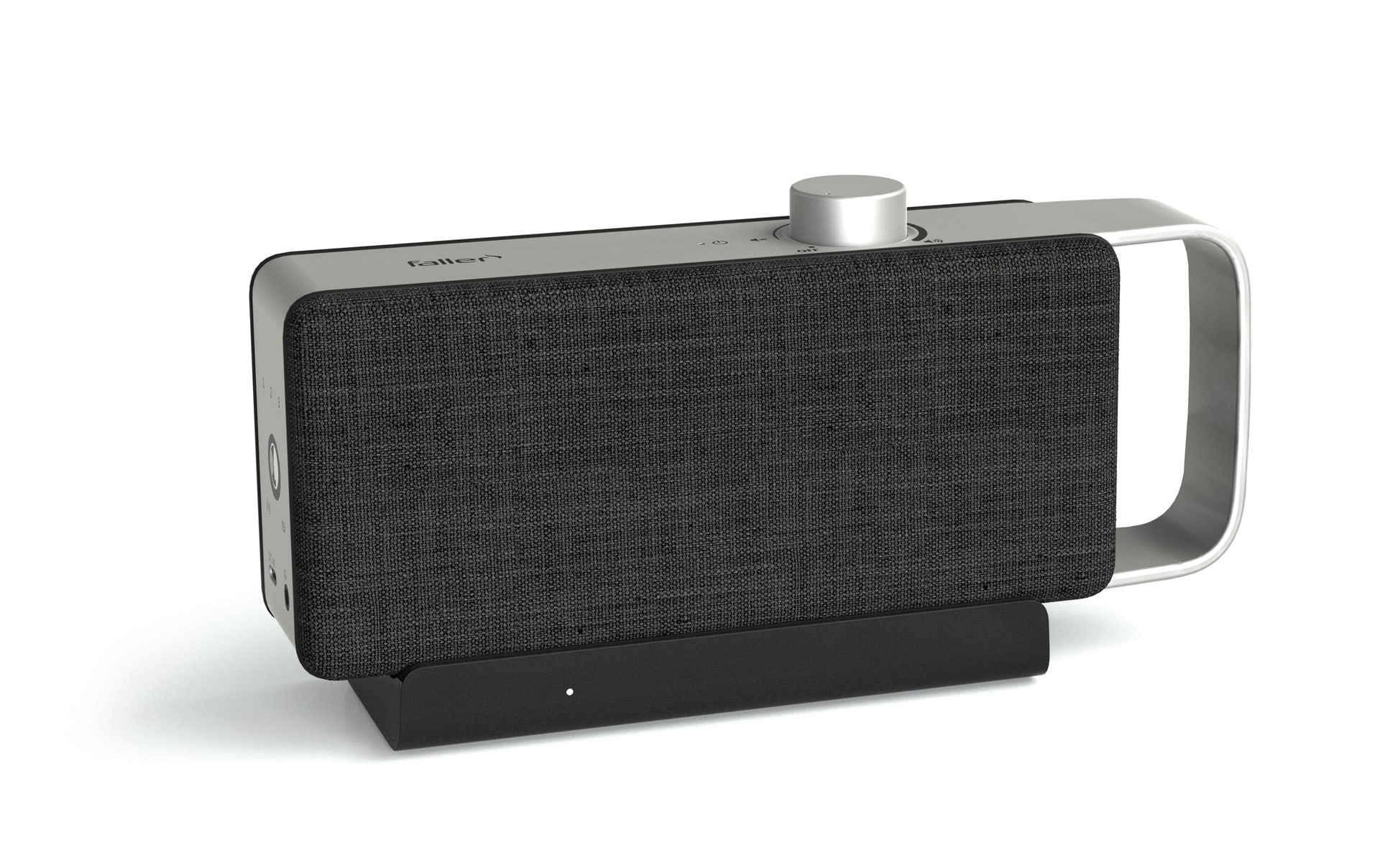
Portable TV voice amplifier
Advertisement
Table of contents
A soundbar is the key to an impressive home theater sound experience that far surpasses the flat sound of many televisions. But even the highest-quality soundbar can only reach its full potential if it is optimally positioned in the room. The right location has a significant impact on sound quality, spatial effect, and the immersion of movies and music. This guide provides expert instructions and practical tips on how to position your soundbar in front of the TV, mount it elegantly on the wall, and optimally position your subwoofer. You will also receive special tips for Dolby Atmos and surround sound systems to achieve the best possible sound in your living room.
The most important information in brief
- Placing the soundbar correctly under the TV at ear level guarantees a natural sound stage and perfect picture-sound synchronization.
- Soundbars should be placed free of obstacles so that the sound can radiate forward unimpeded.
- When mounting on a wall, a stable bracket and neat cable management are crucial for safety and aesthetics.
- The subwoofer benefits from flexible placement—the "crawling method" helps to find the optimal bass location.
- 10-30 cm distance from the wall prevents booming and ensures precise, balanced bass
- Dolby Atmos requires a clear line of sight to the ceiling; room acoustics significantly influence the overall sound experience.
Why the correct placement of the soundbar has a significant impact on the sound
The visual experience of a modern TV is often impressive, but the sound often lags behind. A soundbar is the answer to this problem, significantly improving the sound. However, its performance can only be fully exploited if it is positioned correctly in the room. It's not just a matter of placing the soundbar in a visually appealing location, but also of taking the acoustics of the room into account and ensuring that the sound reaches the listener in the best possible way.
Every soundbar emits sound in a specific way. An unfavorable setup can lead to sound loss, overemphasized bass, unclear dialogue, or uneven sound distribution. For example, reflections from walls or furniture can distort the sound. The correct height and distance from surfaces are crucial for creating a clear, balanced, and immersive sound experience. Especially with systems featuring Dolby Atmos or surround sound, the physical characteristics of the room play a central role in the three-dimensional reproduction of sound.
Place the soundbar in front of the TV
The most common and often best place to position a soundbar is directly in front of or below the TV. This setup ensures good synchronization of picture and sound and a natural soundstage.
Find the ideal distance between the TV and your seat
The distance between the soundbar and the TV and listening position is important for a harmonious sound experience. It is best to place the soundbar centrally and directly in front of the TV. Make sure that it does not cover the bottom of the TV screen. If the soundbar is too far away from the TV or not positioned centrally, this can interfere with the perception of the sound source and result in the picture and sound not being perceived as a single unit. The ideal distance from the seating position depends on the size of the room and the system. In general, the soundbar should not be too far away so that the direct sound can unfold its full effect.
Consider field of view and sound radiation
Most soundbars emit sound toward the front. It is crucial that there are no obstacles in front of the soundbar that could absorb or block the sound. These include decorations, furniture, or even the TV stand if the soundbar is too close to the TV. The soundbar's built-in speakers should also not be covered. This is especially true for up-firing speakers on Dolby Atmos soundbars, which project sound toward the ceiling to use reflections for the 3D effect. The direct field of view of the TV should also remain unobstructed.
Mounting the soundbar on the wall
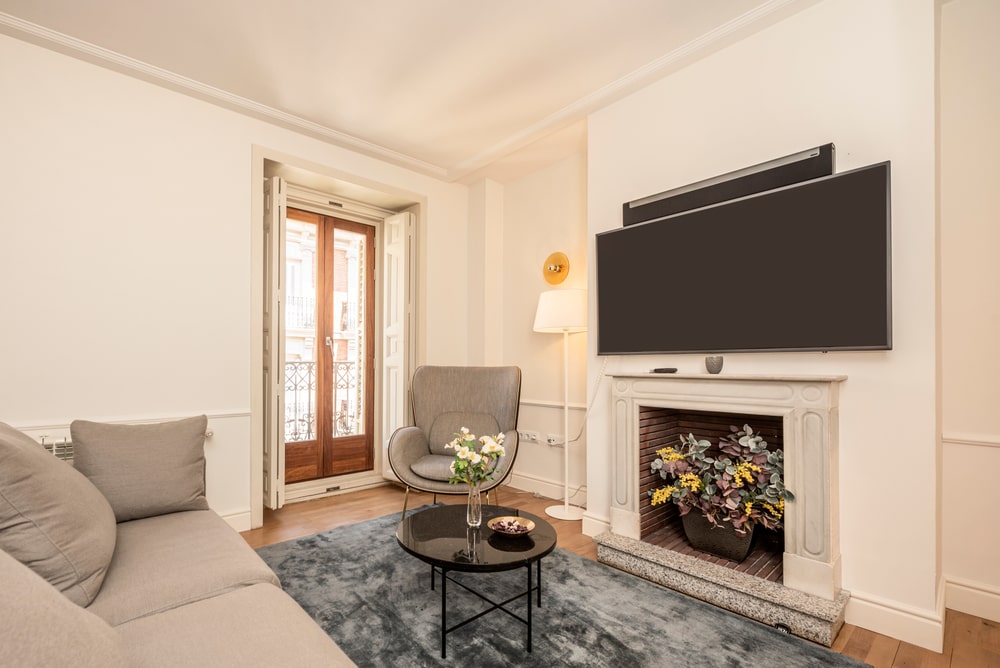
Wall mounting the soundbar is a popular option, especially in modern living rooms. It saves space on the TV stand and can improve the aesthetic appearance.
The optimal height for immersive sound
When mounting on the wall, the height of the soundbar is very important. Ideally, the soundbar should be mounted so that its speakers are at ear level or slightly below. This ensures that the sound reaches the listening position directly and without distortion, creating a natural sound stage. This often means mounting the soundbar directly below the TV. If the TV itself is mounted on the wall, the soundbar should be placed directly below it to maintain visual unity and synchronization of image and sound. For Dolby Atmos soundbars with up-firing speakers, it is also important to ensure that they have a clear path to the ceiling so that reflections can be used optimally.
Sturdy mounts and cable management
Sturdy brackets are essential for wall mounting. Many soundbar manufacturers offer suitable brackets, or there are universal solutions available. Pay attention to the maximum load capacity of the brackets and the condition of your wall. Secure mounting is important to keep the soundbar stable and prevent vibrations that could affect the sound quality.
Another aspect of wall mounting is cable management. Since the cables can no longer be hidden behind a TV cabinet, neat cable routing is important to avoid cable clutter. This can be achieved with cable ducts, in-wall solutions, or special cable fasteners. Make sure that the cables are not under tension and that there is sufficient space for the connection to the soundbar and TV. Neat cable routing not only contributes to the aesthetics, but can also extend the life of the cables and connections.
Setting up the subwoofer correctly
Many soundbars, especially those with 2.1 channels or surround sound systems, come with a separate subwoofer. The subwoofer is responsible for reproducing deep bass tones, and its placement has a significant impact on the overall sound experience.
Finding the best position for the subwoofer in the room
Unlike soundbars, whose positioning is often determined by the TV, subwoofers offer more flexibility in terms of placement. Since low frequencies are omnidirectional (i.e., they spread in all directions), a subwoofer can theoretically be placed anywhere in the room. In practice, however, there are ideal locations for achieving the best bass. One common option is the "subwoofer crawl method": First, place the subwoofer at your main listening position. Then play bass-heavy music or a movie with a lot of low frequencies. Crawl around the room and find the spot where the bass sounds the strongest and most balanced. That is often the optimal location for the subwoofer.
Another common placement is near the soundbar, often on the same wall or in a corner. Here, the connection is usually straightforward (often wireless), and the bass integrates well with the front sound.
Distance from walls and corners for clear sound
The placement of the subwoofer in relation to walls and corners is crucial. So-called "room gain" or "corner loading" can amplify the bass by placing the subwoofer closer to walls or in corners. This can result in more powerful bass, but also in a "boomy" or imprecise sound if the bass is overemphasized. Experiment with the distance to walls and corners. A distance of about 10 to 30 centimeters from the wall can often provide a good compromise between bass strength and precision. If the bass seems too dominant, try moving the subwoofer slightly away from the wall or placing it in a different location in the room.
Special aspects for Dolby Atmos and surround sound systems
For soundbars that support Dolby Atmos or true surround sound systems, there are additional placement considerations that are crucial for an immersive sound experience.
The placement of up-firing speakers for 3D sound
Dolby Atmos soundbars often use so-called up-firing speakers, which emit sound upwards towards the ceiling. The sound is then reflected off the ceiling, creating the impression that the sound is coming from above (e.g., rain, helicopters). For this effect to work optimally, a clear line of sight to the ceiling and a ceiling height of approximately 2.30 to 3.50 meters is ideal. Ceilings with steep slopes or uneven surfaces can impair the effect. Ensure that no obstacles such as lamps or shelves block the path of the sound waves from the up-firing speakers to the ceiling and back to the listening position. The soundbar itself should ideally be positioned so that the up-firing speakers are aligned frontally with the ceiling.
Rear speakers and the role of room acoustics
Systems with physical rear speakers (often connected wirelessly to the soundbar) create a true surround sound experience. These speakers should be positioned to the side or slightly behind the main listening position. Make sure they are placed at ear level for the listener and at an equal distance from the listening position. The distance between the rear speakers and the listening position is crucial for a balanced surround sound stage.
Room acoustics play an important role in the sound quality of your entire home theater. Hard surfaces such as glass, tiles, or bare walls can cause excessive reflections and a reverberant sound. Soft materials such as carpets, curtains, or upholstered furniture can absorb sound and thus improve the acoustics. Even small changes in placement or the addition of carpets can make a noticeable difference to the sound experience. Many high-quality soundbars also offer an automatic room calibration function that uses a microphone to adjust the sound to the specific acoustics of your room.
Frequently asked questions (FAQs) about setting up the soundbar
Similar questions often arise when setting up a soundbar. Here you will find answers to the most frequently asked questions.
Should you place the soundbar above or below the TV?
The most common and recommended placement is below the TV, directly in front of it on a piece of furniture or on the wall below it. This is because the sound comes naturally from the direction of the image, which improves immersion. If the soundbar is placed above the TV, it can feel as if the sound is coming from too high up, which can disrupt synchronization with the image. Only in exceptional cases, when there is no space under the TV or special designs require it, should the soundbar be placed above the TV. Here, too, it is important to choose the height and distance so that the sound is as natural as possible.
How far away from the wall should the soundbar be placed?
The ideal distance between the soundbar and the wall depends on the model and design. Soundbars with rear-facing bass ports or speakers often need to be placed at a slight distance from the wall (usually 10-20 cm) to ensure optimal bass reproduction and avoid a booming echo. If the soundbar is hung directly on the wall or placed on it, the bass may become overemphasized or imprecise. Soundbars that only radiate forward can usually be placed closer to the wall. It is always advisable to check the manufacturer's recommendations in the user manual and try out different distances to achieve the best sound experience in your room. Sometimes cables or connections can also affect the necessary distance.
How does room acoustics affect soundbar sound?
The acoustics of the room play a significant role in the overall sound experience of your soundbar. Hard, smooth surfaces such as large windows, tile floors, or bare walls reflect sound strongly. This can result in a reverberant, imprecise, or even boomy sound, as the sound waves are thrown around the room uncontrollably. Especially with soundbars that use upward or side-firing speakers (such as Dolby Atmos or surround sound systems), these reflections can interfere with or enhance the desired effect. Soft furnishings and furniture arrangement can help optimize room acoustics and create a more balanced sound experience.
Further articles

Healthy candy alternatives for seniors
For many people, craving sweets is part of everyday life. However, traditional sweets often contain large amounts of sugar and provide

Cooking together in old age
As we get older, our everyday lives change in many ways. The children have left home, our partner may be

Protein-rich nutrition in old age
As we age, our bodies change in many ways, and nutrition plays a crucial role in our health.