HÖRST
Hearing health – 8 tips for healthy hearing
August 7, 2025
6 minutes reading time
OSKAR
Portable TV voice amplifier
Advertisement
Table of contents
Hearing is one of our most important abilities because it enables us to communicate, recognize sounds and voices, perceive other people's emotions, and respond appropriately.
To derive reactions, recognize dangers in time, or simply experience entertainment, for example, enjoying music.
In addition, hearing is an important function in children's language development. Toddlers learn a large number of words, especially in the early years.
Without the ability to hear, life can be a lot more difficult. That's why it's so important to keep our hearing healthy. Below, we've summarized a few tips for healthy hearing.
Consequences of hearing loss
Hearing loss can have far-reaching consequences for those affected and, in some cases, change their entire lives. It presents them with new challenges, particularly in terms of communication, and can cause both physical and psychological problems.
In addition to hearing impairment, dizziness and balance disorders can occur, and in the worst case, hearing loss can result.
The psychological consequences include loneliness and social isolation, stress and excessive demands, as well as anxiety and depression.
You can find more information on the topic of "Consequences of hearing loss" in our article.
8 tips for healthy hearing
1. Avoid noise:
Unfortunately, what sounds so simple is not. We encounter noise in all areas of everyday life, from traffic to noise on the construction site next door to the disco—because yes, even loud music can be considered noise if it is louder than 80 decibels. So try to avoid these sources of noise as much as possible and take enough breaks. And if you like to listen to music through headphones or in-ear headphones, you should set an appropriate volume so that your hearing is not damaged. Here, too, 80 decibels is considered the upper limit. In addition, the headphone volume should not exceed 60 percent. Your hearing health will thank you for it.
2. Hearing protection:
If noise cannot be avoided, it is essential to wear hearing protection, as prolonged exposure to noise, whether at work or during leisure activities, such as listening to loud music, can cause irreparable damage to your hearing. At elevated noise levels, i.e., above approximately 80 decibels, it is best to use appropriate hearing protection. This includes, for example, earplugs, earmuffs, or noise-canceling headphones. Make sure that the hearing protection fits well, does not slip, and does not pinch or squeeze, so that it can be worn even during longer periods of noise.
3. Earplugs:
Hearing protection not only protects against noise, but also against other external influences such as water, dirt, or dust. That is why there is now a wide range of special earplugs available for different applications and individual requirements. They can prevent water from entering the ear, for example when bathing or swimming, as well as dust or dirt, for example at work, outdoors, in dusty environments, on the beach, etc.

4. Nutrition for your hearing:
It's no secret that a balanced and healthy diet offers many health benefits. This also applies to hearing health. For example, it has been found that consuming folic acid can reduce the risk of hearing loss. Folic acid is found in green vegetables such as spinach and lettuce, legumes and nuts, tomatoes, oranges, whole grains, and eggs, among other foods.
5. Ear canal care and cleaning:
Proper care and cleaning of the ear canal is also particularly important for hearing health. Although our ears clean themselves of dirt and bacteria with the help of earwax, proper care can help prevent infections. This includes, for example, gently cleaning the ears with a damp cloth, drying the ears after swimming or showering, and cleaning headphones and hearing aids. However, the use of cotton swabs should be avoided, as they often only push the dirt deeper into the ear.
6. Regular hearing tests
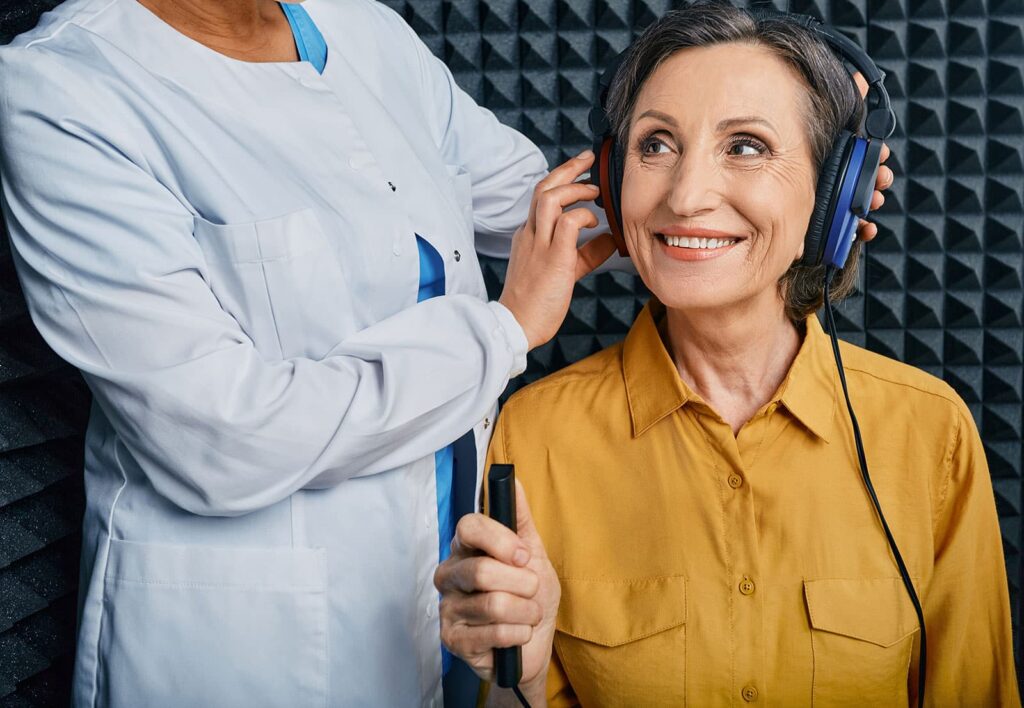
Our hearing deteriorates over the course of our lives. This is due to natural changes in the ear, such as the deterioration of hair cells in the inner ear. In addition to age-related hearing loss, noise, injuries, and ear diseases can also lead to hearing problems or even hearing loss. Regular hearing tests are important in order to detect this in good time and possibly even prevent it. You can have these done by your ENT doctor or a hearing care professional, for example. People aged 50 and over are recommended to have a hearing test once a year as part of their hearing care. If you notice hearing problems, regardless of your age, a hearing test is also advisable.
You can also get an interesting first impression of your hearing ability with our free online hearing test.
7. Listening training
As in many areas of life, practice makes perfect when it comes to hearing. Targeted hearing training can help improve your hearing and prevent hearing problems or even hearing loss.
So why not incorporate a few regular listening exercises into your daily routine, from consciously listening to music to actively perceiving and distinguishing certain sounds to directional hearing. Listening training is also available under professional guidance, for example as part of audio therapy.
8. Avoid stress
Most people know how unhealthy stress can be and that too much stress can have a negative effect on our bodies. But did you also know that hearing loss and mental health can be closely related? High stress levels can lead to sudden hearing loss and be the cause of hearing problems and symptoms such as tinnitus. So try to make sure you relax in your everyday life. Meditation, yoga, or sports, but also conscious breaks could help.
Further articles

Healthy candy alternatives for seniors
For many people, craving sweets is part of everyday life. However, traditional sweets often contain large amounts of sugar and provide

Cooking together in old age
As we get older, our everyday lives change in many ways. The children have left home, our partner may be

Protein-rich nutrition in old age
As we age, our bodies change in many ways, and nutrition plays a crucial role in our health.