HÖRST
Communicating with people who are hard of hearing
December 19, 2025
10 minutes reading time
OSKAR
Portable TV voice amplifier
Advertisement
Table of contents
Successful communication is the basis for social participation and interpersonal relationships. When hearing is impaired, everyday life presents special challenges for everyone involved. This guide shows how to communicate successfully with people who are hard of hearing, which strategies can help, and what both hearing and affected individuals can pay attention to.
The most important information in brief
- Clear articulation is more helpful than increased volume, as speaking loudly can distort the mouth shape.
- Eye contact and good lighting on the face make lip reading and recognizing facial expressions easier.
- Background noise should be reduced as much as possible, as people with hearing loss find it difficult to filter out distracting sounds.
- When misunderstandings arise, rephrasing often helps more than repeating verbatim.
- Patience and empathy are fundamental to respectful communication.
- Technical aids can support communication in everyday life
Basics for understanding hearing loss
Before specific communication strategies are implemented, it is helpful to have a basic understanding of the situation. Not all hearing loss is the same, and individual needs can vary greatly.
What hearing loss means
Hearing loss refers to a reduction in hearing ability, which can range from mild hearing impairment to severe hearing loss. Depending on the type and severity, different frequency ranges are affected. Some people hear low tones well but have difficulty with high frequencies. Others perceive sounds as muffled overall.
A common misconception concerns the effectiveness of hearing aids. These technical aids cannot completely replace natural hearing. Although they amplify sound signals, they cannot restore missing frequencies. Many hearing aid users still experience gaps or distortion in their hearing, especially in environments with a lot of background noise. If you would like to learn more about the consequences of hearing loss, you can find further information on the various effects in everyday life.
The limits of lip reading
Reading lips is an important aid to communication, but it is not a perfect solution. According to estimates, only about 30 percent of sounds can be clearly recognized from lip movements. The rest must be deduced from contextual knowledge, powers of deduction, and guesswork. This makes lip reading a strenuous activity that requires a high level of concentration.
In addition, certain sounds look very similar when spoken. The letters P, B, and M are visually almost indistinguishable. The same applies to T, D, and N. These ambiguities mean that people with hearing loss often have to deduce which word is meant from the context.
The psychological side of communication
Communication is more than just the exchange of information. It has an emotional dimension that is particularly important when hearing problems arise. Understanding these aspects can significantly improve communication.
Listening effort and fatigue
Constantly concentrating and piecing together fragments of words to form meaningful sentences requires enormous mental effort. People with hearing loss have to constantly puzzle over conversations in order to follow the content. This cognitive strain can lead to rapid exhaustion. Experts refer to this as hearing fatigue.
The constant strain can have an impact on general well-being. Regular breaks during longer conversations or meetings can therefore be useful in maintaining concentration. These so-called listening breaks give the brain time to recover.
Withdrawal and social consequences
Many people with hearing problems try to hide their impairment. They nod at inappropriate moments or avoid situations where they have difficulty understanding. This withdrawal can lead to isolation and loneliness. Communication, a basic social need, is neglected.
It is important for family and friends to know that people with hearing loss are not slow to understand or uninterested when they cannot follow conversations. They simply have acoustic comprehension problems. This awareness can prevent misunderstandings and promote mutual understanding.
Practical strategies for hearing people
The following tips can make communication with people who are hard of hearing easier. These are general recommendations that can be adapted to suit individual situations.
Create optimal conditions
Background noise makes understanding considerably more difficult. Radio, television, street noise, or the clattering of dishes should be reduced as much as possible. People with hearing loss often cannot filter out distracting noise as well as those with normal hearing. Understanding is particularly difficult in noisy environments such as restaurants or parties.
Good lighting of the face is important for reading facial expressions and lip movements. The conversation should be positioned so that the face is not in shadow. Standing in front of a window creates a silhouette due to the backlighting, and the mouth movements are barely visible. For watching television together with hearing loss, there are special aids and settings that can make understanding easier.
Adjust speech behavior
A common misconception is that speaking loudly helps. In fact, shouting distorts the mouth shape and can even be unpleasant. It is better to speak clearly and distinctly at a normal volume. A moderate speaking pace gives the other person time to process what is being said.
The mouth should not be covered when speaking. Hands in front of the face, chewing, or an unfavorable head position hinder lip reading. Beards around the mouth can also make it difficult to recognize lip movements. Complicated sentence structures and technical jargon should be avoided if simpler formulations are possible.
Attract attention
Before starting a conversation, make eye contact or get the person's attention by waving or touching them lightly. If you start talking abruptly, you risk your first words going unheard.
It can be helpful to mention the topic of conversation at the beginning. This allows the other person to mentally prepare themselves and better understand the context. When changing topics, it is useful to give a brief indication, such as a simple signal like "Now we're talking about something else." The thematic framework makes it easier to classify the fragments of words heard.
Dealing with misunderstandings
If something has not been understood, repeating it word for word is often not the best solution. It can be more helpful to rephrase the sentence or use synonyms. Sometimes certain words are simply difficult to hear or read from the mouth. Rephrasing then offers a new chance to understand.
Important information such as dates, addresses, or names should be written down to be on the safe side. This avoids misunderstandings with numbers and details that can easily be confused acoustically. A quick question to check whether everything has been understood shows interest and a willingness to communicate.
Strategies for people with hearing loss
Communication is not a one-way street. Those affected can also actively contribute to improving understanding. The following approaches can help.
Open approach to hearing loss
Mentioning your hearing impairment signals to the other person that consideration is needed. Specific instructions are more helpful than general requests. Instead of saying "I can't hear well," an instruction such as "Please look at me when you speak" can give the other person a clear idea of what to do.
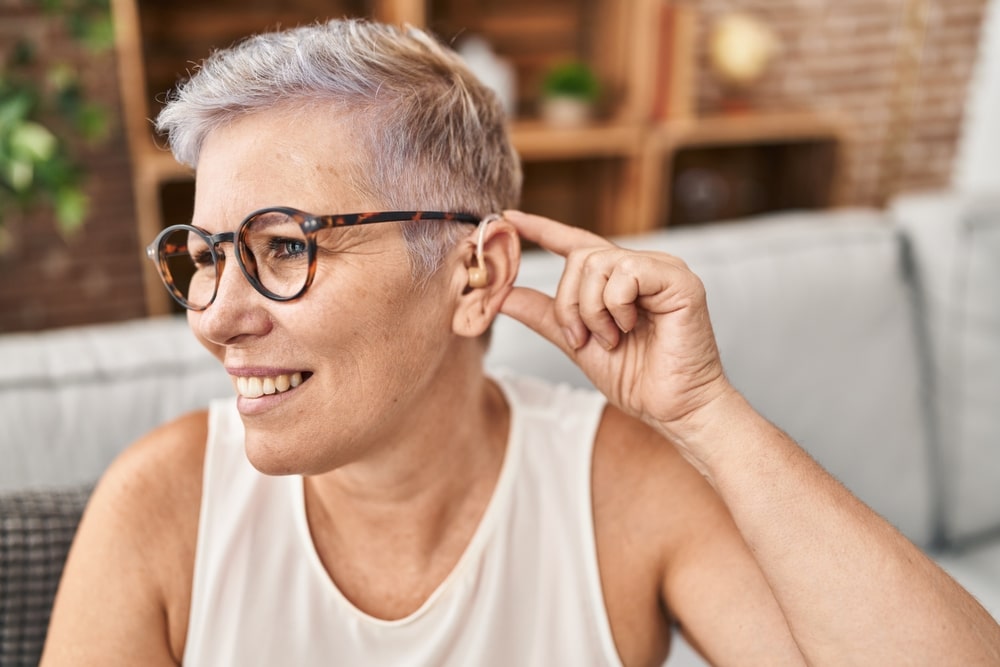
The visible use of hearing aids can also serve as a signal. Many people then automatically know that they should pay attention to how they speak. The fear of stigmatization prevents some affected individuals from wearing their hearing aids openly. However, visibility can actually break down communication barriers.
Strategic positioning
In rooms, the choice of seating is important. A seat with your back to the wall or to the light allows you to see everything clearly and avoids glare. In groups, it can be helpful to sit next to someone you trust who can give you keywords or explain contexts if necessary.
At events or in restaurants, it is worth asking in advance for acoustically favorable seats. Areas away from loudspeakers, kitchens, or passageways are often more suitable than central locations.
Active conversation techniques
Pretending to understand leads to misunderstandings in the long run. Asking open questions or repeating what you have understood for confirmation are better strategies. Dealing with mistakes openly can ease the situation for both sides. Sometimes, smiling at a funny misunderstanding can also help to take the tension out of the conversation.
Special situations in everyday life
Certain everyday situations place special demands on communication. Specific approaches are required here.
Telephoning with hearing loss
Telephoning is often particularly difficult for people with hearing impairments, as they cannot see the caller's mouth. Technical solutions such as telephone amplifiers or telephones with increased volume can help. Video telephony offers the advantage of being able to see the caller's face.
During important phone calls, background noise should be avoided. Asking the other person to speak slowly and clearly can improve communication. For particularly important information such as appointments or addresses, written confirmation by email or text message can be useful.
Group discussions and social events
Understanding is particularly challenging in groups. When several people talk at once, people with hearing loss find it difficult to follow the conversation. Clear conversation discipline, where only one person speaks at a time, makes the situation much easier.
At parties or in restaurants, asking for the music volume to be turned down can help. Seats with good acoustics are better than positions in the middle of the room. Small conversation groups are often easier to follow than large table discussions.
Assistive technology in everyday life
Modern technology offers various options to support communication. FM systems transmit the speaker's voice directly to the hearing aid and are particularly helpful in noisy environments. Apps for teaching written language convert spoken words into text, enabling users to follow conversations.
There are special hearing amplifiers for television that can highlight dialogue more clearly and reduce background noise. Such aids can improve the media experience and enable participation in watching television together.
Empathy as the basis for understanding
All technical and practical strategies can only be fully effective if they are based on mutual respect and understanding.
Be patient and understanding
People with hearing loss sometimes need a little more time to process what has been said. Giving them this time is a sign of respect. Impatience or annoyed reactions make communication even more difficult and can cause those affected to withdraw.
It helps to be aware of how much effort listening requires for people with hearing loss. Constantly concentrating on fragments of words, facial expressions, and context is exhausting. Understanding this situation can form the basis for successful communication.
Finding solutions together
The best communication strategy is often one that is developed together. Every person with hearing loss has individual needs and preferences. Open discussions about what helps and what doesn't can improve communication in the long term.
In families, circles of friends, and at work, it is worthwhile to think about adjustments together. Sometimes it is small changes that make a big difference. The willingness to engage in dialogue and mutual consideration is the most important factor here.
Further articles

Healthy candy alternatives for seniors
For many people, craving sweets is part of everyday life. However, traditional sweets often contain large amounts of sugar and provide

Cooking together in old age
As we get older, our everyday lives change in many ways. The children have left home, our partner may be

Protein-rich nutrition in old age
As we age, our bodies change in many ways, and nutrition plays a crucial role in our health.