HÖRST
Remove earwax
August 8, 2025
8 minutes reading time

OSKAR
Portable TV voice amplifier
Advertisement
Table of contents
When you think of earwax, the first thing that probably comes to mind is "dirty ears" and, in this context,cleaning the ear canal. Many people even feel disgust at the thought of removing earwax.
But did you know that earwax actually has an important function for our ears? Find out what that is and what you should bear in mind when removing earwax below.
What is earwax?
Earwax is a secretion from the earwax glands, which is usually yellowish or brownish in color. It is also called ear wax or, in medical terms, cerumen.
What many people don't know: earwax is not a superfluous waste product. Instead, it is a protective secretion. Its job is to protectour earsand especially our hearing, for example against dirt, dust, and other foreign bodies that could get into our ears. Thanks to its greasy and sticky consistency, earwax traps dirt particles and prevents them from entering the ear canal, where they could potentially cause damage.
But that's not all: earwax also prevents dirt and bacteria from settling in the ear. Chewing and talking slowly transport the cerumen out of the ear. Another advantage of earwax is that it keeps the ear canal supple. As a "natural lubricant," it protects the skin in the ear from drying out.
Earwax also contains enzymes and acids that inhibit the growth of bacteria and fungi. This helps prevent infections in the ear. Have you ever wondered why earwax tastes bitter? The reason is that it is meant to deter insects from entering our ears. Earwax thus plays an important role in maintaining ear health. Instead of viewing it as annoying dirt, we should recognize the useful functions of this substance and treat our ears with the care they deserve.
Why do some people have more earwax than others?
Increased earwax production cannot be attributed to poor hygiene. Instead, there are various reasons why some people have more earwax than others. These include
genetic predisposition:
Specific genes influence the consistency (e.g., wet or dry and crumbly) and the amount of earwax produced.
gender:
Men generally produce more earwax than women.
age:
Age also plays a role in the production of cerumen. Older people tend to produce more. In addition, increased hair growth can slow down its removal. Children produce significantly more cerumen than adults.
excessive cleaning:
As a rule, the ear produces exactly as much earwax as it needs. Cleaning too often can therefore lead to increased production.
external factors:
Regular use of hearing aids, but also of in-ear headphones, can lead to increased secretion in the ear.
Too much earwax? When your ear is blocked.
Even though the ear normally regulates its own production of earwax, it can sometimes become blocked. This is often caused by "incorrect" cleaning, for example with cotton buds. This pushes the cerumen too far into the ear, where it becomes lodged. The consequences can range from hearing problems or hearing loss to ear infections and earache.
Symptoms of a blocked ear or earwax blockage include hearing loss, noises in the ear such as buzzing or hissing, a feeling of pressure in the ear, and evenearache.
If you notice hearing problems or ear pain, it is advisable to see an ENT doctor. They can determine the specific cause of the symptoms and check whether excess earwax is really the reason.
Removing earwax: Tips and tricks
As we have now established, our ears basically clean themselves. Excessive or too frequent cleaning can therefore be unnecessary or even harmful.
However, removing earwax is sometimes necessary, for example, when there is excessive production or a buildup that blocks the ear canal and causes hearing problems.
Here are a few tips and tricks for removing earwax:
- Water: Cleanyour ear cups using a washcloth and warm water. Make sure that no water gets into your ears.
- Ear spray: Ear spraysare designed to clear excess earwax from the ear canal. They usually contain a special solution that softens the cerumen and supports its natural removal.
- Ear drops: Ear drops, often based on salt water or oils, help to loosen earwax blockages in the ears.
- Earwax removers: Thesemechanical aids are specially shaped instruments that enable excess earwax to be removed. However, particular care must be taken here to avoid injuring the ear.
It is important to clean your ears carefully and correctly to avoid injuring the eardrum or ear canal.
Removing earwax at the doctor's office
If you are unsure, consult your doctor. They have various safe methods for removing earwax correctly. These include, for example:
- Ear irrigation:A doctor can perform professional ear irrigation. This involves flushing the ear canal with a special liquid to loosen the earwax.
- Ear drops:Your doctor may prescribe special medical ear drops that soften the earwax and make it easier to remove.
- Scraping:Using a small, spoon-shaped instrument called a curette, the doctor can gently remove the earwax from the ear canal by hand.
- Micro-suction:The doctor can carefully remove the cerumen using a special suction instrument.
Better not: Methods for removing earwax that should be avoided
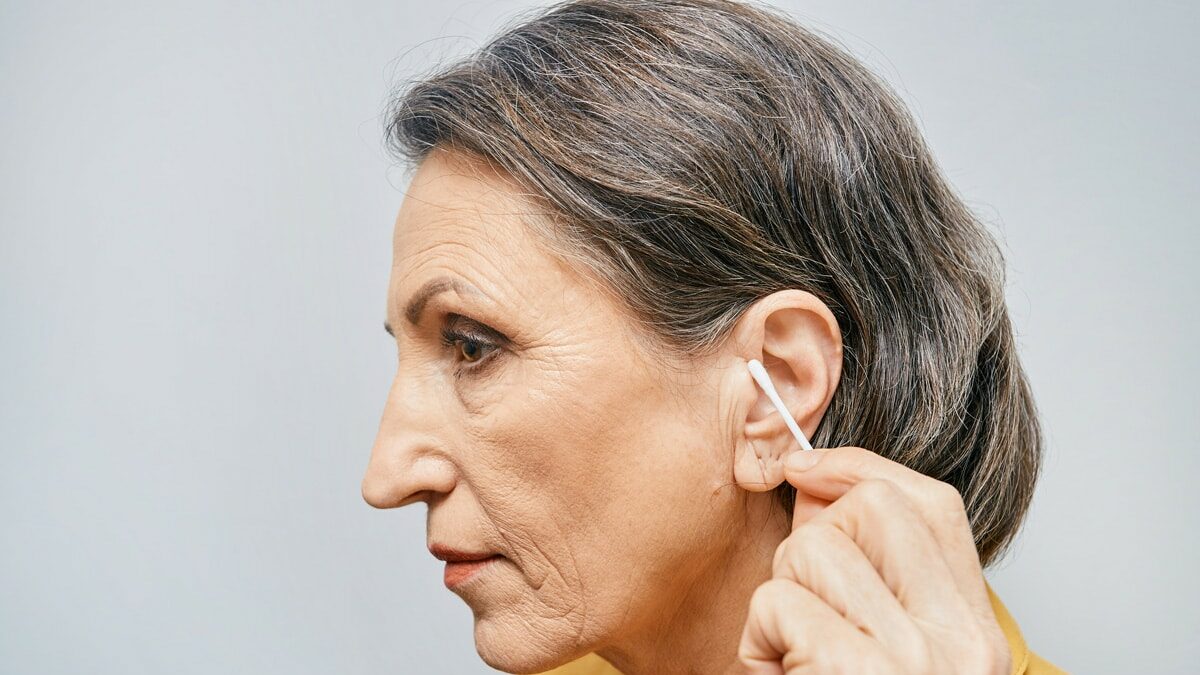
Of course, there are also lots of secret tips and home remedies for removing earwax. However, some of these should not be used as they could be dangerous. These include cotton swabs, for example, which often do more harm than good in the ear. They often just push the earwax deeper into the ear canal. This in turn can lead to blockages and even injuries to the eardrum. Other thin objects such as hairpins, matches, etc. should also never be used to remove earwax, as they can damage the sensitive tissue in the ear.
Ear candles are also not recommended. Ear candles involve inserting a hollow candle into the ear and lighting it, which is supposed to pull out earwax through the suction created. However, this is controversial and not recommended by experts. This method carries the risk of burns and can even lead to a blockage of the ear canal by wax.
Prevention and care
True to the motto "better safe than sorry," you should take the best possible care of your ears and ear canals to prevent excess earwax production.
Regular and gentle care, such as cleaning the outer ear with a soft cloth, can help reduce the build-up of earwax.
You should also make sure that you do not wear earplugs and headphones for too long. These can impair the ventilation of the ear canal.
FAQ: Frequently asked questions about earwax removal
How often should I clean my ears?
The question of how often you should clean your ears can only be answered on an individual basis. In any case, gentle external cleaning should be carried out regularly.
However, it is even more important that people with excessive earwax production visit an ENT doctor regularly, i.e., every 3 months or at least twice a year, for a check-up and, if necessary, have the earwax professionally removed to prevent blockages in the ear canal and consequent problems.
How much earwax is normal?
There is no clear answer to the question of how much earwax is "normal," because the amount of earwax a person produces depends on various factors, including gender, age, and genetic predisposition. It is important to note that earwax is not a bad thing.
On the contrary, it protects our ears against viruses and bacteria as well as dust and dirt. However, excessive earwax production or improper cleaning of the ear canal can sometimes lead to blockages in the ear and consequently to problems such as earache or hearing difficulties. In such cases, you should definitely consult an ENT doctor.
Is earwax the reason why I hear so poorly?
Hearing loss or hearing problems can have various causes, including age, illness, or a "blocked" ear. If there is an overproduction of earwax, the ear can become blocked by the earwax plug.
This makes hearing more difficult. In this case, it is advisable to have the plug professionally removed by an ENT doctor.
Further articles

Healthy candy alternatives for seniors
For many people, craving sweets is part of everyday life. However, traditional sweets often contain large amounts of sugar and provide

Cooking together in old age
As we get older, our everyday lives change in many ways. The children have left home, our partner may be

Protein-rich nutrition in old age
As we age, our bodies change in many ways, and nutrition plays a crucial role in our health.