HÖRST
Types of TV speakers
September 12, 2025
22 minutes reading time

OSKAR
Portable TV voice amplifier
Advertisement
Table of contents
A good sound experience is an essential part of the television experience, but many televisions offer limited sound quality through their built-in speakers. Fortunately, there are various types of TV speakers that have been specifically designed to improve sound quality and provide a more immersive experience. These range from simple external speakers to advanced surround sound systems and wireless solutions. This section introduces the different types of TV speakers, from built-in and external speakers to soundbars and compact speakers to subwoofers and surround sound systems. Modern technologies such as Bluetooth and wireless speakers also offer new ways to optimize sound and enhance the TV experience. More detailed information can be found in the individual sections, which link to more comprehensive and in-depth explanations if required.
The most important information in brief
- Integrated TV speakers save space, but their flat design severely limits sound quality and bass performance.
- Soundbars offer affordable enhancement with Dolby Atmos and dialogue modes for better speech intelligibility
- Compact and standard speakers deliver fuller sound than TV speakers, but remain limited when it comes to surround sound.
- Subwoofers complement other systems with powerful bass reproduction, but require additional space and suitable hardware.
- Surround sound systems create an immersive 3D sound experience, but require more complex installation and a higher investment.
- Bluetooth and wireless speakers allow flexible placement without cable clutter, ideal for mobile use.
Integrated TV speakers
Integrated TV speakers are the standard solution for most modern televisions. They save space and are easy to use, as they are built directly into the TV, eliminating the need for additional devices. However, they generally do not offer satisfactory sound quality, especially when it comes to dialogue clarity, low frequencies, and bass. Due to their slim design, most televisions are unable to integrate powerful speakers. This results in a flat sound that is often insufficient for complex sound effects or music. Especially in films or series with dynamic soundscapes, the integrated speakers lack bass and depth, which detracts from the overall experience.
Another problem is the placement of the speakers. They are often directed downward or backward, which means that the sound does not fill the room optimally and misses the direct path to the listener. In many cases, this results in a diffuse sound that is perceived as less clear and precise. Only televisions with forward-facing speakers improve this situation somewhat, but even these cannot reproduce low frequencies optimally.
Although some modern televisions have integrated advanced technologies such as Dolby Audio or DTS for better sound reproduction, these limitations in terms of clarity, dialogue intelligibility, bass, and low frequencies remain. The speakers in high-quality devices generally offer higher fidelity, but the physical limitations imposed by the size of the device still result in a less dynamic and less immersive sound.
For people who watch television regularly and value clear dialogue, the built-in speakers may be sufficient, especially for simple programs such as news. However, they are often inadequate for intense, demanding, or difficult-to-understand content. The sound quality is often not good enough to provide a truly immersive experience. External speakers such as soundbars, standard speakers, wireless TV speakers, or surround sound systems are by far the better choice here. These devices deliver much better sound quality and enable more precise reproduction of low frequencies and dialogue.
External speakers not only offer a larger sound stage, but also better adaptation to individual needs. Especially for people with impaired hearing, these speakers can significantly improve speech intelligibility by emphasizing the frequencies that are important for the voice. An additional advantage of external speakers is their flexibility. They can be easily positioned and adjusted to ensure optimal sound distribution in the room. This is a major advantage over built-in TV speakers, which are always limited due to their position and design.
External TV speakers
External TV speakers are an effective way to significantly improve the sound experience of a television. They are a useful addition or replacement for built-in speakers and offer much better sound quality. Compared to the integrated speakers of a TV, which usually only cover basic audio requirements,external speakers provide a fuller, clearer, and more powerful sound. They offer a significant improvement, especially when reproducing dialogue and complex soundscapes. They come in various versions, such as soundbars, compact speakers, or surround systems, and can be flexibly adapted to the needs of the user.
The sound reproduction of external TV speakers is significantly more dynamic and spatial than that of most integrated speakers. Many models are equipped with advanced technologies such as Dolby Atmos and DTS:X. These technologies provide three-dimensional surround sound, making the TV experience more intense and immersive. Dolby Atmos simulates sound reproduction from different directions, which not only makes the sound clearer, but also gives the impression that the sound is coming from the room itself. This creates a realistic experience, especially for movies or action scenes.
Another advantage of external speakers is their flexible placement. Soundbars can be easily positioned under or in front of the TV and do not require any additional devices or cables, which simplifies setup. Positioning is also crucial for surround sound systems, as multiple speakers are placed around the room to create a true surround sound experience. The subwoofer, which often comes with the speakers, provides stronger bass reproduction and is usually positioned in a corner of the room.
External TV speakers not only offer better sound quality, but also individually adjustable volume. While built-in TV speakers often distort or overdrive at higher volumes, external speakers can maintain their sound quality even at louder settings. This ensures significantly stronger bass reproduction and clearer differentiation between sounds and dialogue, especially for movies that require high and low frequencies or for music.
External speakers are particularly beneficial for people with hearing problems. Most integrated TV speakers have difficulty reproducing high and mid frequencies correctly, which makes it particularly difficult to understand dialogue in complex soundscapes. External speakers that are specifically designed to improve speech intelligibility, such as the dialogue mode found on many soundbars, emphasize the mid-range frequencies and ensure that speech remains clear and understandable without losing the other sounds. This feature is particularly beneficial for seniors or people who have difficulty understanding normal TV speakers.
Many external speakers also offer wireless connectivity options such as Bluetooth and Wi-Fi, which simplifies installation and ensures a clean, minimalist look in the living room. With these modern technologies, TV sound can be streamed easily, and the speakers can be used with various devices such as smartphones or tablets. HDMI and optical inputs ensure lossless audio transmission and support uncompressed audio formats, which further improve sound quality.
Another advantage of external TV speakers is their versatility. They are compatible with various devices and can also be used as a music system, which adds value. Installation is relatively simple, as most speakers can be quickly connected to the TV without the need for additional devices or complicated setups.
The price of external speakers varies depending on the model and technology. There are both affordable soundbars that offer a significant improvement over built-in speakers and premium models that are equipped with advanced features such as Dolby Atmos and surround sound, enabling a cinema experience at home. The choice depends on the individual requirements, room size, and budget of the user.
Choosing external TV speakers not only improves sound quality, but also offers a user-friendly way to optimize the overall TV experience. Whether for movies, series, or music, external speakers make TV sound clearer, more powerful, and more detailed, significantly enhancing the TV experience.
Soundbars
Soundbars are external speaker systems designed to significantly improve the sound of a television. They often consist of a narrow enclosure that integrates multiple speakers to distribute sound and create a better surround sound experience. Compared to built-in TV speakers, soundbars offer a cost-effective and space-saving way to significantly improve the sound of a TV without cluttering the room with lots of speakers and cables.
Compared to the built-in speakers of a TV, soundbars offer significantly better sound quality. They use technologies such as Dolby Atmos or Virtual Surround Sound to create a spatial sound image that fills the room with a more powerful sound. The lows, bass, and highs are reproduced better, especially in action movies, series, or music. Many soundbars have special dialogue modes that emphasize mid-range frequencies to keep dialogue clear and understandable even when there is loud background noise.
Soundbars offer numerous features and models tailored to different needs. Models with subwoofers deliver deeper bass, while Dolby Atmos soundbars offer even more intense, 3D-like sound reproduction. Modern soundbars have connectivity options such as HDMI, Bluetooth, and Wi-Fi, making it easy to connect to your TV and other devices. For people who have limited space, there are also compact models that still offer powerful bass reproduction.
When buying a soundbar, you should pay attention to sound quality and compatibility with your TV. Especially with high-end models, you should look for features such as Dolby Atmos, which enhance sound reproduction. For users who want to enjoy sound without a tangle of cables, wireless soundbars offer a flexible solution. However, soundbars equipped with advanced technologies such as Dolby Atmos can be relatively expensive, which needs to be taken into account depending on your budget.
The advantages of soundbars lie primarily in their compact size and improved sound quality. They deliver clearer dialogue, better bass reproduction, and greater dynamics than built-in speakers. However, compared to surround sound systems, soundbars are often less comprehensive as they do not offer a full surround sound experience. The cost of models with advanced features such as Dolby Atmos can also be high.
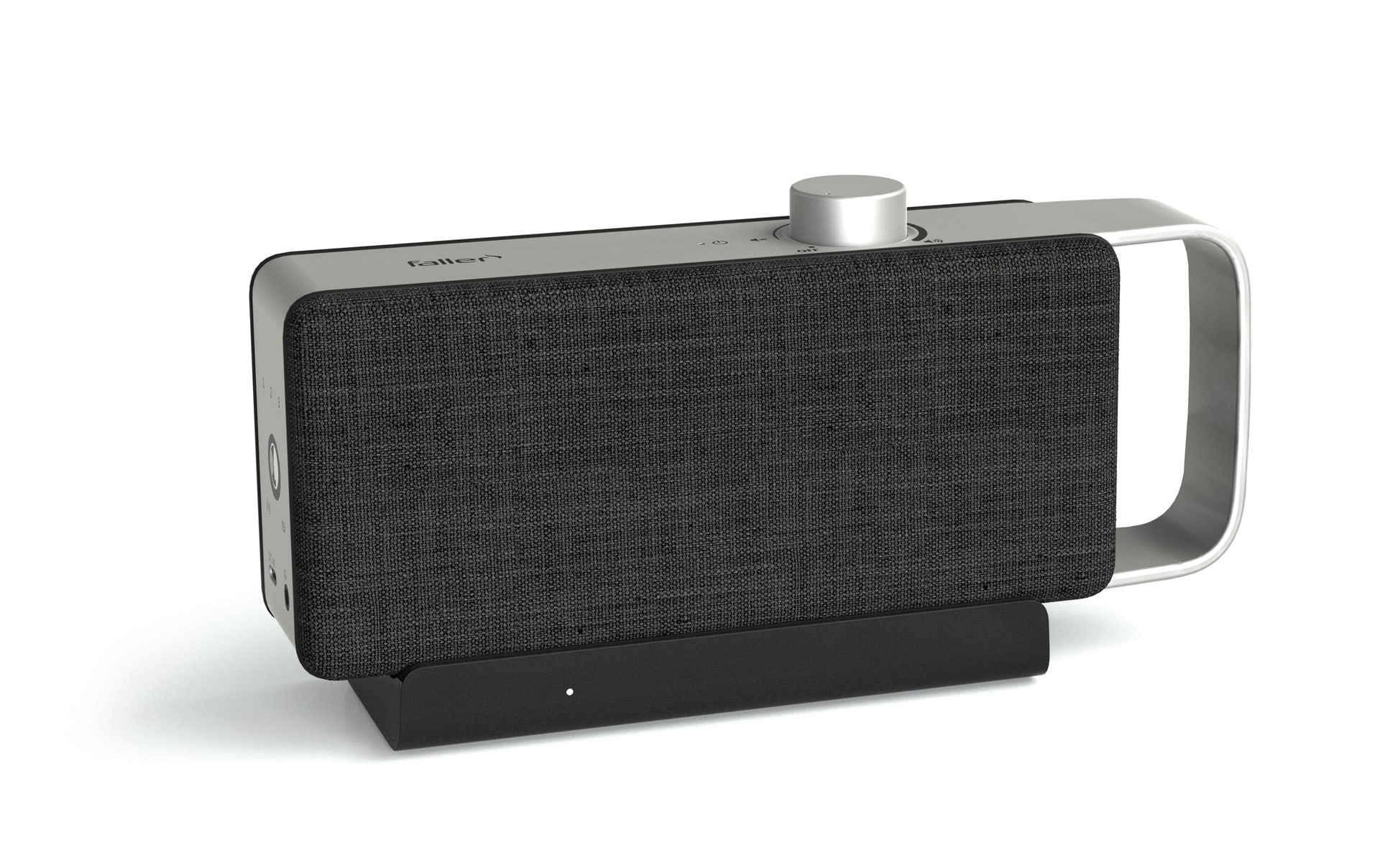
Another model that compares well with conventional soundbars is the OSKAR TV speaker. Unlike traditional soundbars, the OSKAR is specially designed to improve speech intelligibility, ensuring clearer dialogue even with loud background noise. OSKAR also offers the flexibility of a portable speaker and can be used wirelessly. It dynamically adjusts to the volume of the TV sound, ensuring continuous optimization of dialogue reproduction. Compared to many soundbars, OSKAR offers a user-friendly solution that can be customized to individual listening needs and offers good value for money.
compact speaker
Compact speakers are space-saving external speaker systems designed to improve the sound quality of a TV or music system without taking up much space. They offer clearer, fuller sound compared to a TV's built-in speakers and are particularly suitable for smaller rooms or people who want improved sound reproduction. These speakers effectively fill the room with sound and offer better reproduction of low frequencies and bass. The difference is particularly noticeable with movies, TV shows, and music, as compact speakers deliver sound across a wider frequency range, improving the overall sound quality.
Compact speakers have the ability to make dialogue clearer and more understandable, particularly through technologies that emphasize the mid-range frequencies where the human voice resides. This ensures that conversations remain clear even when music or sound effects are playing in the background. Although compact speakers cannot offer a true surround sound experience due to their compact size, they still create a wide soundstage and simulate the impression that the sound is coming from multiple directions.
Another advantage of compact speakers is their ability to deliver high volumes without distortion. They are particularly useful for dynamic scenes in movies or high-volume music, as they maintain sound quality at high volumes. Some models even integrate subwoofers to enhance bass reproduction and provide powerful dynamics.
Compact speakers are available in various models, which differ in terms of their functions. Many models offer easy installation with connection options such as HDMI, optical inputs, or Bluetooth. Some models also have subwoofers for improved bass reproduction or high-quality tweeters for more precise treble reproduction. When buying a compact speaker, you should pay attention to sound quality, especially the ability to reproduce dialogue clearly and deliver balanced bass.
The connections on compact speakers vary depending on the model and offer numerous options for easy connection to various devices. HDMI is one of the best options as it offers lossless audio transmission. Optical inputs and Bluetooth connections are also common and enable wireless connection to various devices, which is advantageous for users who prefer a flexible solution.
Despite their many advantages, compact speakers also have some disadvantages. Without an additional subwoofer, the bass can be less powerful than with larger speaker systems, and they do not offer true surround sound. Placement must also be considered in order to achieve the best sound, as they should be strategically positioned despite their compact size.
Compared to compact speakers, the OSKAR TV speaker offers specific advantages, especially for people with hearing problems. The OSKAR is specially designed to improve speech intelligibility. While compact speakers improve the overall sound, OSKAR's special technology ensures that dialogue remains clear and understandable, even when background noise or music overpowers the sound. OSKAR also offers dynamic sound adjustment, so that speech intelligibility is maintained even when the volume changes, without the need for manual volume adjustment.
In addition, OSKAR offers the advantage of simple operation and high flexibility. With its wireless connection to the TV via the base station and a long battery life of up to 16 hours, the speaker can easily be taken to different rooms without compromising sound quality. OSKAR is therefore also perfect for people with hearing problems or seniors, as it offers a user-friendly solution for improving dialogue intelligibility. Compared to compact speakers that offer general sound enhancement, OSKAR is a specialized solution for clear and understandable dialogue, which is particularly valuable for users with special requirements for speech intelligibility.
standard speaker
Standard speakers are external speaker systems used to improve TV sound. Compared to built-in TV speakers, they offer clearer and richer sound reproduction and cover a wide frequency range, including deep bass and high tones. These speakers are a practical solution for improving the sound of a TV without resorting to complex surround sound systems or subwoofers. They offer balanced sound reproduction that effectively fills the room with sound. The improved depth and bass reproduction is particularly noticeable when playing movies, series, or music.
A key advantage of standard speakers is their ability to improve speech intelligibility. Many models are equipped with technologies that emphasize mid-range frequencies, thereby increasing speech clarity. This ensures that dialogue remains clear and understandable even in scenes with a lot of music or intense sound effects. Although standard speakers do not offer true surround sound, they use stereo effects to create a wider sound image that fills the room in a more pleasant and balanced way.
Standard speakers also offer good dynamics and performance. They can deliver clear sound without distortion during loud movie scenes or music with significant volume differences. Many models can also be combined with a subwoofer to improve bass reproduction and create greater dynamics. In larger rooms, they offer a fuller sound than integrated TV speakers and provide a better listening experience.
When purchasing standard speakers, particular attention should be paid to sound quality, especially the ability to reproduce dialogue clearly and deliver balanced bass. Important connection options include HDMI, optical inputs, and auxiliary ports, as these allow for easy connection to various devices. Models with subwoofers or wireless features such as Bluetooth offer additional flexibility to customize TV sound to individual needs.
Despite their advantages, standard speakers also have some limitations. Bass response can be less powerful without a subwoofer, and they don't offer true surround sound like larger home theater systems. Placement is also important, as standard speakers should be strategically positioned for the best sound.
In comparison, the OSKAR TV speaker offers specific advantages, particularly in terms of speech intelligibility. While standard speakers improve overall sound quality, OSKAR uses special dialogue optimization to ensure that dialogue remains clear and intelligible, even when background noise or music overpowers the sound. Oskar dynamically adjusts the sound so that speech intelligibility is always maintained at changing volumes without the need for manual volume adjustment.
In addition to its outstanding speech optimization, OSKAR offers a high degree of flexibility with a wireless, portable design. Compared to standard stationary speakers, OSKAR offers a mobile solution that can easily be taken to different rooms. While standard speakers are a good solution for general sound enhancement, OSKAR is the better choice for users who value clear and distinct dialogue reproduction.
subwoofer
Subwoofers are specialized speakers that focus on reproducing low frequencies (bass) and play a crucial role in home theater systems in particular. They expand the sound spectrum and provide powerful bass reproduction, which intensifies the listening experience for movies, music, and other audio sources. Unlike conventional speakers, which cover a wide frequency spectrum, subwoofers focus on the range from 20 to 200 Hz, providing precise and powerful bass reproduction. These speakers can be used alone or in combination with other speakers to enhance the sound experience.
The sound quality of subwoofers is outstanding when it comes to reproducing low frequencies, which are particularly important in action scenes and music. Subwoofers ensure that bass is reproduced intensely and clearly, which is not possible with most integrated TV speakers. Even with music and sound effects that rely on lower frequencies, subwoofers deliver a richness of sound that significantly enhances the overall listening experience.
There are different types of subwoofers, both passive and active models. Passive subwoofers require an external amplifier, while active models already have a built-in amplifier, making them easier to use. Models are available in various sizes, with larger subwoofers generally offering deeper and more powerful bass reproduction. Some subwoofers are specifically designed for integration into home theater systems and feature adjustments that optimize the sound for the room acoustics.
When buying a subwoofer, you should consider the size of the room, as larger rooms require more powerful subwoofers to produce full bass. Compatibility with the amplifier is also an important factor, as passive subwoofers require an external amplifier. Active subwoofers offer more flexibility because they already have a built-in amplifier. Other important features include connection options such as LFE, HDMI, or optical inputs, as well as the option for wireless connection via Bluetooth.
Subwoofers offer numerous advantages, including the ability to produce deeper bass tones that intensify the listening experience and the possibility of expanding the sound spectrum. They can be positioned flexibly in the room to achieve the best sound. However, they require more space and increase the cost of the entire speaker system. Passive subwoofers also require an external amplifier, which can make installation more complex.
The OSKAR TV speaker also has an integrated subwoofer as a passive driver for optimized bass reproduction.
surround sound systems
Surround sound systems are audio systems that reproduce sound from multiple directions to create a spatial, three-dimensional listening experience. Unlike conventional stereo systems, where sound comes from only two sources—the left and right speakers—surround sound reproduces sound from different speakers in the room. These speakers are strategically positioned around the room to create the effect of "all-around" sound, giving the feeling of being right in the middle of the action. A good surround sound system uses technologies such as Dolby Atmos and DTS:X to simulate spatial sound and present sound from all directions.
Surround sound systems are available in various designs, including complete systems and individual components. Home theater systems that include all necessary components such as speakers, receivers, and subwoofers offer a simple and high-quality solution, while individual components allow for a more customized and flexible setup. The most important components of a surround sound system are speakers, subwoofers, and the receiver. Speakers such as front, center, and surround speakers create the surround sound, while tweeters and the subwoofer ensure precise bass reproduction. The receiver is the heart of the system and distributes the audio signal to the speakers.
Surround sound systems are particularly beneficial for home theaters, as they take the sound of movies and TV shows to a whole new level. With spatial audio and technologies such as Dolby Atmos, the home theater experience becomes more realistic, and viewers can enjoy movies or TV shows with impressive sound depth. Surround systems also create an immersive experience for music and live broadcasts, with sound coming from different directions, enhancing the feeling of presence. For gamers, surround sound offers an additional advantage by accurately reproducing the position and distance of sounds.
Choosing the right surround sound system depends on factors such as room size and budget. A simple 5.1 system is sufficient for smaller rooms, while larger rooms benefit from a 7.1 system or a system with Dolby Atmos. Installation requires careful planning and placement of the speakers, and modern systems offer both wired and wireless connections. The various connection options, such as HDMI and optical inputs, allow for easy integration.
A surround sound system is a worthwhile investment for anyone looking to enhance their home theater experience, but prices can vary greatly depending on the model and features. Budget systems offer basic features, while high-end models offer advanced technologies and superior sound quality. In the long run, more expensive systems often offer better sound quality and greater flexibility.
Bluetooth and wireless speakers
Wireless TV speakers and Bluetooth models have established themselves as a practical solution for enhancing the television experience. They offer an uncomplicated way to transmit sound from the TV wirelessly, allowing for more flexible placement and a clean, uncluttered setup. Bluetooth speakers connect directly to the TV or other devices, eliminating the need for cables. These speakers use technologies such as Bluetooth and Wi-Fi to ensure stable, high-quality audio transmission. While Bluetooth offers a simple connection for shorter distances, Wi-Fi-based systems allow for greater range and use in multi-room systems.
Bluetooth speakers are known for their ease of use and flexibility, especially at short to medium distances. Newer Bluetooth versions such as 5.0 improve range, and signal strength ensures stable connections. Wi-Fi speakers, on the other hand, offer greater range and more stable connections, ideal for larger rooms or multi-room applications. Bluetooth speakers are particularly suitable for mobile use, as they offer a battery life of around 6 to 12 hours, depending on the model and volume.
Bluetooth speakers often use advanced audio codecs such as AptX and AAC, which improve sound quality and minimize delays or quality loss. NFC technology simplifies connection by enabling easy connection through proximity. True Wireless Stereo (TWS) technology allows two Bluetooth speakers to be connected simultaneously, creating true stereo sound.
Compared to Bluetooth, Wi-Fi speakers offer a more stable and longer-range connection, making them ideal for larger rooms or multi-room systems. Although installing Wi-Fi speakers requires more technical knowledge, they offer greater flexibility in terms of placement and enable wireless streaming via your home network.
For mobile use, Bluetooth speakers offer the freedom to enjoy the TV experience anywhere, such as in the garden or on the go. They enhance the home theater experience with wireless transmission and more intense sound. In addition, people with hearing problems benefit from Bluetooth and wireless speakers, which offer better speech optimization and clear sound reproduction.
When purchasing a Bluetooth or wireless TV speaker, sound quality, battery life, and voice optimization capabilities are key factors to consider. Models such as the OSKAR TV speaker offer excellent sound quality and long battery life, as well as easy connection via a base station on the TV. In addition, voice optimization ensures that dialogue remains clear and understandable, which is particularly beneficial for people with hearing problems.
Advantages of wireless speakers include freedom of movement without cables, easy setup, and versatile use. They are ideal for mobile applications, multi-room systems, and people looking for a flexible, wireless solution. Disadvantages can include limited battery life, connection problems at greater distances, and lower sound quality in cheaper models.
Further articles

Healthy candy alternatives for seniors
For many people, craving sweets is part of everyday life. However, traditional sweets often contain large amounts of sugar and provide

Cooking together in old age
As we get older, our everyday lives change in many ways. The children have left home, our partner may be

Protein-rich nutrition in old age
As we age, our bodies change in many ways, and nutrition plays a crucial role in our health.