HÖRST
Television in sign language
August 8, 2025
6 minutes reading time

OSKAR
Portable TV voice amplifier
Advertisement
Table of contents
The issue of accessible television is becoming increasingly important today—and in this context, so is television in sign language.
Below you can find out what options deaf people have for using sign language on television, what services are already available, and how to activate sign language on television.
Sign language explained briefly
Sign language is a visual, natural language. Unlike spoken language, however, it does not use sounds or words to communicate, but rather signs, i.e., hand signals, gestures, facial expressions, and mouth movements.
Sign language is used by deaf and hard-of-hearing people to communicate with each other and with hearing people. In Germany alone, German Sign Language (DGS) is used by approximately 250,000 people.
Here you can learn more about learning sign language.
Why sign language television?
All people should have equal access to information and entertainment, regardless of their mental or physical abilities. This applies to all areas of life, including television.
Many television stations, streaming providers, and others are therefore already promoting accessibility today.Accessible television isimplemented with the help of various technologies, includingsubtitles,clear language settings, and sign language translations.
Unfortunately, the latter are still the exception rather than the rule.
How does sign language television work?
It's actually quite simple: when watching television in sign language, a sign language interpreter translates what is being said and shown into sign language. The interpreter can usually be seen in a small extra picture on the large TV screen.
These visual translations are either recorded before the film, program, etc. is broadcast, or they take place live during the broadcast, for example during televised sporting events. This is particularly challenging for sign language interpreters, as they cannot prepare for their work in advance.
Since, as in spoken language, there are regional differences and dialects in German sign language, a more "general" combination of sign language and lip movements is often used on television so that as many people as possible can understand it.
Requirements for sign language television: HbbTV
Only a few television stations offer sign language interpretation in their live programming. However, there are other options for sign language television, such as via HbbTV. HbbTV stands for "Hybrid Broadcast Broadband TV" – a technology that combines television and the internet to offer interactive services via the TV set. These include, for example, media libraries, video-on-demand and streaming services, or the sign language function – provided that it is offered by the desired channel for the respective program.
To watch television in sign language, you first need a HbbTV-enabled television or a HbbTV-enabled receiver. These include , for example , modern smart TVs with an internet connection or set-top boxes such as Amazon Fire TV, Apple TV, Google Chromecast, etc.
Some programs with sign language interpretation can also be found in the various media libraries of the television stations or can be watched via livestream on the Internet.
Turn sign language television on/off
To activate sign language on your TV using HbbTV, you must first check whether your TV supports HbbTV. If not, there are a few alternatives, as mentioned above.
How to turn on sign language with HbbTV:
- Turn on your TV and make sure it is connected to the Internet.
- Now make sure that the HbbTV function on your TV is activated, or activate it if necessary. The HbbTV function can usually be found in the TV menu under "Settings," "Channels," or "Network."
- Start HbbTV. To do this, first select a channel that offers HbbTV services. Once the function is activated, the HbbTV icon, usually a red button at the edge of the screen, will appear after a few seconds.
- Press the red button or red key on your remote control. This will launch the respective HbbTV portal.
- Now navigate to the settings and search for "Accessibility" or directly for "Sign Language." The exact name varies depending on the TV set. Then select the appropriate option for sign language and confirm your selection.
The sign language interpreter should now be displayed in a small picture-in-picture window. Please note, however, that not all HbbTV-enabled channels offer the sign language function.
To turn off sign language translation, go back to Settings and disable the feature.
If you still have trouble activating sign language despite these instructions for turning it on and off, we recommend consulting the user manual for your TV set.

Do all channels offer television in sign language?
No, unfortunately, not all television stations currently offer programs with sign language interpreters. This is partly because smaller or regional stations do not have the resources.
Recording sign language or broadcasting live sign language interpretation is technically and financially complex. However, large broadcasters such as the public broadcasters ARD, ZDF, NDR, WDR, BR, and others often have the resources and personnel to implement such services. They therefore play a pioneering role in the field of "barrier-free television."
Several years ago, Bayerischer Rundfunk launched the series "Sehen statt Hören" (Seeing Instead of Hearing), which exclusively shows content using various visual means of television, such as sign language. These programs, which include reports on hearing and deafness as well as numerous other topics, are produced by BR but also broadcast by all other third-party stations (WDR, NDR, MDR, RBB, SWR, HR, etc.).
In addition, ARD announced some time ago that from fall 2024, all new episodes of the cult crime series "Tatort" and "Polizeiruf 110," which are being newly produced by the state broadcasting companies, will also be offered with sign language translation.
MDR has been offering episodes of "Tatort" and "Polizeiruf" with sign language since 2023. Other productions by Bayerischer Rundfunk (BR) are also set to be made available with translations into DGS.
These changes are being made as part of the "Barrier-Free Broadcasting" project, which was launched some time ago by the ARD public media network to support people with sensory impairments such as hearing or visual impairment, as well as people who understand little or no German.
Alternatives to sign language television
Even though sign language interpretation services are still very limited in television programming, more and more broadcasters are placing importance on accessibility.
One option that is already frequently offered in this context is subtitles. They help both deaf and hard-of-hearing people to better understand the information on television. Subtitles are available on many programs and can often be activated via the TV settings.
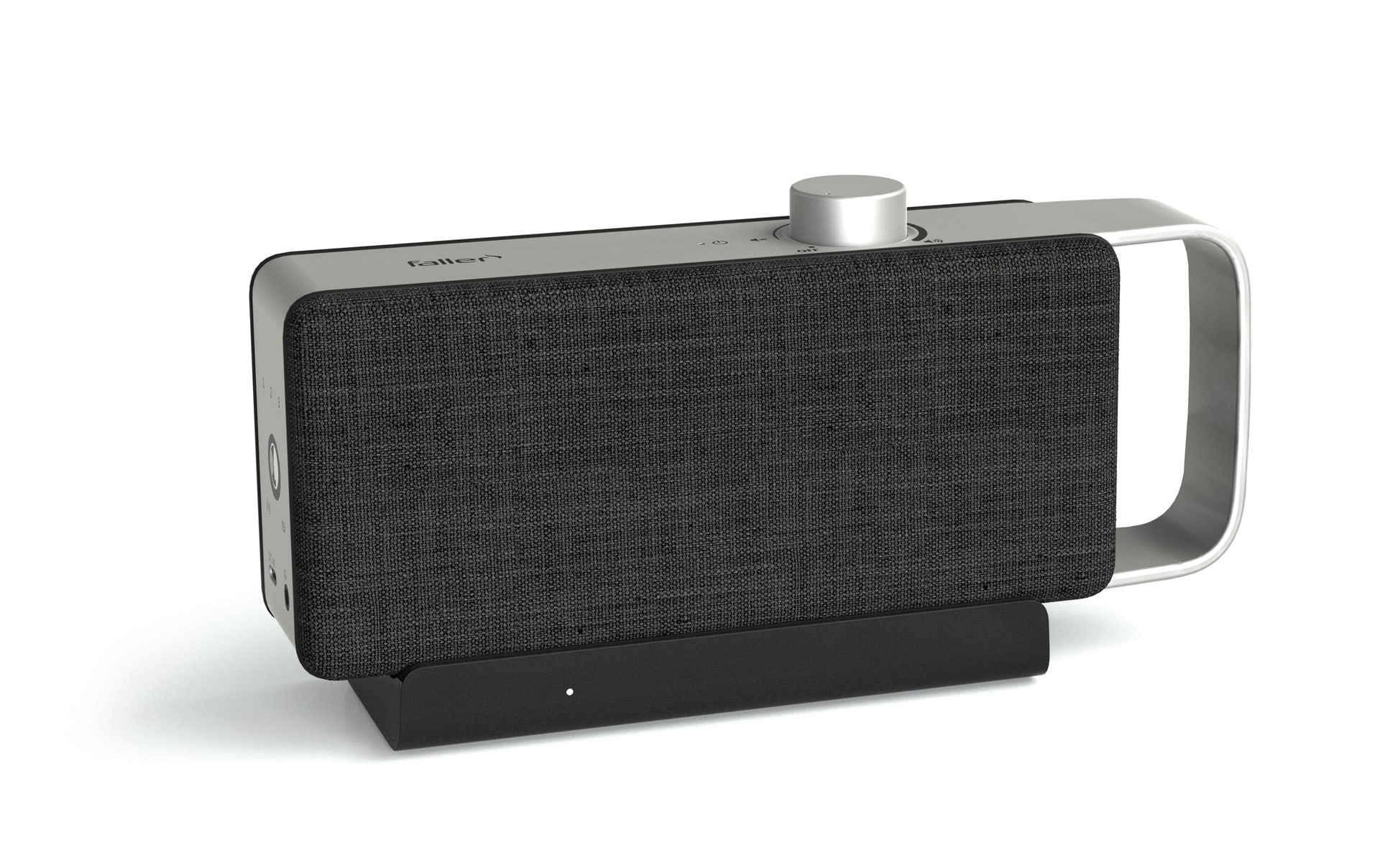
People who suffer from hearing problems can also benefit from TV hearing amplifiers. TheOSKAR TV hearing amplifier fromfaller audio, for example, features special speech optimization that amplifies speech on television and minimizes background noise.
Further articles

Healthy candy alternatives for seniors
For many people, craving sweets is part of everyday life. However, traditional sweets often contain large amounts of sugar and provide

Cooking together in old age
As we get older, our everyday lives change in many ways. The children have left home, our partner may be

Protein-rich nutrition in old age
As we age, our bodies change in many ways, and nutrition plays a crucial role in our health.